


Within an implantable brain‑computer interface (BCI) system, electrodes are responsible for capturing neural signals and chips perform signal‑processing computations. The hermetic feedthrough, by contrast, serves as the critical gateway for signals to pass through the sealed housing of the implanted device.It enables bidirectional transmission of hundreds or thousands of neural signals and stimulation commands between the interior and exterior of the housing, while delivering high‑level hermetic sealing to block the ingress of cerebrospinal fluid and bodily fluids. This protects the internal chip circuitry from corrosion and failure, directly determining the long‑term in‑vivo service life of the implant. Accordingly, the hermetic feedthrough is an indispensable hardware component for invasive brain‑computer interfaces.
Non‑invasive brain‑computer interface (BCI) devices require no implantation inside the human body and have no demand for hermetic protection. Therefore, feedthroughs are core components exclusive to fully‑implanted and semi‑implanted BCIs. As the industry evolves toward the multi‑thousand‑channel level, high‑density hermetic feedthroughs have become one of the key bottlenecks restricting the industrialization of implantable BCIs in China.
If an implantable brain‑computer‑interface system is compared to a deep‑sea submarine, the feedthrough acts as a sealed bulkhead junction box that allows signal cables to penetrate the hull while maintaining complete watertightness. Its mission is simple yet demanding: let electrical signals pass through the wall, and keep every drop of bodily fluid out.
Industry Market Overview: Long‑term Reliance on Overseas High‑end Products and Accelerated Domestic Breakthroughs
Within the field of active implantable medical devices, feedthroughs were first deployed on a large‑scale basis in mature products such as cardiac pacemakers and cochlear implants. Brain‑computer interfaces represent an emerging, high‑growth niche market for feedthrough components.
1.Global Landscape: The high‑end implantable‑grade hermetic feedthrough market has long been dominated by overseas manufacturers. Companies such as Heraeus, Kyocera and TE Medical rely on glass‑to‑metal sealing and Low‑Temperature Co‑fired Ceramic (LTCC) technologies to supply the majority of early‑stage thousand‑channel BCI feedthrough products. Their offerings are mostly custom‑developed, featuring long lead times and high costs.
2.Domestic‑market Status: In the early stage, China only possessed the capacity to manufacture general‑purpose feedthroughs for pacemakers and cochlear implants. High‑density thousand‑channel feedthroughs dedicated to brain‑computer interfaces were almost entirely imported. In recent years, with the boom of the BCI industry, upstream component suppliers and complete‑system BCI manufacturers have carried out feedthrough‑related R&D in parallel. Domestic feedthrough products are rapidly catching up, evolving from low‑channel configurations toward high‑density thousand‑channel specifications.
3.Market Characteristics: BCI feedthroughs are not standard off‑the‑shelf components. Each implantable BCI system has unique requirements for housing dimensions, channel count, signal bandwidth and biocompatibility. Almost all feedthroughs require custom‑tailored development. Component verification entails a lengthy cycle, with mandatory tests including helium‑leak hermetic inspection, biocompatibility assessment, accelerated‑aging testing and long‑term in‑vivo reliability validation. This results in high R&D costs, and unit costs remain elevated for small‑batch orders.
Industry Pain Points: Many start‑up BCI enterprises can rapidly complete prototype validation for electrodes, chips and algorithms. However, projects often get stuck at the stages of feedthrough customization and reliability verification. As a result, after prototype hardware is finished, companies are unable to move forward with long‑term animal experiments and clinical translation.
Comparison of Mainstream Technical Routes
Route 1: Conventional Glass‑to‑Metal Sealed Feedthrough
Principle: Metal pins pass through glass insulators and are sealed by high‑temperature melting. Hermetic sealing is achieved through matched coefficients of thermal expansion.
Advantages: Mature manufacturing process and stable hermetic performance. This technology has been widely validated in cardiac pacemakers and cochlear implants, with abundant accumulated reliability data.
Disadvantages: It is difficult to achieve high‑density miniaturization with large pin spacing, making hundreds‑channel or thousand‑channel configurations hard to realize. The relatively bulky size also hinders the miniaturization of implants.
Suitable‑for applications: Low‑channel‑count implantable brain‑computer interfaces and neurostimulators.
Route 2: Ceramic‑based High‑density Feedthrough Substrates (Alumina / Aluminum Nitride Ceramics, Bioglass Substrates)
Principle: A large array of tiny conductive vias is fabricated on a ceramic or bioglass substrate to enable multi‑channel signals to pass through the substrate. The substrate directly serves as the hermetic sealing lid for the implant housing, making this one of the mainstream solutions for new‑generation implantable BCIs.
Advantages: Channel density is greatly improved, supporting hundreds‑to‑thousands of channels with channel spacing reduced down to the 100 μm level. It delivers high integration and enables miniaturization of the complete implant system.
Disadvantages: Processing difficulty rises sharply. As the number of vias increases, the challenges of hermetic leak testing and yield‑rate control grow exponentially. Material metallization and vacuum brazing processes carry extremely high technical barriers.
Representative Case: WarmChips 1280‑channel visual‑cortex BCI V‑BCCI. The company has self‑developed high‑density feedthroughs based on bioglass substrates. A single substrate achieves ultra‑high channel density, supporting the development of intracranial vision‑restoration products.
Route 3: Silicon‑based Micro‑via / Flexible Silicon‑CMOS Integrated Feedthrough (Cutting‑edge Emerging Technology)
Principle: Instead of adopting a discrete feedthrough substrate, TSV (Through‑Silicon Via) holes are fabricated directly on the silicon chip. The feedthrough paths are monolithically integrated with the signal‑processing chip, eliminating connector solder joints between the separate feedthrough substrate and the chip. This reduces external interfaces and shrinks the overall implant volume.
Advantages: It delivers extreme integration and further reduces the size of implantable devices; contact impedance and signal crosstalk caused by intermediate connections are minimized; the solution is compatible with flexible silicon‑based electrode architectures.
Disadvantages: As a cutting‑edge technical route, it still requires extensive verification for mass‑production processes, biocompatible packaging and long‑term in‑vivo reliability, and has not yet achieved large‑scale clinical deployment.
Representative Enterprise: QuanNaoXinKe. Leveraging flexible silicon‑based CMOS technology, the company adopts an integrated feedthrough‑chip roadmap to restructure the underlying hardware architecture of implantable BCIs.
Route 4: Polymer‑based Flexible Feedthrough
A polymer insulating substrate is adopted to fabricate feedthrough channels penetrating the housing.
Advantages: Excellent flexibility.
Disadvantages: Its long‑term hermetic performance is inferior to glass and ceramic materials. It can hardly meet the requirements for multi‑year in‑vivo implantation. This solution is mostly used for prototypes in short‑term animal experiments and rarely adopted for clinical‑grade long‑term implantable devices.
Related‑sector Enterprises: Ongoing Domestic Substitution
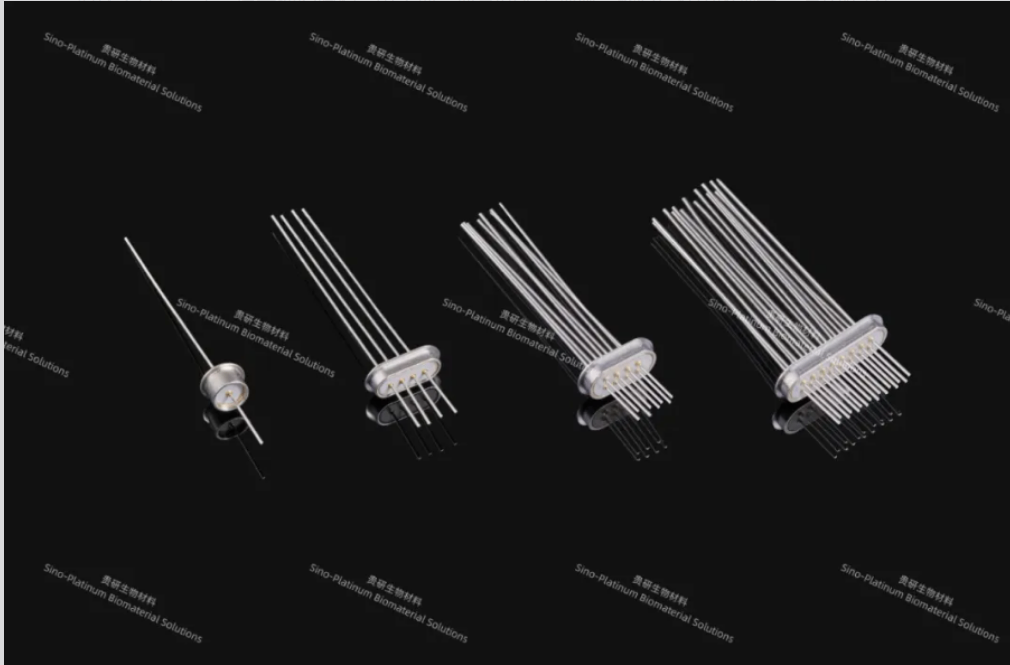
Guiyan Biomaterials 丨 High‑end Implantable & Interventional Noble‑Metal‑Based Medical New Materials
Guiyan Biomaterials is the core life‑health platform of Precious Metals Group, focusing on high‑end noble‑metal‑based new medical materials for implantable and interventional devices. Its mature‑product portfolio includes marker bands, electrode components and precision noble‑metal wires, which are widely applied in cardiovascular and cerebrovascular interventional instruments. The company is also developing medical feedthroughs, ring electrodes, nitinol‑ and cobalt‑based alloys, covering fields such as neuromodulation, electrophysiology and vascular intervention, with core performance indicators taking a leading position domestically. Among its offerings, medical feedthroughs are designed for active implantable devices including pacemakers and neurostimulators; ring‑electrode products support atrial fibrillation ablation procedures; nitinol and cobalt‑based alloys serve as substrate materials for stents.
Mocos Electronics (Suzhou) 丨 Upstream Ceramic Feedthrough Component Manufacturer
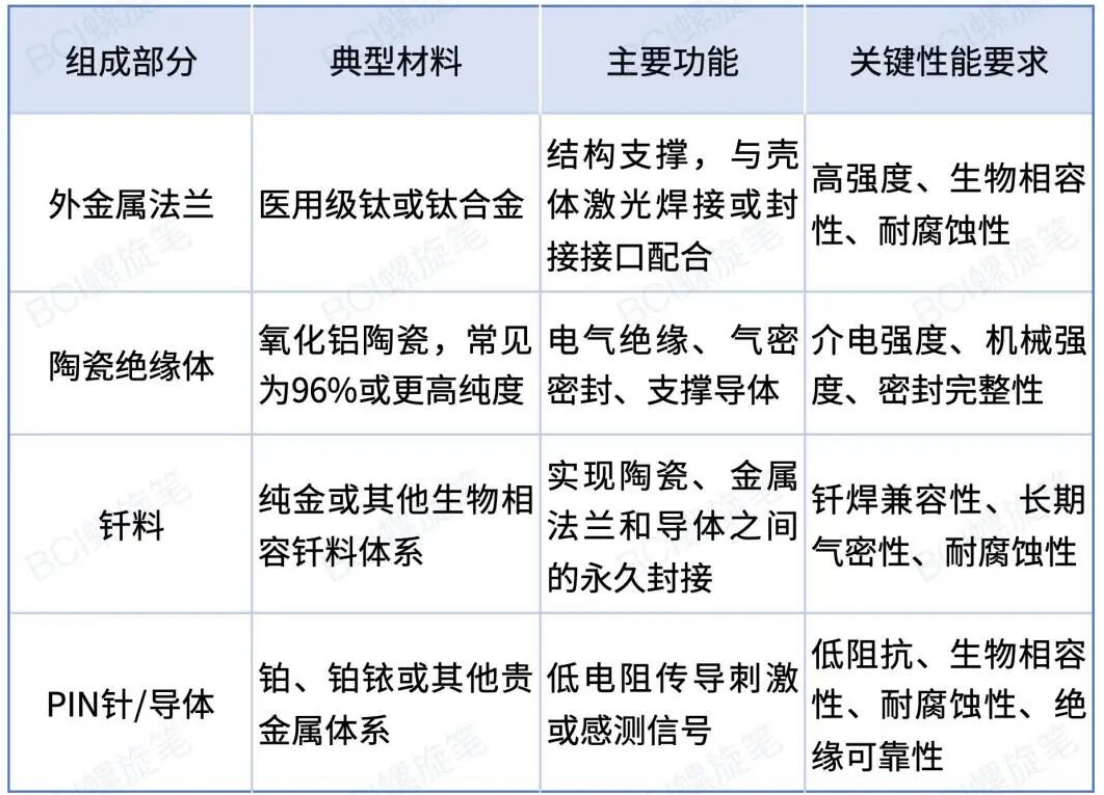
It is China’s first‑ever enterprise focusing on ceramic feedthroughs for Class‑III active implantable medical devices. Its core team originates from Harbin Institute of Technology and the Shanghai Institute of Ceramics, Chinese Academy of Sciences. Adopting the technical route of active brazing between alumina ceramic and titanium flange, the company mainly provides implant‑grade hermetic ceramic feedthroughs with 2‑8 channels as well as custom‑made multi‑channel options. Key indicators such as leak rate and insulation performance meet the specifications for implantable devices. It supplies customized feedthrough components to manufacturers of invasive brain‑computer interfaces, deep‑brain‑stimulation and neuromodulation equipment, filling the industrialization gap for domestically‑produced ceramic feedthroughs.
Hebei Shengping Electronic Technology Co., Ltd. 丨 Pacemakers, Cochlear Implants, Retinal Implants, Deep‑Brain Stimulators, Endoscopes
The company specializes in the R&D and manufacturing of ceramic materials for medical devices and ceramic feedthroughs for implant‑grade medical components. It possesses core technologies including gel‑casting forming, platinum‑based metallization and active ceramic‑to‑metal brazing. Production lines for high‑density ceramic feedthroughs, micro‑assembly and surface‑mount‑technology (SMT) processes have been established.
Its products can be applied to a wide range of implantable medical devices, including pacemakers, cochlear implants, retinal implants, deep‑brain stimulators and endoscopes. Drawing on its accumulated expertise in advanced ceramic materials (alumina, zirconia, aluminum nitride, etc.) as well as core processes such as hermetic sealing and ceramic‑to‑metal brazing, the company is driving breakthroughs in the localization of key components for high‑end medical devices including implantable brain‑computer‑interface systems.
BCI System‑level Terminal Manufacturers (Feedthrough Technology‑route Selection)
WarmChips (Hangzhou) 丨 Self‑developed High‑density Feedthrough on Ceramic‑Bioglass Substrate
The company has self‑developed a multi‑thousand‑channel bioglass feedthrough substrate to support its 1280‑channel visual‑cortical implantable BCI system, V‑BCI. Without relying on external component suppliers, it achieves end‑to‑end in‑house development of feedthroughs, electrodes and chips, making the solution well‑suited for intracranial implantation scenarios for vision restoration.
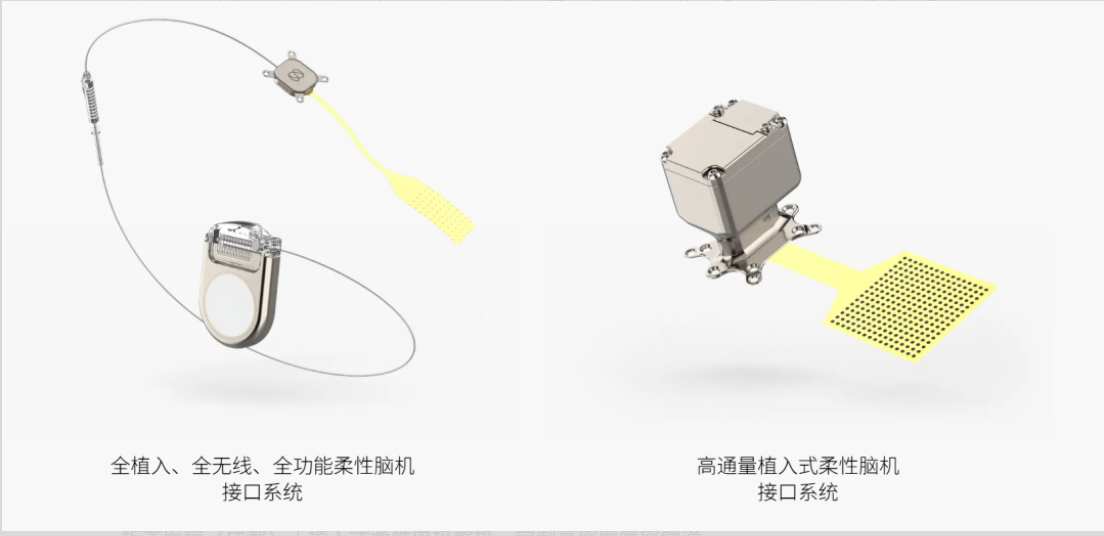
QuanNaoXinKe 丨 Self‑developed Monolithic TSV Feedthrough with Flexible Silicon‑based CMOS
Discarding the conventional discrete feedthrough substrate, the company adopts a monolithic design integrating chips and feedthrough channels, representing a new‑generation underlying‑architecture roadmap. It closed a multi‑million‑yuan Angel Round financing merely 18 days after incorporation, and is focused on tackling core hardware challenges for implantable BCI systems.

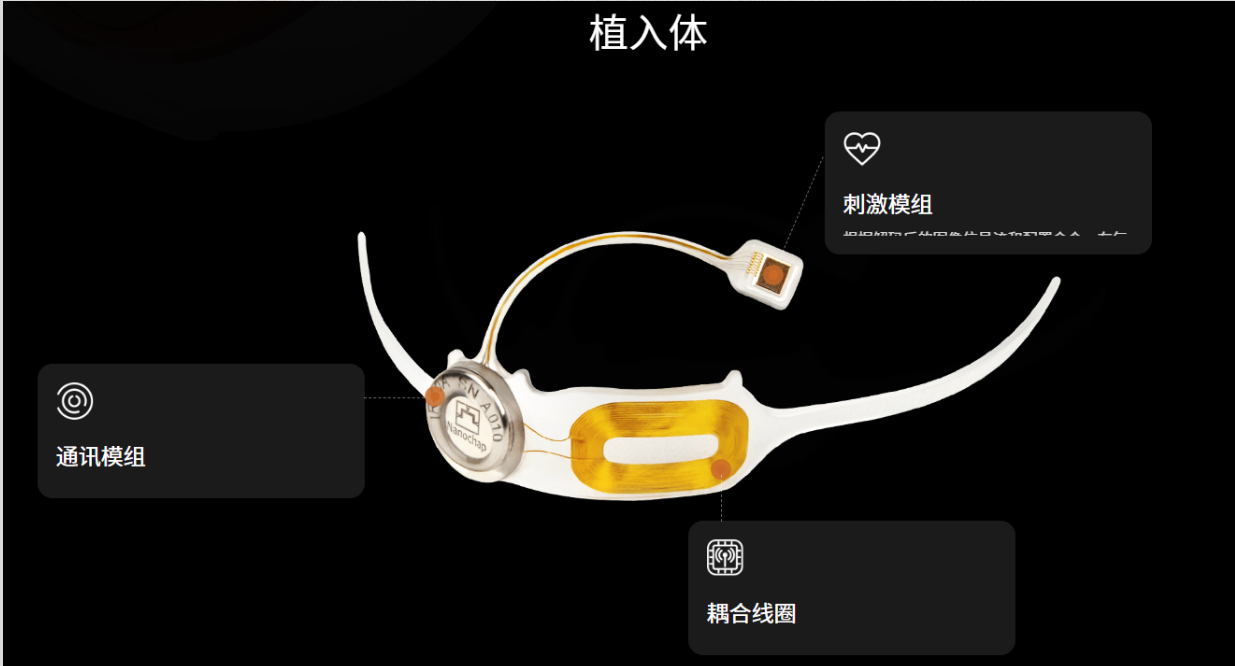
Neuracle (Shanghai) 丨 Combined Glass‑to‑Metal and Ceramic Feedthrough Roadmap
For its fully‑implantable wireless BCI product, the company adopts a customized hermetic feedthrough solution that balances channel count and overall device volume, supporting clinical applications for motor‑function restoration.
Ximang Medical (Chengdu) 丨 Implantable Flexible‑electrode System with Custom High‑density Hermetic Feedthrough
Located in Chengdu Hi‑Tech Industrial Development Zone, the company focuses on implantable neurorehabilitation devices. It adopts customized hermetic feedthroughs for its complete systems and carries out layout covering R&D, manufacturing and clinical translation.
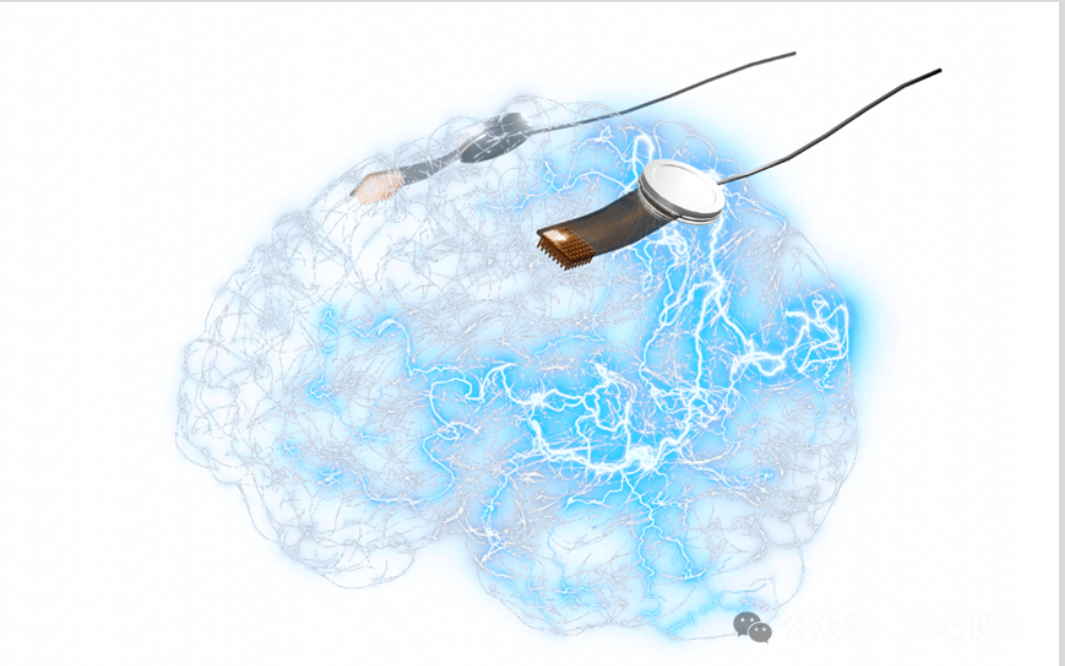
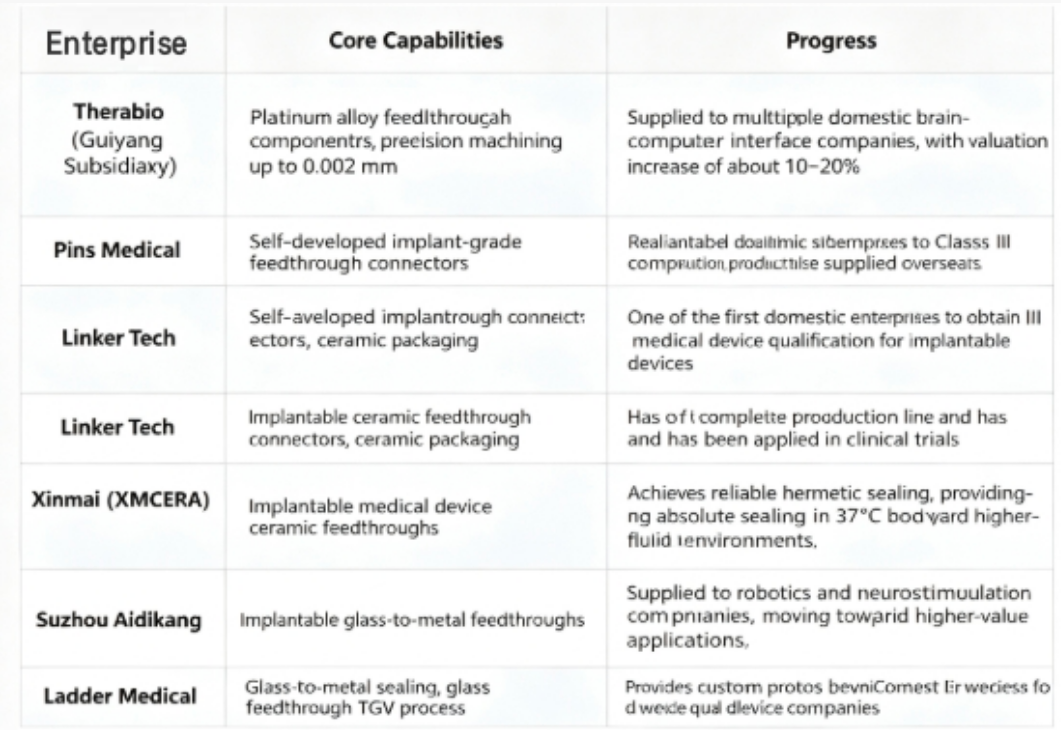
Pins Medical is a leading domestic enterprise in the field of implantable neuromodulation. Its self‑developed implant‑grade feedthrough connector has achieved domestic substitution. This component represents one of the core bottleneck technologies for neuromodulation products.
Ladder Medical: It is speculated that the company adopts the ceramic / glass‑to‑metal hermetic packaging route. Its patent CN116369927B describes a process for arranging feedthrough electrodes through a glass body, indicating that it employs a glass feedthrough process rather than a ceramic feedthrough process.
Neural‑Micro Medical: Its patents reveal that the implant adopts a feedthrough structure with ceramic‑to‑metal hermetic packaging.
Neuracle: The company has not publicly disclosed detailed information about its feedthrough materials. However, given the extremely high hermetic‑sealing requirements of its "fully‑implantable, fully‑wireless, full‑function" product, it is speculated that it has adopted the mainstream industry ceramic‑to‑metal / glass‑to‑metal hermetic‑packaging solution.
Zhongke Xianjian: The company has more than ten years of in‑depth experience in the field of brain‑computer interfaces. The R&D, packaging and testing of its ceramic feedthrough components constitute one of its core technologies.
Nurotron (Zhejiang): As a neuro‑electronic technology enterprise, the company has filed a patent entitled "An in‑situ sealing structure for ceramic feedthrough and hermetically‑packaged assembly", indicating its technical layout in this field.
Supplementary Note: A large number of domestic BCI start‑ups currently adopt the model of "outsourced feedthrough components + secondary integration". After completing system‑level design, they customize feedthrough substrates from upstream suppliers, followed by assembly with electrodes, titanium housings and chips.
Industry Summary and Outlook
While a feedthrough may appear to be merely a sealing substrate, it is a multidisciplinary product spanning materials science, precision manufacturing, packaging technology and biomedicine. The invasive‑BCI industry has generally focused its attention on electrodes, chips and algorithms. Nevertheless, the hermetic reliability of feedthroughs determines whether an implantable device can truly move forward to long‑term human clinical applications.
The industry is evolving along two distinct development paths. Some enterprises continue to iterate discrete feedthrough substrates made of ceramic and bioglass to rapidly meet current‑day demands for clinical prototypes. Other emerging start‑ups are betting on silicon‑based monolithic feedthrough architectures, aiming to restructure hardware from the ground up and achieve leap‑forward improvements in device size and channel density.
In the process of domestic substitution, it is not sufficient merely to manufacture the components. It is equally critical to establish a complete reliability‑verification system, complete long‑term in‑vivo implantation tests on animals, and develop reproducible mass‑production processes. Only when upstream feedthrough components reach mature localization can China’s implantable‑BCI system‑level industry truly break free from reliance on overseas parts and accelerate clinical translation and commercialization.