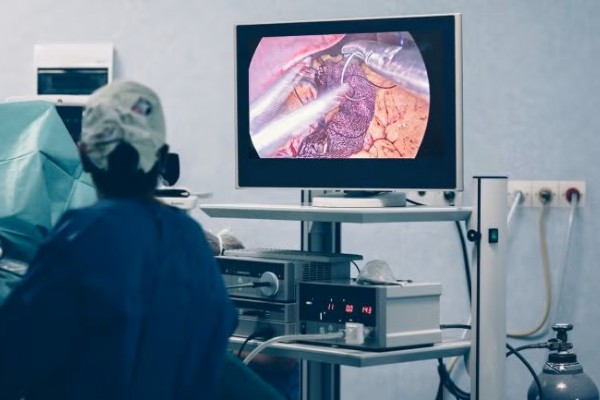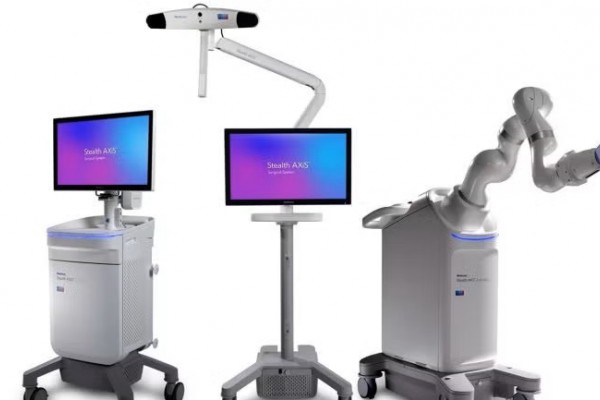



Recently, a domestic‑developed laparoscopic surgical robot has achieved a landmark breakthrough in core‑technology dimensions. According to media reports, the force‑feedback laparoscopic surgical robot, jointly developed by a national key R&D project led by Professor Song Aiguo of Southeast University and Nanjing Todov Medical Technology Co., Ltd. (hereinafter referred to as Todov Medical), successfully completed two partial nephrectomies and one radical prostatectomy. The operation was carried out with close collaboration between the urology teams from the First Affiliated Hospital of Zhengzhou University and the First Affiliated Hospital of Xinjiang Medical University.
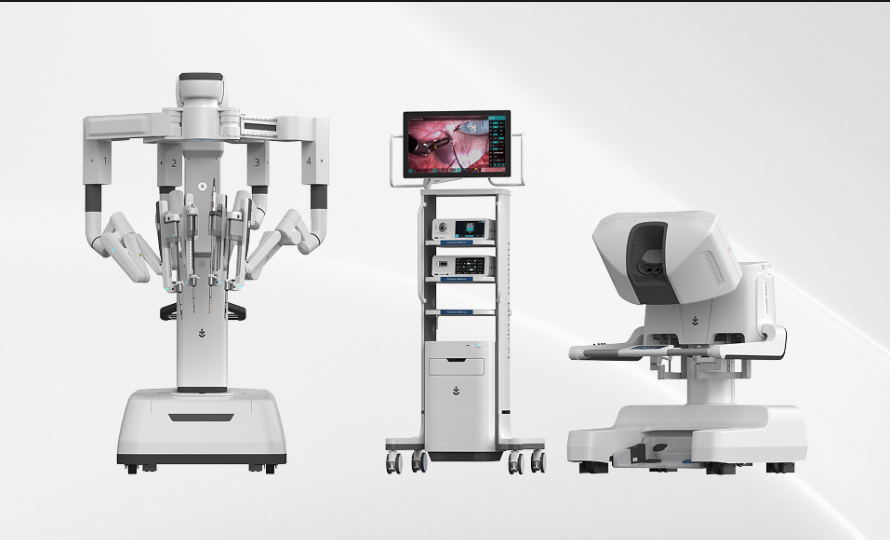
This marks China’s first domestically‑developed laparoscopic robotic force‑feedback technology put into clinical application. It is also one of the few laparoscopic robot systems worldwide with full‑sensing capability deployed in real‑world clinical surgeries, directly breaking the long‑standing industry paradigm of “vision‑only without tactile sensation” adopted by mainstream overseas products.
In terms of clinical outcomes, the core breakthrough of this force‑feedback laparoscopic surgical robot stems from the multi‑dimensional force‑sensor technology fully independently‑developed by the project team. Targeting the clinical requirement for high‑precision force perception during operations within the extremely narrow working space of laparoscopic surgical instrument shafts with a diameter of less than 9 mm, the Todov Medical team has independently developed a structurally‑novel 3‑dimensional force sensor for surgical lifting traction and a clamping‑force sensor based on the resistance‑strain principle. This development has thoroughly overcome the long‑standing industry challenge of integrating multi‑dimensional force‑sensing functions inside compact surgical instruments.
To deliver stable, high‑precision performance, the project team carried out structural design optimization through multiple rounds of simulation, and precisely arranged the layout of sensing components. Custom‑built supporting signal‑conditioning circuits and temperature‑compensation strategies were developed. In addition, a high‑precision calibration platform was established to complete decoupling calibration.
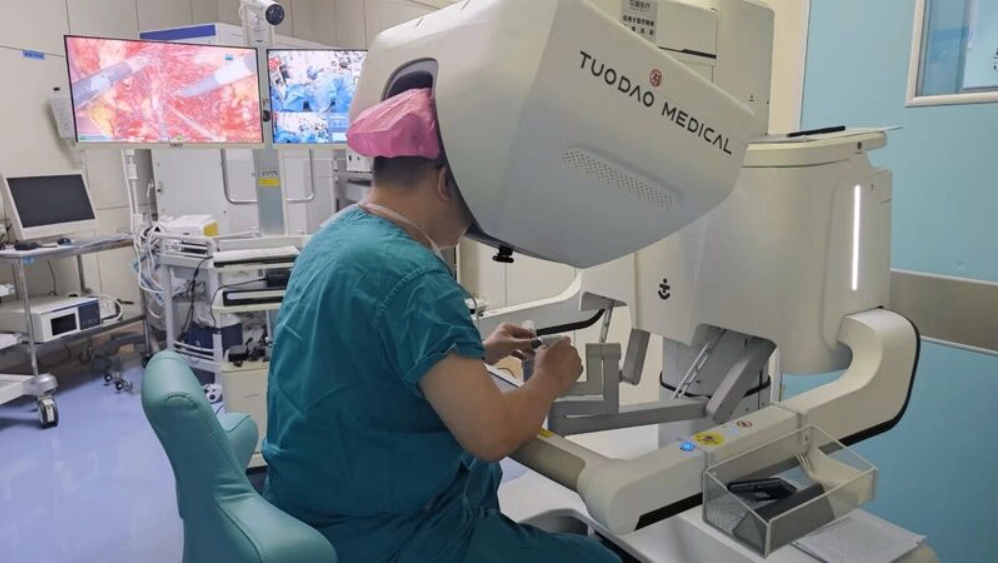
The final miniaturized, high‑precision and low‑coupling multi‑dimensional force‑sensor endows the laparoscopic surgical robot with delicate force‑perception capability close to that of the human hand, directly filling the long‑standing technical gap in force‑sensing technology for domestic‑made laparoscopic robots. Building on this achievement, the team further overcame core technologies including force‑feedback control and teleoperation with force‑based telepresence. Having passed rigorous type inspection and multiple rounds of animal experiments, the complete system has successfully entered the clinical‑trial phase.
The performance demonstrated in this clinical trial has directly validated the clinical practicality and technological advancement of the entire system. While the surgeon operated at the local console, the robotic arm located 2,400 kilometers away delivered real‑time synchronous response with no noticeable latency throughout the procedure.
Equipped on the Todov Medical laparoscopic surgical robot used in this trial, the 3D‑4K fluorescence‑imaging system magnifies intra‑body tissue textures by 10‑20 times to deliver ultra‑high‑definition visualization. Combined with AI algorithms and fine tactile feedback generated by the team’s self‑developed force‑feedback sensor, the system achieves upgraded dual perception of “vision + tactile sensation”. Surgeons can not only clearly distinguish subtle tissue boundaries, but also perceive in real‑time the contact force between instruments and human tissues via the manipulator handle. This completely eliminates the operational risk of judging force merely by visual observation, which is common in conventional laparoscopic surgery.
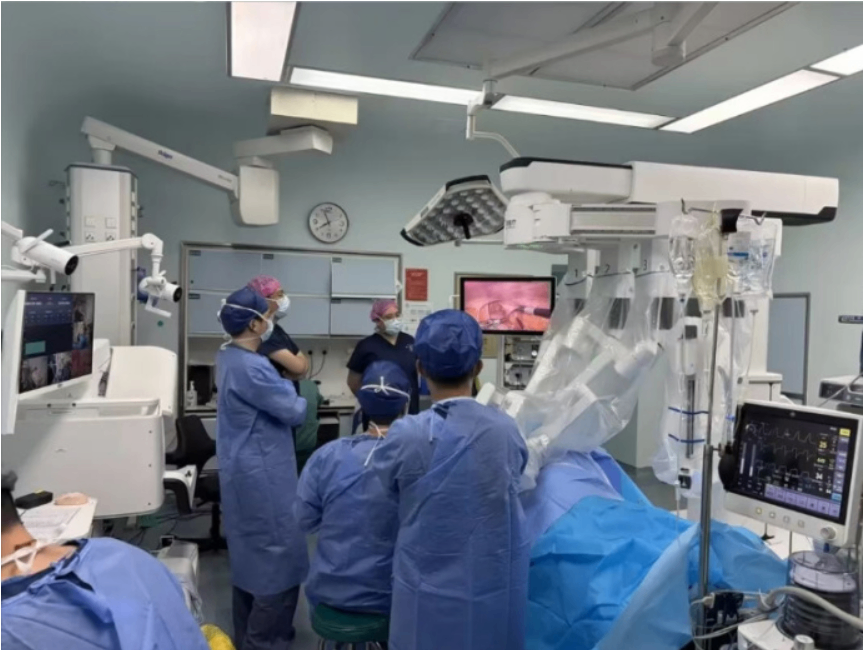
During the trial, the robotic arm smoothly performed all core surgical maneuvers including dissection, mobilization and cutting throughout the operation, with positioning accuracy fully meeting the requirements of clinical surgical specifications. The technically‑challenging radical prostatectomy lasted only one hour and nine minutes, substantially shortening the patient’s anesthesia time and directly reducing potential risks such as postoperative infection and slow recovery. The clinical team participating in the surgery stated that the realistic operating feel brought by force‑feedback greatly reduced operator fatigue. In addition, complex tissue dissection, fine suturing and other procedures were completed far more smoothly than on conventional force‑free laparoscopic robots.
Force‑feedback technology has long been a widely‑acknowledged technical bottleneck in the global field of laparoscopic surgical robots. Even the da Vinci system, which leads the global market share, has never delivered genuine force‑sensing feedback on its mainstream models. It was not until its fifth‑generation product launched in 2024 that relevant capabilities were integrated for the first time.
The clinical launch of this domestic force‑feedback laparoscopic surgical robot signifies that Chinese manufacturers have taken a fully‑independent differentiated path in this core‑technology dimension, directly transforming the long‑prevailing industry status of “vision‑only without tactile sensation”.
More importantly, the deep integration of force‑feedback technology and the 2,400‑kilometer ultra‑long‑distance surgical capability provides a mature and feasible technical pathway for the balanced cross‑regional allocation of high‑quality medical resources in China. In the future, patients in remote areas will no longer need to travel long distances to first‑tier cities. Instead, they can receive robot‑assisted surgery performed by top‑tier national specialists directly at local hospitals, technically narrowing the gap in medical services across different regions.
The project team stated that it will continue to promote the deployment and application of force‑sensing and force‑feedback technologies on a wider range of surgical‑robot platforms, comprehensively supporting domestic high‑end medical equipment to achieve full‑chain independent control.