


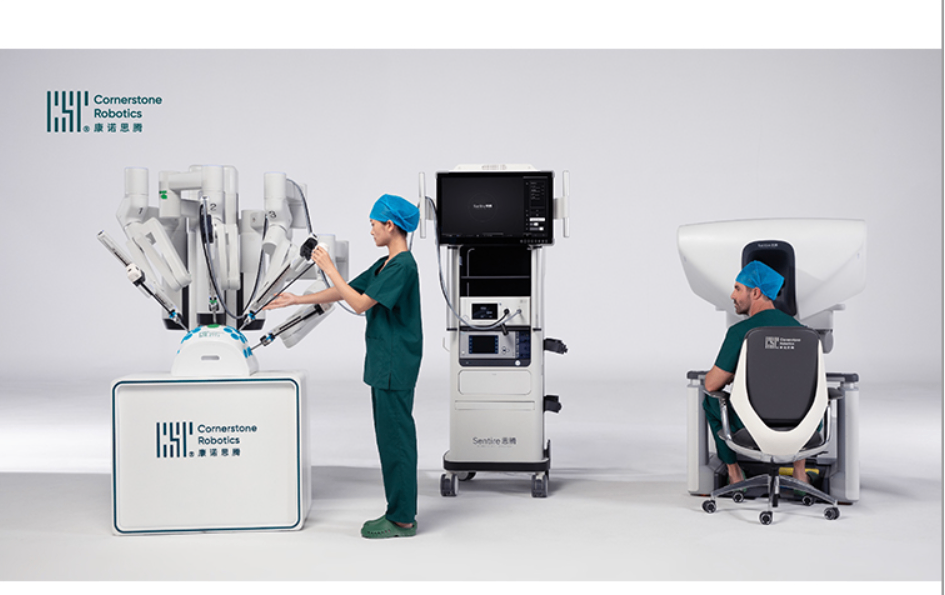
On September 1, 2026, Medtronic, a global medical‑technology giant, and Cornerstone Robotics, a Chinese laparoscopic surgical robot developer, officially announced a deep strategic partnership. The total value of this deal stands at approximately USD 700 million, equivalent to around RMB 4.7 billion. Distinct from typical equity investment or full‑scale acquisition deals in the market, Medtronic will not take an equity stake in Cornerstone Robotics. Instead, it has secured exclusive distribution rights for Cornerstone Robotics’ flagship Sentire® laparoscopic surgical robot in selected approved markets outside the United States.
This large‑scale, non‑equity‑tied strategic transaction has quickly drawn widespread attention across the global surgical robotics industry. From a market perspective, the core logic behind this deal essentially lies in Medtronic buying market time with substantial capital to rapidly fill gaps in its product portfolio within the laparoscopic surgical robot segment.
According to publicly released official information, Ou Guowei, Founder of Cornerstone Robotics, holds a PhD in Mechanical Engineering from the Massachusetts Institute of Technology (MIT). Earlier in his career, he worked at Intuitive Surgical, where he led the software and control‑algorithm development for the da Vinci Si system as well as its single‑port surgical platform. He later joined the Chinese University of Hong Kong as a faculty member before founding Cornerstone Robotics in 2019. The company was incorporated in Hong Kong, China, with its R&D and manufacturing footprint anchored in Shenzhen. Its investor roster includes Hong Kong Investment Corporation, Qiming Venture Partners, Meituan DragonBall, and Lilly Asia Ventures, among others. Notably, Meituan DragonBall has made three consecutive follow‑on investments in the firm.
Industry data shows that Cornerstone Robotics has completed six rounds of financing since its founding, raising a total of approximately RMB 3.226 billion. In November 2025, it closed an over‑subscribed financing round of around USD 200 million. Back in January 2025, the firm secured its Series C financing of over RMB 500 million, led by EQT. Continuous backing from industrial capital has provided solid support for the global regulatory registration and commercial roll‑out of its products.
According to Medtronic’s official statement, following the strategic partnership, the company will pursue co‑sales of the Sentire® laparoscopic surgical robot alongside its commercially available Hugo RAS system, building “a multi‑port product portfolio anchored on Hugo and expanded by Sentire”. Matt Anderson, Senior Vice President at Medtronic, publicly noted that the addition of the Sentire® laparoscopic surgical robot directly extends the capability boundaries of the Hugo RAS system, making Medtronic the world’s only surgical‑robot enterprise to possess these two complementary platforms at present.
Looking at the commercialization progress of both parties’ flagship products, Medtronic’s Hugo RAS system received EU CE certification in October 2021 and US FDA approval on December 3, 2025. However, it is currently only approved for urological indications in the US market, and it was not until June 3, 2026 that the company submitted an indication expansion application to the FDA for general surgery (including hernia repair) and gynecology. To date, the Hugo RAS system has been deployed in 35 countries across six continents, with cumulative procedure volume expected to exceed 50,000 cases.
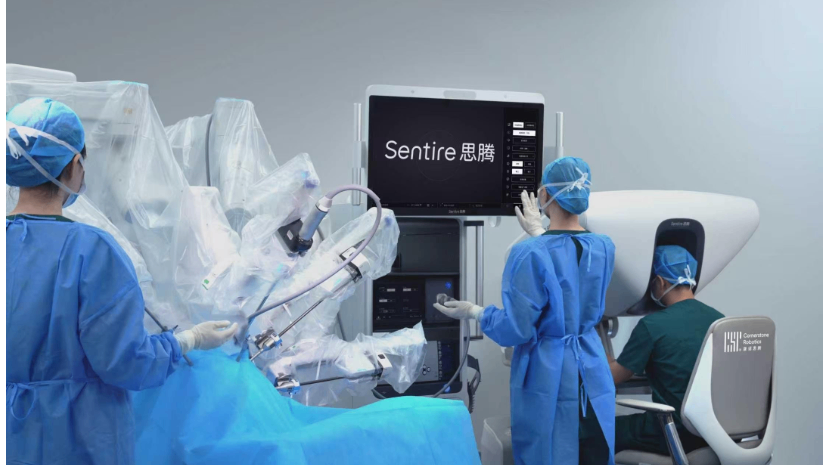
By contrast, Cornerstone Robotics’ Sentire® laparoscopic surgical robot secured NMPA marketing approval in China as early as September 2024. In May 2026, it consecutively obtained the EU CE certification and Singapore HSA approval. Currently indicated for four major specialties: urology, general surgery, gynecology and thoracic surgery, it delivers strong complementarity to Hugo’s existing indication scope.
Against the backdrop of still‑low overall penetration of surgical robots worldwide, Intuitive Surgical’s da Vinci system has evolved into its fifth‑generation iteration, while new offerings such as Johnson & Johnson’s OTTAVA are rapidly catching up. Therefore, partnering with the Sentire® laparoscopic surgical robot, which has secured market clearances across multiple jurisdictions, represents Medtronic’s optimal path to complete its product portfolio fill‑in within the shortest possible timeframe.
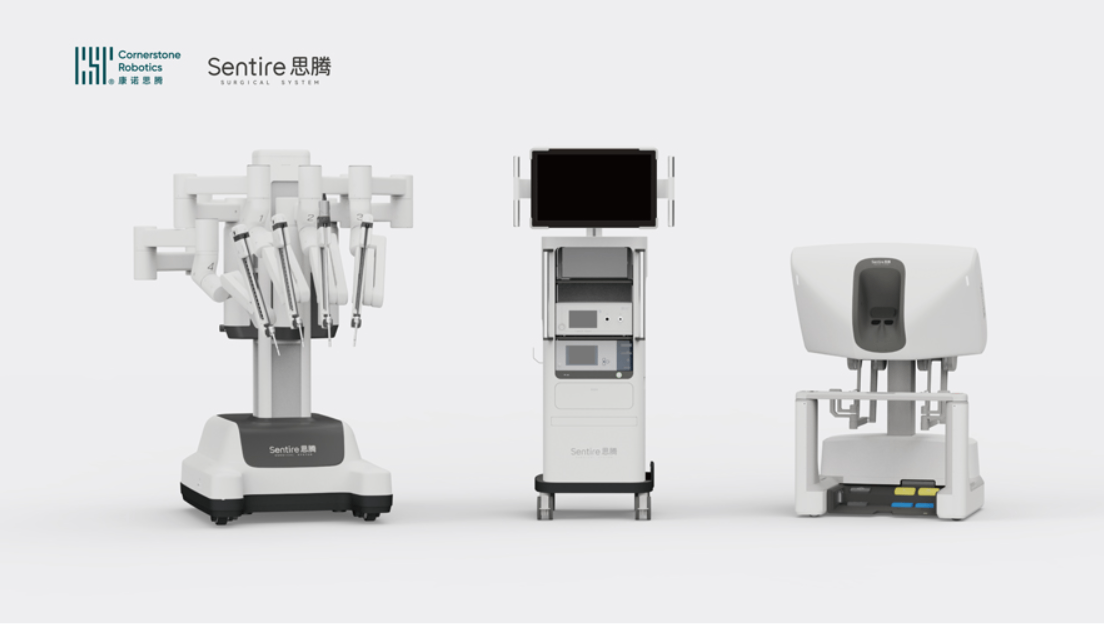
Medtronic’s ultimate selection of Cornerstone Robotics for this collaboration stems primarily from the irreplaceable strengths of its product, technology, team and industrial layout. The Sentire® laparoscopic surgical robot is equipped with 600° highly articulate wristed robotic arms, a large 27‑liter master‑controller working volume and a glasses‑free 3D vision system. Supported by highly flexible wristed multi‑functional instruments, it delivers millimeter‑level precise manipulation via ultra‑low‑latency technology, and demonstrates outstanding clinical adaptability.
More critically, the product features fully in‑house development across its mechanical architecture, electronic systems, control software and sophisticated algorithms. With 99% of its core components independently developed and manufactured, it minimizes risks of technology dependency and supply‑chain disruption for Medtronic in subsequent cooperation.
In fact, Medtronic’s dual‑binding model of “strategic investment plus commercial cooperation” adopted in this deal is emerging as a mainstream approach for global med‑tech giants to engage with innovative Chinese medical‑device enterprises. Rather than pursuing pure financial investment or outright acquisition, Chinese device firms retain independent operational rights while supplying mature products and home‑grown technologies, and multinationals open up their decades‑established global channel networks.
Such cases have proliferated across the global medical‑device market over the past year. In September 2025, Johnson & Johnson Innovation Ventures led the USD 67 million Series D financing for Ruolong Surgical, and the two parties entered into a strategic cooperation agreement to jointly drive the commercial roll‑out of Haishan‑I®, China’s first approved split‑body laparoscopic surgical robot, in selected regions of China. In February 2025, Cordis signed an agreement with Bomay Medical for exclusive distribution of its new‑generation drug‑coated peripheral balloon dilatation catheter. In January 2026, Johnson & Johnson Med‑Tech inked an upgraded strategic partnership agreement with Changyida Medical. Led by J&J Med‑Tech’s Global R&D team for Neurointerventional business unit, the collaboration aims to accelerate global R&D and commercialization of intracranial interventional solutions.
Likewise, the real industry‑wide significance of the partnership between Cornerstone Robotics and Medtronic lies in that it has for the first time validated the pathway of “distribution by a global industry giant”. Chinese surgical‑robot enterprises are no longer merely shipping devices for overseas sales. Instead, they deeply couple their mature products with the global channels of multinational giants to achieve more‑efficient global commercial roll‑out.
For decades, the prevailing logic of China’s medical‑device industry centered on introducing innovative overseas products for marketing and sales within the Chinese market. However, starting with this USD 700‑million deal, a fundamental reversal is taking place across the sector. A growing number of domestic innovative medical‑device enterprises, armed with mature products and pre‑obtained global regulatory clearances, are seeing multinational giants proactively approach them with capital and channel resources for partnerships.