


Recently, the U.S. Food and Drug Administration (FDA) has granted marketing authorization for Aletta, a fully‑autonomous blood‑collection robot developed by Dutch medical robotics firm Vitestro, via the De Novo classification pathway for innovative medical devices. As the world’s‑first standalone blood‑drawing robot to receive regulatory clearance with no manual human intervention throughout the entire blood collection workflow, its approval marks a landmark breakthrough in the front‑end specimen‑testing segment of the global healthcare automation industry.
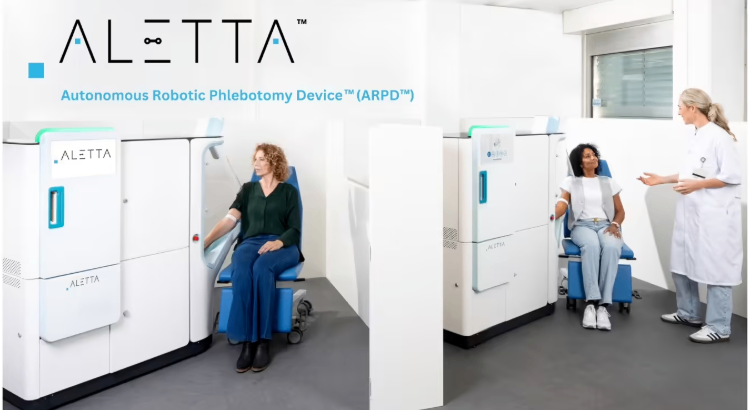
Unlike conventional blood‑collection devices that require healthcare workers to perform manual operations throughout the whole process, Aletta delivers a fully‑automated closed‑loop workflow for venipuncture. Every core step is completed autonomously by the robot with no direct human‑operated contact: patient arm stabilization, tourniquet inflation, multimodal vessel localization combining infrared and ultrasound imaging, sub‑millimeter‑precision automatic needle insertion, automatic tube switching in accordance with medical orders, as well as needle retraction and adhesive bandage application.
To ensure clinical safety, the system is also equipped with a dual‑fail‑safe mechanism. If the algorithm fails to identify a suitable vein, the robot will actively decline needle insertion and immediately alert clinical staff to take over the procedure. Should the patient move violently during blood collection, built‑in sensors will trigger instant automatic needle retraction, fundamentally lowering the risk of accidental vascular injury.
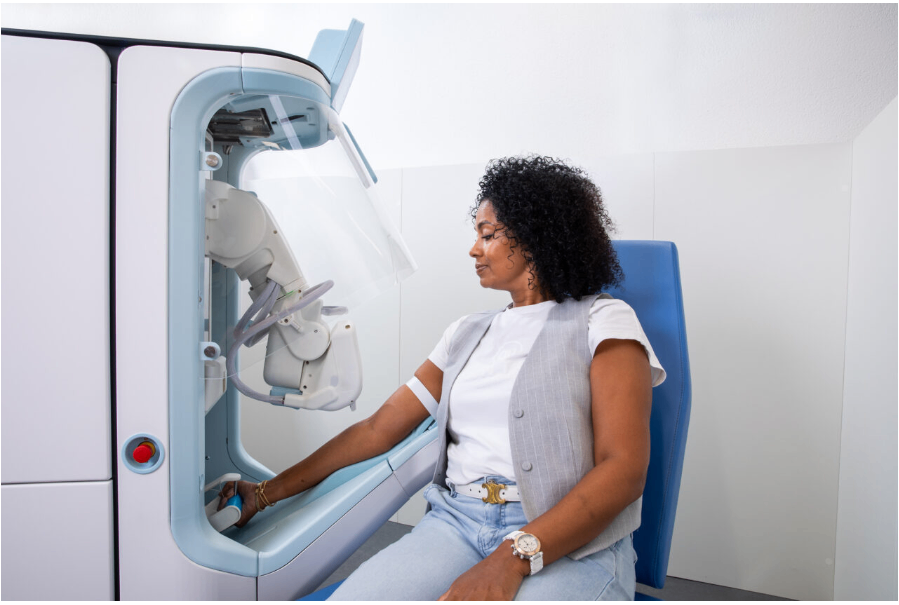
Aletta’s successful FDA clearance was backed by multicenter clinical‑trial data covering 1,633 subjects. Results demonstrated that the robot achieved an overall first‑stick success rate of 94.5 % when a suitable vein was identified. Aletta also delivered impressive outcomes for hard‑to‑stick patient populations, a long‑standing challenge in conventional venipuncture: the first‑stick success rate reached 97.4 % among obese participants with a BMI above 30, 92.7 % for self‑reported “hard‑to‑access‑vein” patients, and 93.4 % for the elderly aged 65 years and older.
In terms of specimen quality for laboratory testing, the hemolysis rate of samples collected by the robot was only 0.3%, far below the average level of conventional manual venipuncture reported in published literature. Patient‑experience survey outcomes were also favorable: nearly 90% of participants reported pain that was milder than or comparable to manual blood collection, and over 82% of respondents explicitly stated that they would prefer robot‑assisted blood‑collection services in the future.
The commercial launch of this product has also secured endorsement from key players across the global medical‑robotics industry. Vitestro had previously raised an oversubscribed Series B financing round of USD 70 million, co‑led by Fred Moll, the co‑founder of global surgical‑robotics giant da Vinci. This investment move directly underscores the strong confidence of world‑leading industrial capital in the commercial prospects of the automated blood‑collection sector.
Judging from the FDA’s clearance positioning, Aletta is primarily deployed for routine outpatient blood collection in adults under a human‑machine collaboration operation model. A single supervisor with basic training can oversee three Aletta units simultaneously. While greatly boosting venipuncture efficiency, this configuration directly addresses long‑standing pain points of healthcare systems worldwide, namely shortages of phlebotomy staff and lengthy patient waiting times. At present, the product’s scope of use does not cover complex blood‑collection scenarios such as neonates, critically‑ill patients and emergency care, so as to avoid safety risks caused by over‑expansion of application boundaries at the early stage of technological maturity.
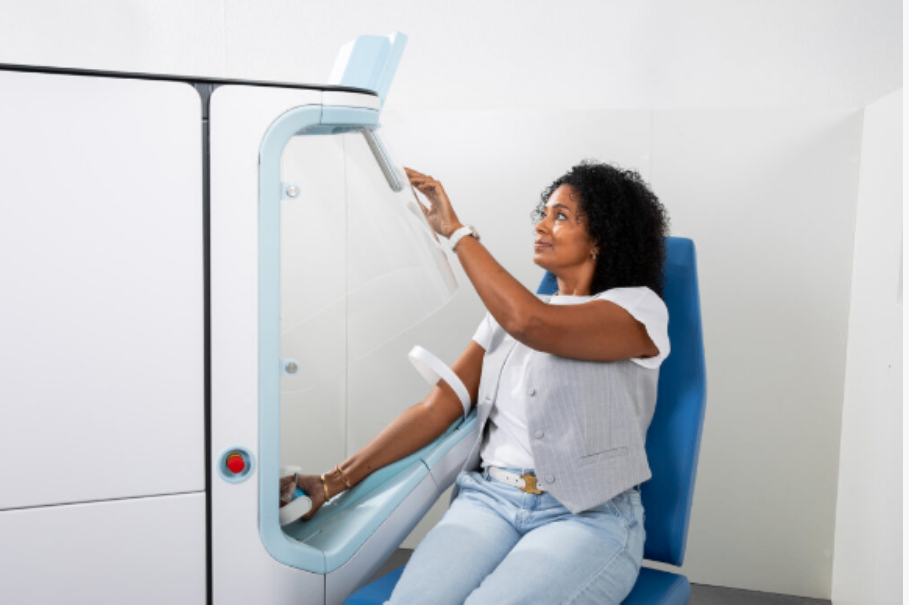
The approval of the world’s first fully‑autonomous blood‑collection robot has sparked widespread discussion across global social‑media platforms and the healthcare industry. A large number of needle‑phobic patients have publicly welcomed the device, stating that it can completely eliminate the pain caused by repeated needle sticks in conventional venipuncture.
Meanwhile, concerns from the public have also emerged. Many online users worry that malfunctions such as short circuits, system freezes and needle jams during device operation could cause accidental harm to patients. In addition, some clinical healthcare workers have voiced psychological resistance to the replacement of human‑led blood collection by “cold machines”, fearing the loss of interpersonal trust built during traditional venipuncture procedures.
Looking back at the industry’s development history, Silicon‑Valley‑based Veebot attempted to launch a comparable product as early as 2013. However, its commercialization ultimately failed because its vein‑detection accuracy reached only 83%, which fell short of clinical requirements. This demonstrates that the technical barrier for fully‑autonomous blood‑collection robots far exceeded the industry’s early‑stage expectations.
From the perspective of the global healthcare‑automation industry, Aletta’s approval fills a long‑standing gap in worldwide medical systems. In the United States alone, billions of blood‑collection procedures are performed every year. While downstream laboratory testing has long achieved a high level of automation, the front‑end venipuncture process has remained heavily reliant on manual labor for decades, resulting in a persistent supply‑demand gap. Similar to the adoption curve of technologies such as automatic elevators and autonomous vehicles, fully‑autonomous blood‑collection robots will inevitably go through a public‑trust‑building phase. With continuous improvements in clinical experience and growing safety‑data accumulation, public apprehension toward this new technology will gradually fade. The official commercial launch of Aletta marks the dawn of an era of pain‑free automation in healthcare.