


On August 25, Lepu Medical (300003.SZ) released its investor‑relations activity record, disclosing that the company’s interventional multi‑channel brain‑computer‑interface (BCI) product has successfully completed animal experiments and officially entered the human‑subject Investigator‑Initiated Trial (IIT) phase. Meanwhile, its commercially‑approved Deep‑Brain Stimulation (DBS) system generated sales revenue of approximately RMB 10 million in the first half of the year. This milestone signals that the company’s neuromodulation and BCI business has transitioned from pure‑play R&D into a new stage featuring parallel clinical implementation and commercialization.
Within its commercially‑launched neuromodulation segment, Lepu Medical’s rechargeable implantable deep‑brain stimulation (DBS) system obtained the Class‑III medical device registration certificate from the NMPA in November 2025. Indications include neurological disorders such as Parkinson’s disease and essential tremor. It ranks among the few domestically‑developed DBS products in China with fully self‑controlled core technologies. The company is currently advancing provincial‑level price listing, distributor recruitment and hospital access procedures across China. The product generated sales revenue of approximately RMB 10 million in the first half of the year, marking the official start of the import‑substitution journey for home‑grown DBS systems.
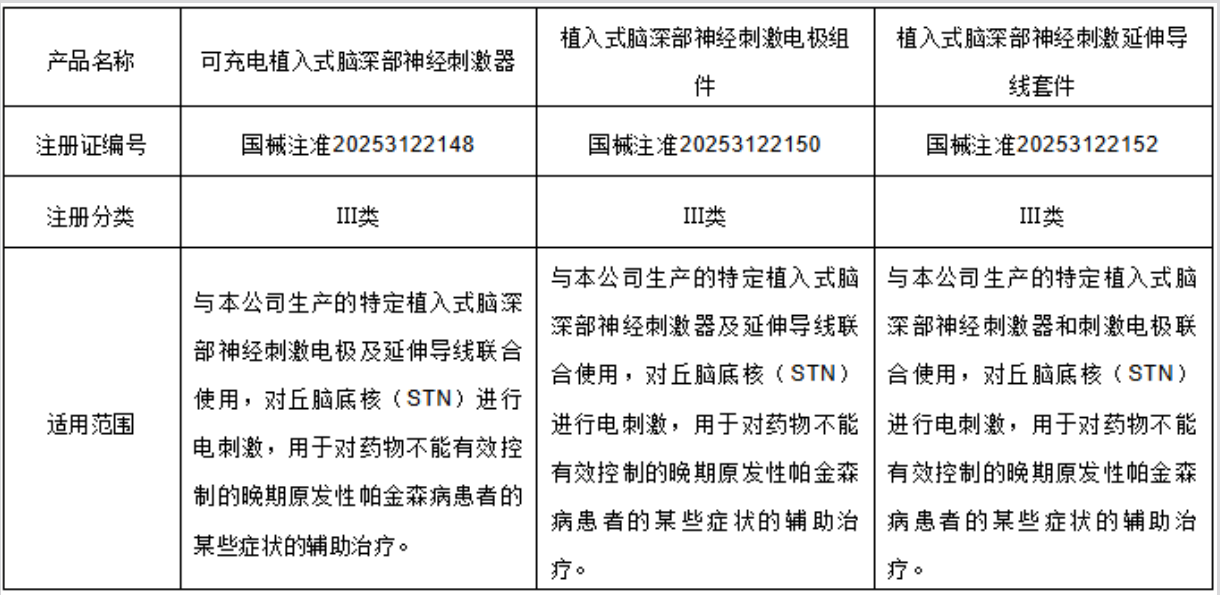
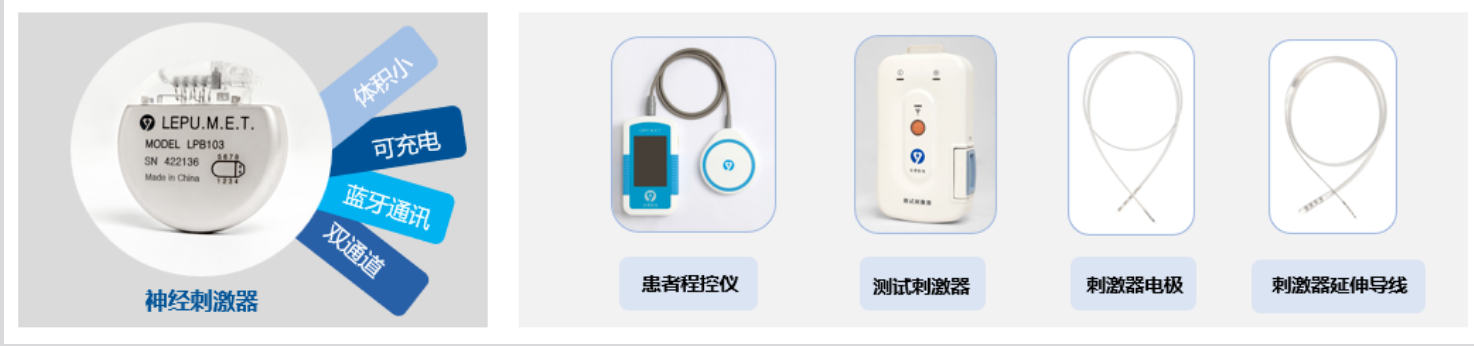
Figure. The Company’s Rechargeable Implantable Deep‑Brain Stimulation (DBS) System
Beyond its DBS and interventional‑type brain‑computer‑interface programs, Lepu Medical continues to expand its neuromodulation pipeline portfolio. Multiple products, including the implantable vagus‑nerve stimulator (VNS) indicated for epilepsy and stroke, the spinal‑cord stimulation system (SCS) for chronic pain, and the sacral‑nerve modulation system (SNM) for urinary incontinence, are all in clinical‑trial stages. The company has built a complete neuromodulation product tier covering deep‑brain stimulation, vagus nerve, spinal cord and sacral‑nerve targets, which provides the intervention‑side hardware foundation for closed‑loop brain‑computer‑interface systems.
In terms of overall layout, Lepu Medical adopts a dual‑track development strategy that combines non‑invasive rehabilitation and interventional/implantable invasive brain‑computer‑interface technologies. Its non‑invasive BCI business is advanced by its holding subsidiary, Ruihan Medical. Multiple electroencephalogram (EEG) acquisition and rehabilitation‑robot products have obtained marketing approvals and been deployed in medical institutions for motor‑function rehabilitation training after stroke, generating modest operating revenue. Leveraging its accumulated expertise in active implantable devices from Lepu Active Medical Electronics, the company’s interventional and implant‑grade pipelines focus on high‑barrier therapeutic‑grade BCI and neuromodulation equipment. It has built a complete technological chain covering “signal acquisition‑decoding‑neural‑stimulation intervention”. Unlike consumer‑oriented BCI products, all its offerings are targeted exclusively at serious‑care clinical medical scenarios.
It is worth noting that the interventional‑type brain‑computer‑interface product is still in the human Investigator‑Initiated Trial (IIT) stage, representing only an early‑phase clinical exploration. A long period lies ahead before registration submission and marketing approval. Extensive clinical‑trial data will still be required to verify the product’s safety, signal stability and clinical benefits in the future. The DBS business is also at the initial market‑introduction phase with modest overall revenue. Subsequent sales scaling‑up hinges on multiple factors including provincial price listing progress, surgeon training and clinical promotion.
For the full‑year 2025, Lepu Medical recorded operating revenue of approximately RMB 6.483 billion, representing a year‑on‑year increase of 6.22%. Its net profit attributable to shareholders of the listed company reached roughly RMB 962 million, surging 289.57% year‑on‑year, with a marked improvement in earnings quality.
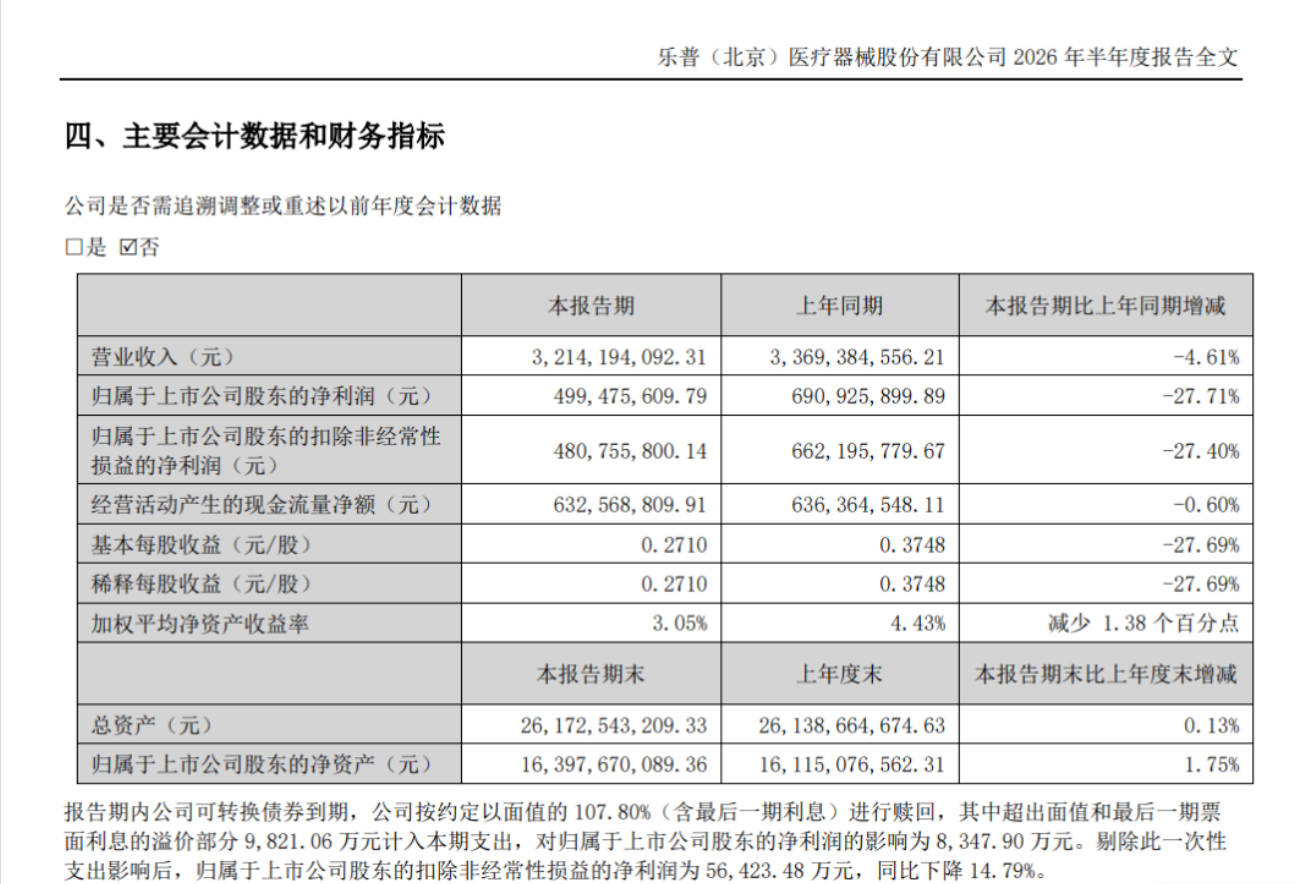
On August 22, 2026, Lepu Medical released its 2026 semi‑annual report. During the reporting period, the company achieved operating revenue of RMB 3.214 billion, a slight year‑on‑year decline of 4.61%. Despite headwinds on the revenue side, its innovative device product lines delivered strong performance. In the first half of 2026, implantations of TAVR devices rose by 50% year‑on‑year, while implant volumes of biodegradable occluders increased by approximately 35% year‑on‑year. The product mix continued to be optimized, with the proportion of high‑value innovative products rising steadily.
In the field of neuromodulation, DBS serves as the flagship product under one of the company’s three core transformation strategic directions. Having obtained its registration certificate, it is now being rolled‑out at an accelerated pace. In the first half of 2026, the DBS product generated sales revenue of approximately RMB 10 million and is expected to become a new performance‑growth driver for the company.
For Lepu Medical, brain‑computer interface and neuromodulation constitute the second growth curve that the company is prioritizing for development, following its core cardiovascular business. Drawing on its accumulated strengths in the supply‑chain resources, clinical channels and active‑implant hardware technology for implantable and interventional devices, the company will continue to advance clinical research on its interventional‑type BCI product. Meanwhile, it will speed up market penetration of neuromodulation products such as DBS. Lepu aims to seize a leading position in domestic neuro‑medical‑device innovation, and facilitate the clinical translation and import‑substitution process of China’s brain‑computer‑interface industry.
iCCD 2026, the 2nd Brain‑Computer‑Interface Ecosystem Conference, is scheduled to be held in Shenzhen on October 28‑29, 2026. In‑depth discussions will center on core topics including invasive / non‑invasive brain‑computer interfaces, neuromodulation and visual reconstruction. Lepu Medical’s progress in interventional‑type BCI and DBS‑based neuromodulation represents one of the key industrial‑development directions highlighted at the conference.