


Following the successful commercialization of Ion, its lung‑interventional surgical robot, Intuitive Surgical obtained FDA 510(k) clearance for IG1000, its gastrointestinal‑endoscopy robot, on August 7, 2026, under clearance number K253702. Classified as a Class II medical device, the product bears a primary code of FDS (Flexible/Rigid Gastroscopes and Accessories) and a secondary code of FET (Endoscopic Video‑Imaging Systems). This milestone marks a crucial step for the long‑established leader in laparoscopic surgical robots as it formally enters the gastrointestinal endoluminal surgery track.
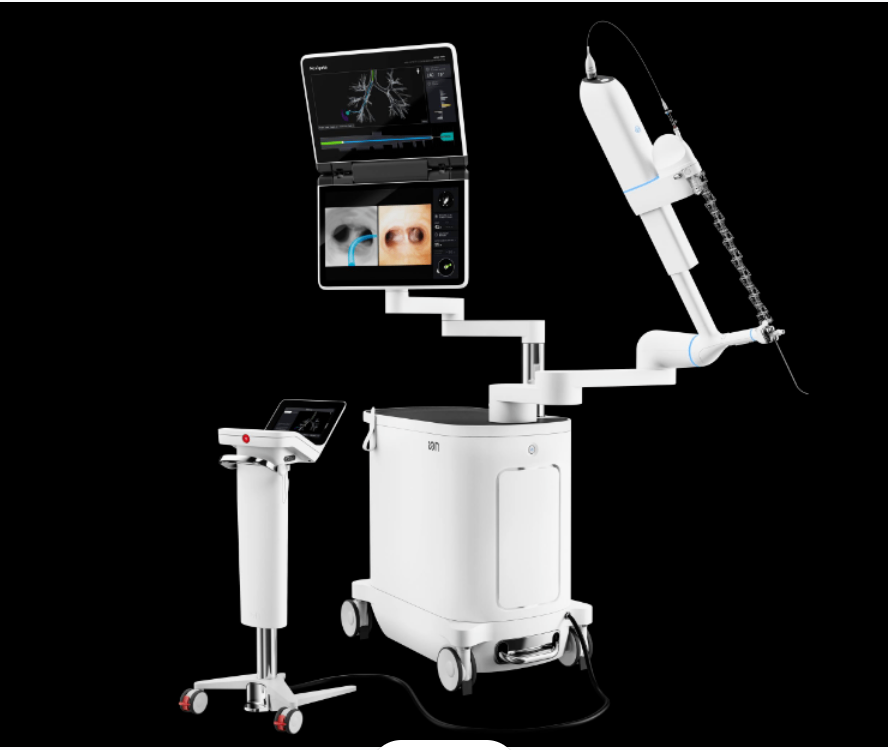
Notably, the newly‑cleared IG1000 follows a special “non‑commercial‑release” strategy: it has completed the regulatory clearance process, yet sales will not be launched for the time being. The official commercial‑ready version will be rolled out to the market only after sufficient clinical data are accumulated, standardized physician‑training programs are finalized, and the supporting instrument ecosystem is fully established.
Analysts at Bernstein, an overseas‑based research firm, estimate that the platform remains a 12‑to‑18‑month preparation period away from full‑scale commercial launch. During Intuitive Surgical’s Q2‑2026 earnings call, CEO David Rosa explicitly stated that venturing into gastrointestinal surgical robots represents a natural extension of the company’s mission. The prior success of the Ion platform has proven that Intuitive is fully capable of developing brand‑new technology platforms beyond its soft‑tissue surgical robot portfolio. Going forward, the company will leverage proven experience accumulated from the da Vinci series and the Ion platform to systematically guide technology R&D and clinical implementation within the gastrointestinal space.
From a technical‑path perspective, the R&D logic behind IG1000 follows Intuitive Surgical’s long‑standing philosophy of “stabilize the platform first, then add functionalities”. By dissecting publicly available FDA information and the company’s patent portfolio, overseas analyst Steve Bell discovered that IG1000 incorporates the shape‑sensing and shape‑locking technologies from NeoGuide, which Intuitive acquired years ago. Once the flexible endoscope reaches the target operative site, it can autonomously “anchor” its configuration to create a stable working platform. This fundamentally addresses the long‑standing industry pain point in conventional endoscopic procedures, where physicians must maintain continuous manual control and instruments are prone to unwanted motion. This development roadmap is highly aligned with the implementation logic adopted by the Ion platform in the field of pulmonary intervention.
At the core‑function level, Intuitive Surgical’s R&D investments in force‑feedback and suturing technologies over the past two years have gradually yielded tangible outcomes. International patents published between 2025 and 2026 reveal that Patent US20260053494A1 covers a helical tissue‑grasping device. Its spiral flexible needle tip screws into target tissue like a wine corkscrew to deliver robust tissue anchoring force, while an integrated sensor system captures real‑time force‑feedback signals including resistance and torque. The patent US20260224321A1, published on August 6, 2026, puts forward a technical solution for “phased state‑transition control of force feedback”.
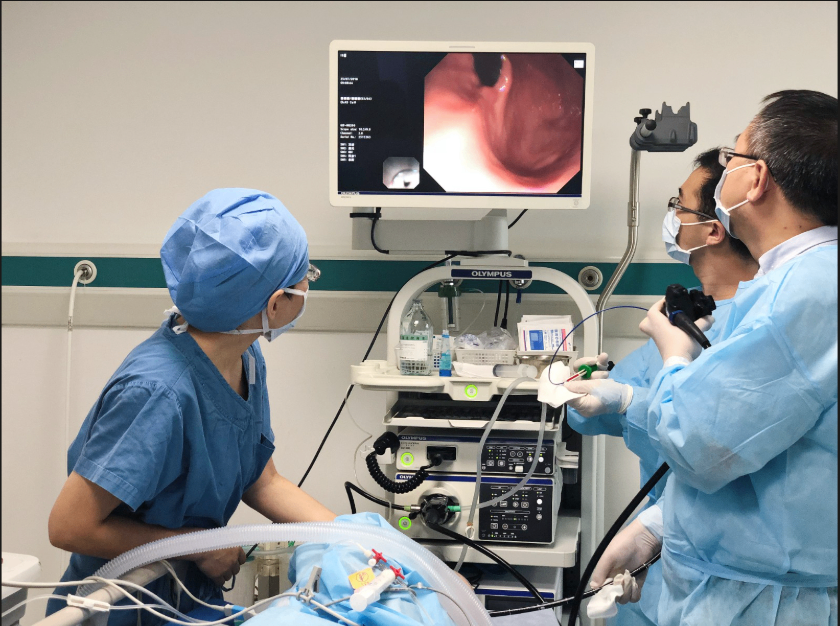
Overall, the IG1000 leverages both the proven force‑feedback technology from the da Vinci 5 system and the tissue‑manipulation expertise built up on the Ion platform. The end‑result is a flexible gastrointestinal surgical robot capable of covering full‑workflow endoscopic procedures, enabling endoscopic suturing and delivering high‑precision force‑feedback performance.
With Intuitive Surgical’s entry into the market, the competitive landscape of the global gastrointestinal‑endoscopy robot track is undergoing accelerated restructuring. As a leading incumbent in the conventional endoscopy sector, Olympus has adopted a dual‑track strategy of “external collaboration plus in‑house R&D”. On May 4, 2026, Olympus signed an exclusive global distribution agreement with South‑Korea‑based EndoRobotics to integrate the latter’s robot‑assisted technology into its EndoTherapy product portfolio. RoboPera, developed by EndoRobotics, secured FDA 510(k) clearance back in September 2025. Meanwhile, Olympus has formed a joint venture named Swan EndoSurgical with private‑equity firm Revival Healthcare Capital, dedicated to developing a new‑generation endoluminal surgical‑robot system. In August 2026, Erik Todd, who boasts over 25 years of working experience at Stryker, officially took office as the company’s CEO, further speeding up its R&D and commercial roll‑out timeline.
Another emerging industry player, EndoQuest Robotics, has completed patient enrollment for the pivotal IDE trial of its endoluminal‑surgery robot PARADIGM. The trial recruited a total of 49 subjects and performed 50 robot‑assisted ESD procedures. Promising preliminary clinical outcomes were achieved, including a 100% en‑bloc resection rate, 100% rate of no conversion to open surgery, and a 95.8% R0 resection rate. To date, no device‑related bleeding or perforation events have been reported. The company’s Vice‑President of Quality and Regulatory Affairs publicly commented that, with more than 25 years of experience in the surgical‑robot sector, he had never witnessed such impressive clinical‑trial results.
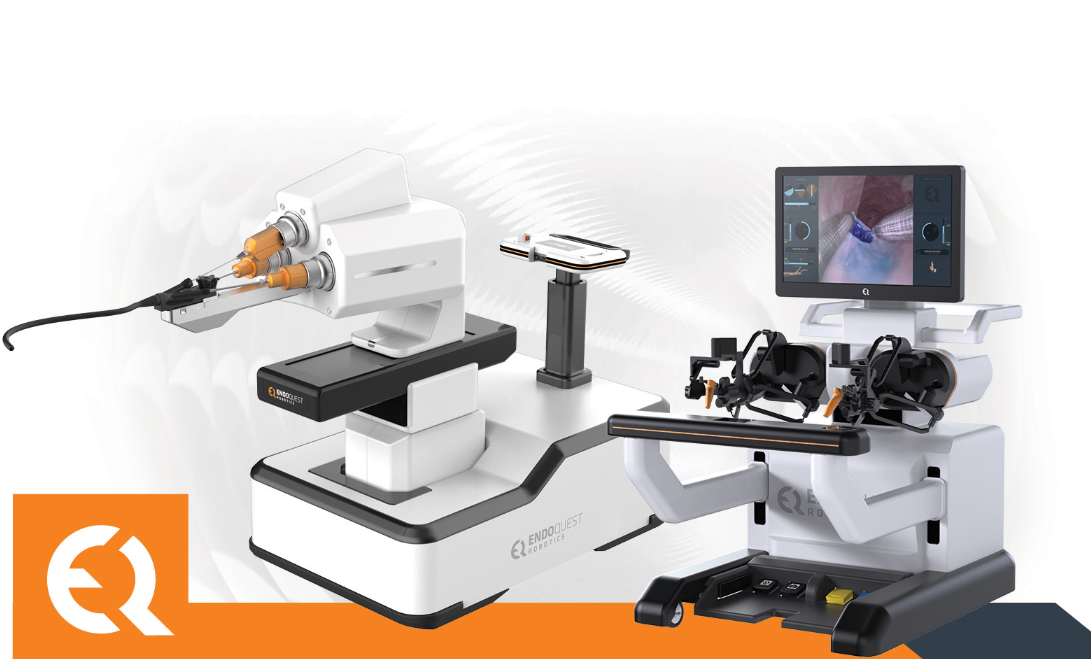
EndoQuest is currently preparing to submit the complete trial results to the FDA to initiate a De Novo application. Meanwhile, it has entered into a collaboration with NVIDIA to integrate the NVIDIA IGX Thor platform into its next‑generation endoluminal robotic surgical system, further strengthening the product’s intelligent capabilities.
Progress among domestic Chinese manufacturers also merits close attention. Aohua Endoscopy’s ERCP surgical‑robot was granted entry into the National Medical Products Administration (NMPA) Special Review Procedure for Innovative Medical Devices in May 2026. Relevant clinical‑study findings have been published in Endoscopy, a leading international peer‑reviewed journal. Data demonstrate that robot‑assisted ERCP achieved a 100 % success rate for biliary cannulation and stone removal, with safety outcomes comparable to conventional ERCP. In addition, the system reduced operator radiation exposure by approximately 92 %.
Aohua Endoscopy expects to complete its registrational clinical trials and kick‑off the registration submission process in the fourth quarter of 2026. It targets obtaining domestic registration approval around the third quarter of 2027, while simultaneously advancing CE and FDA certification procedures. Barring unforeseen setbacks, the robot is on track for an official market launch between 2027 and 2028.
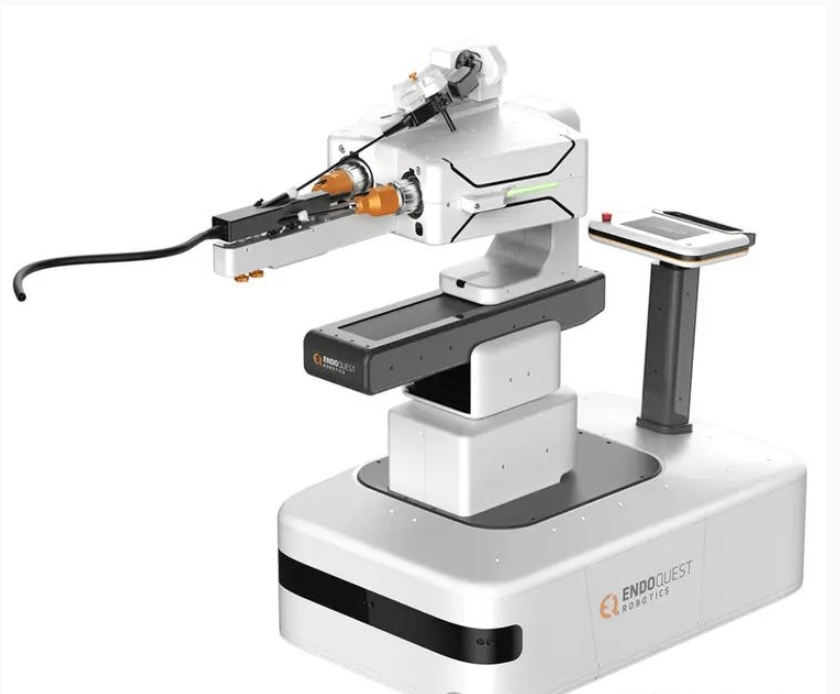
Robo Medical, which achieved breakthroughs at an earlier stage, saw its gastrointestinal‑endoscopy surgical robot EndoFaster® obtain NMPA approval on March 12, 2025. It became the world’s first‑ever gastrointestinal‑endoscopy surgical robot granted marketing authorization. Designed as an add‑on flexible robotic arm for conventional endoscopes, the product delivers 4‑degree‑of‑freedom motion at its end‑effector under master‑slave control. In May 2026, the company closed a multi‑ten‑million‑yuan Series B+ round of financing. The proceeds will be primarily allocated to nationwide clinical roll‑out and the advancement of international regulatory certifications.
Gastrointestinal endoluminal surgical robots are currently at a critical inflection point, shifting from “technology validation” toward becoming a clinical standard‑of‑care. The global robotic endoluminal‑surgery market reached approximately USD 1.45 billion in 2025 and is projected to grow to USD 1.71 billion in 2026, representing an annual growth rate of 18.4 %.
Intuitive Surgical’s entry into this market is less like adding another competitor to the track, and more like welcoming the most powerful market pioneer to the entire industry. The company previously popularized laparoscopic surgical robots from scratch to a cumulative global volume of 16 million procedures. It has built profound, systematic capabilities in commercial roll‑out, global market expansion, physician‑training infrastructure development and public‑market education.
From a market‑reaction perspective, the industry believes that the IG1000 gastrointestinal‑endoscopy robotic platform is expected to become Intuitive Surgical’s fourth core system platform driving long‑term growth, following the da Vinci series and Ion. Intuitive Surgical’s product‑development philosophy and progress also indicate that soft‑tissue surgical robots and flexible‑lumen surgical robots are now undergoing steady iteration and upgrading.