


On July 7, 2026, Japanese surgical robotics company Medicaroid officially announced that its self-developed Hinotori laparoscopic surgical robot has successfully obtained the EU CE-MDR certification.
Medicaroid submitted the complete application dossier for Hinotori in March 2025 and received the final approval notice in July 2026, with the entire review procedure taking approximately 16 months. The issuance of this certification means the system, which has accumulated nearly five years of clinical experience in Japan, has finally secured market access to mainstream European medical markets.
Nevertheless, for Hinotori and Medicaroid’s overall European expansion strategy, the CE marking is by no means a triumphant milestone; rather, it serves merely as an entry ceremony marking the start of a long expedition. It only grants the Japanese manufacturer eligibility to compete in the European market, while the real challenges are just unfolding on this fiercely competitive landscape.
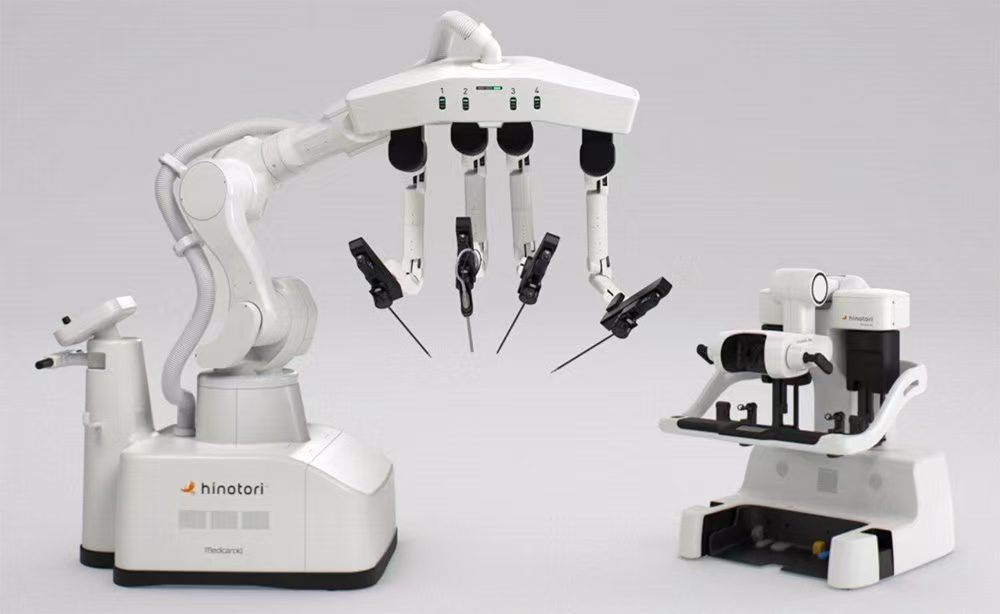
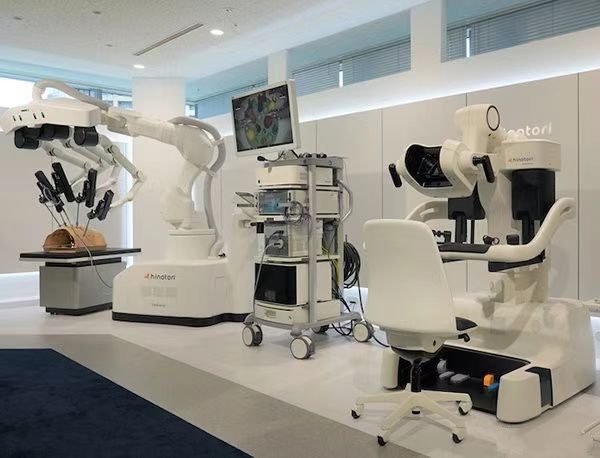
From a clinical perspective, Hinotori is a mature multi-port laparoscopic surgical robot composed of three core modules: a patient-side cart, a surgeon master console, and a supporting 3D high-definition imaging system. This product was jointly developed by two leading Japanese corporations from the medical and industrial sectors. Kawasaki Heavy Industries, a pioneer in industrial robotics, supplies core manipulator arm technology and motion control solutions, while Sysmex, a world-renowned in vitro diagnostics enterprise, delivers full-chain support covering end-to-end medical device development, hospital channel collaboration, and clinical implementation.
However, unlike mainstream surgical robots featuring an integrated patient cart centered on a central column, Hinotori’s four robotic arms are independently mounted on the patient-side unit. Its standout feature is that each arm comes with eight motion axes, one more than the seven-axis design commonly adopted by the da Vinci system.
The additional degree of freedom is not designed to expand the range of motion at the instrument tip; instead, it is dedicated to adjusting the posture of the robotic arms. This enables superior avoidance of adjacent robotic arms and medical staff assisting beside the operating table, greatly reducing the likelihood of instrument collision during surgery.
Furthermore, the hinotori™ features an innovative dock-free design. Instead of establishing traditional rigid mechanical connections between robotic arms and trocars, the system leverages a software-defined remote center of motion (RCM) to enable precise pivoting around the patient’s surgical incision.
Medicaroid highlights in its official promotional materials that the eight-axis manipulator arms deliver "human-arm-smooth motion", fundamentally mitigating collision interference between individual robotic arms, as well as between robotic arms and bedside surgical assistants.
The uniquely engineered robotic arm solution of the hinotori™ imposes far stricter requirements on the system’s positioning calibration accuracy, motion control stability, and reliability during prolonged surgical procedures compared with conventional designs. This means that even after securing regulatory approval, extensive clinical data will still be required to verify its consistent performance amid complex surgical environments across various hospitals in Europe.
In terms of commercial rollout, the hinotori™ obtained marketing approval in Japan as early as 2020. Its initial clinical adoption was predominantly within urology, before the system’s applicable departments were gradually expanded over the subsequent years, alongside market expansion into neighboring Asian economies including Singapore and Malaysia. By the time this CE certification was granted, the cumulative global installed base of hinotori™ had surpassed 110 units, with nearly 20,000 completed surgeries. Notably, the sharp growth in installed systems and surgical volumes was largely achieved over the past two fiscal years.
UK surgical robotics firm CMR Surgical disclosed publicly that its Versius system had completed more than 26,000 surgeries as early as October 2024, and the updated cumulative global surgical volume listed on its official website now stands at 45,000 cases. The figures from industry leader Intuitive Surgical are even more staggering: in Europe alone, over 410,000 procedures were performed using the da Vinci system in 2024.
In recent years, the European market has become a key target for surgical robotics manufacturers to make breakthroughs. Products from multiple leading enterprises have long obtained CE marking, establishing their respective competitive moats. For instance, CMR Surgical’s Versius secured CE certification back in 2019, featuring standalone modular robotic arms and flexible, lightweight mobile deployment as its core advantages. In January 2026, it additionally obtained both CE and UKCA certifications for pediatric abdominal surgeries, further broadening its applicable clinical scenarios.
Separately, Medtronic’s Hugo System secured CE marking in Europe back in 2021. The platform has undergone continuous iterations with additional supporting functions over the years. In July 2025, its LigaSure vessel sealing technology also obtained CE certification, enabling broad application across a full spectrum of gynecological, general and urological surgical procedures.
The domestic robotic system Toumai developed by MicroPort MedBot obtained CE-MDR certification in 2024, with its scope of indication covering four core clinical departments: urology, general surgery, thoracic surgery and gynecology. In June 2026, the Toumai Telesurgery System further secured EU CE marking, making it the world’s first telesurgical robot officially certified by the European Union, and expanding its market reach to over 30 major European countries.
As the industry leader, Intuitive Surgical was the earliest player to enter the European market. Its first-generation dual-arm system was officially launched in Europe back in 1999. The latest fifth-generation platform, da Vinci 5, successfully obtained CE marking in July 2025, with indications covering both adult and pediatric patients.
Europe-based Versius boasts well-established clinical adoption and physician training networks across the region. Medtronic possesses deep distribution channels spanning hospitals throughout Europe for its equipment, consumables and surgical instruments. Meanwhile, Intuitive Surgical commands the largest community of surgeons and an extensive repository of surgical data across the continent.
Sysmex has long positioned the hinotori™ as its core growth driver for the coming years. According to reports from Nikkei, each hinotori system is priced at approximately 100 million to 200 million Japanese yen, delivering a distinct price advantage over major overseas competitors, whose systems are priced between 200 million and 300 million yen.
While such price competitiveness can effectively lower procurement barriers for European hospitals and hold strong appeal especially for small and mid-sized facilities with constrained budgets, the lower pricing will meanwhile directly squeeze product profit margins, which may well constrain capital reserves earmarked for subsequent R&D investment and channel development in the European market.
Sysmex holds a leading global market position in the field of in vitro diagnostics (IVD), with its product distribution channels covering more than 190 countries and regions worldwide. A key question remains whether Sysmex can successfully transfer its well-established channel advantages accumulated in IVD to this entirely new category of surgical robots.
However, surgical robots represent highly complex large-scale medical devices, whose sales models, installation workflows, physician training systems and full-lifecycle after-sales services differ fundamentally from IVD products. Long-term market validation is still required to determine whether the business can meet Sysmex’s internal growth expectations.
Medicaroid has established its wholly-owned subsidiary Medicaroid Europe GmbH in Europe and launched recruitment for core positions including robotics implementation specialists. All in all, this CE marking grants the hinotori™ official access to the European market, yet this long-distance overseas expansion journey has only just begun.