Major Leap Forward for Brain-Computer Interfaces: Neuralink Eliminates Dura Mater ResectionJuly
Neuralink, Elon Musk’s brain-computer interface (BCI) startup, has unveiled a groundbreaking advancement: the world’s first BCI implantation performed through intact dura mater. The leading global BCI firm released a 5+ minute video on social media detailing this transdural implantation technique, which racked up over 250,000 views and nearly 1,000 comments within two days.
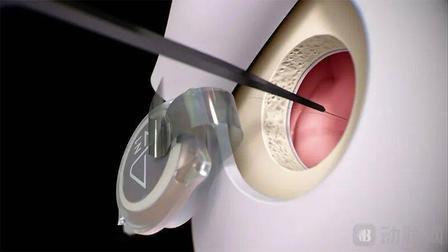
The dura mater acts as the brain’s natural protective armor — a tough membrane that neurosurgeons typically need scalpels to cut through. As the outermost of the three cranial meninges, it is thick and dense, consisting of an inner meningeal layer and an outer endosteal layer. The two layers fuse tightly into a single sheet everywhere except at venous sinuses, where they separate to wrap the brain’s draining veins. The dura adheres closely to the inner surface of the skull, with blood vessels and fibrous trabeculae penetrating deep into bone. Its attachment to the cranial sutures, skull base and foramen magnum is especially firm.
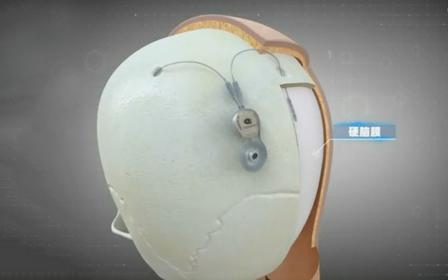
This adhesive strength varies with age. In children, the dura is tightly bound to cranial sutures and hard to peel away. In adulthood, it detaches gradually from fused sutures; as the dura thickens and loses flexibility, it anchors more firmly to the inner surface of the calvaria. When stripped from the skull, the connecting fibers and blood vessels tear, leaving its outer surface rough and fibrous while its inner side remains smooth.
Additionally, the dura forms tubular nerve sheaths as cranial nerves pass through skull foramina, merging with the nerve epineurium once nerves exit the cranium. Modern BCIs mimic this biological mechanism: by replicating how cranial nerves traverse skull openings, signal probes are precisely implanted to interface with nerve epineurium, creating a high-efficiency fusion interface similar to natural neural signal transmission.
Conventionally, all invasive BCI surgeries require removing a portion of the dura to expose the cerebral cortex. This allows electrodes to be implanted easily for reliable neural signal capture and brain-computer communication. However, resecting the dura causes significant tissue trauma and carries high risks, including brain infection and cerebrospinal fluid leakage. Neuralink’s earlier procedures also required a coin-sized opening cut into the dura.
The firm’s new technique completely bypasses this step. Instead of excising the dura, the robotic implantation system pierces the intact membrane with electrode threads, which travel through to reach the nerve epineurium for signal exchange — mimicking the natural nerve sheath structure.
Adult dura possesses high tensile strength, and early ultra-fine probes failed to penetrate it reliably. Neuralink engineers redesigned the probe tip with a slightly enlarged diameter to enable consistent dural puncture. The revised design has passed a brand-new testing pipeline, where synthetic dura mimicking human thickness and puncture resistance withstood hundreds of successful penetration trials.
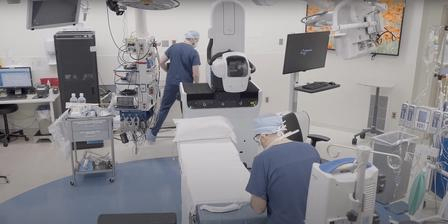
To precisely locate electrode probes mid-surgery, Neuralink’s robotics team overhauled the entire optical system. They integrated ICG (indocyanine green) fluorescence angiography: intravenous fluorescent dye is illuminated by infrared light to visualize blood vessels beneath the dura, enabling the robot to plot collision-free insertion paths. The system also incorporates Optical Coherence Tomography (OCT). Laser light delivered via fiber optics bounces off brain tissue to generate 3D cortical reconstructions, measuring the exact distance from the dural surface to the cortex. This enables ultra-precise threading of electrode filaments into the epineurial cortex.
Neuralink completed the world’s first transdural implantation in May 2026 at Toronto General Hospital (UHG), with assistance from Dr. Lozano. The fully automated R1 robot performed the entire implantation, inserting each electrode thread in roughly 1.5 seconds. The surgical wound is no larger than a quarter. Just one hour post-operation, the patient could control a cursor using only thought. A standard full implantation procedure takes around 20 minutes, and device implantation costs have fallen from the million-dollar range to under $100,000.
Neuralink states the streamlined surgical workflow is far easier to standardize and replicate, with drastically improved safety — marking a critical milestone toward automated, mass-producible BCI implant procedures.
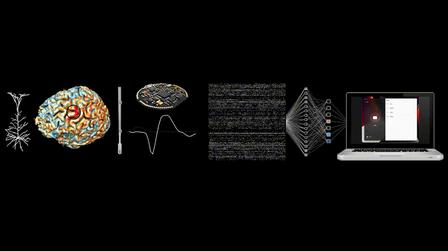
As of early 2026, Neuralink’s high-channel N1 implant with 1,024 electrodes has been implanted in 21 human subjects. Participants can control cursors and robotic arms via thought and generate real-time speech synthesis. Parallel clinical trials, including Blindsight for vision restoration, are also underway. Elon Musk previously announced plans to launch large-scale device manufacturing and roll out nearly fully standardized automated surgical workflows in 2026.
Invasive BCIs still face a major long-term challenge: rapid brain tissue metabolism triggers epineurial tissue overgrowth that can push electrode threads away. Early Neuralink human trials observed minor electrode retraction, leading to degraded functional channel performance. Whether transdural implantation can maintain stable electrode function for two years or longer remains to be verified through larger patient cohorts and extended follow-up.
For the first time, Neuralink’s surgical robot preserves the intact dura while threading electrodes straight through to the cortex. This innovation combines the high signal sensitivity of invasive BCIs with the superior safety profile of non-invasive alternatives. Shifting from “breaking down the door to enter” to “threading a needle through fabric,” this pivotal leap propels brain-computer interface technology forward by a massive margin.