


On July 22, 2026, Johnson & Johnson MedTech announced that its OTTAVA™ Table-Integrated Multi-Port Soft Tissue Surgical Robot has officially received De Novo classification clearance from the U.S. Food and Drug Administration (FDA), enabling its commercialization in the U.S. market for select upper abdominal general surgical procedures. This marks Johnson & Johnson’s official entry into the soft tissue surgical robotics space long dominated by Intuitive Surgical’s da Vinci systems, and heralds the arrival of an entirely new product form factor.
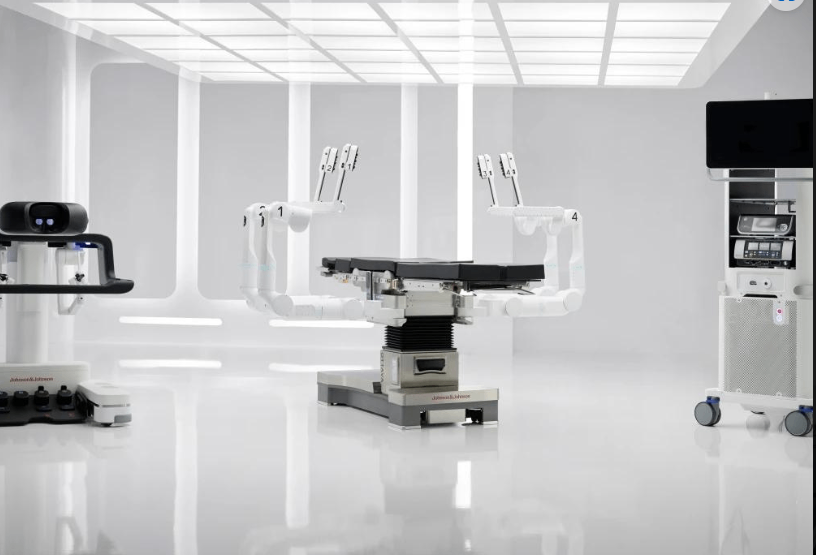
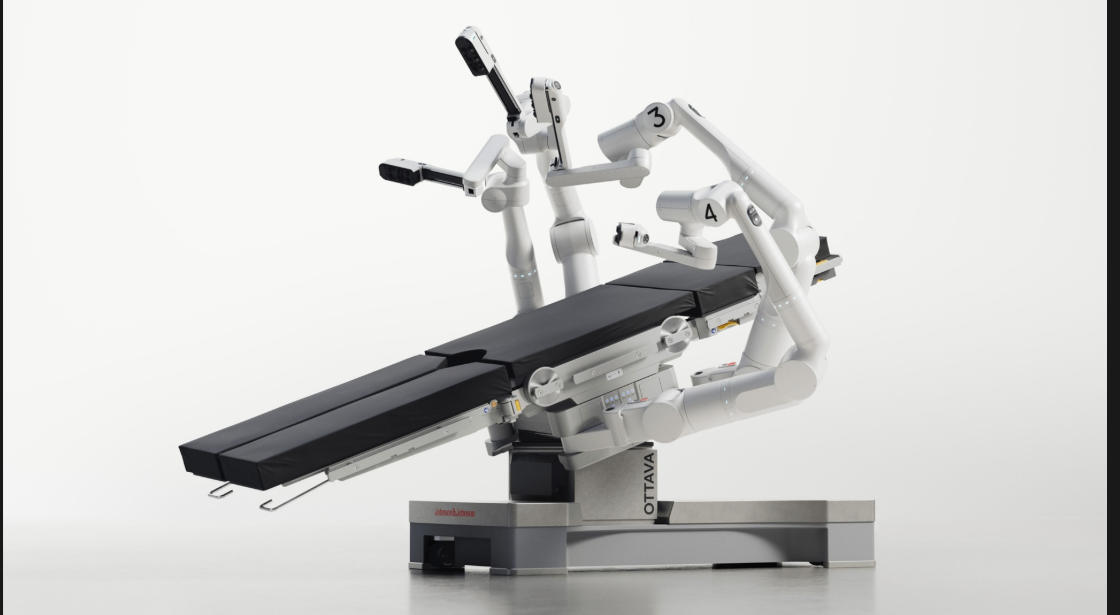
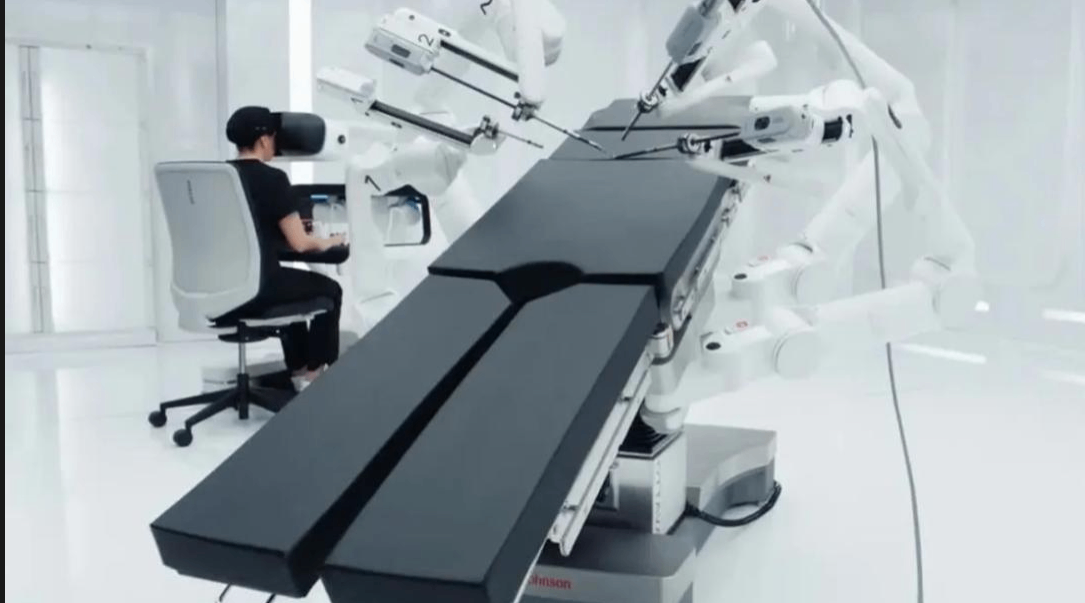
OTTAVA is positioned as “the world’s first table-integrated soft tissue surgical robot”. Its core architecture integrates four robotic arms directly within a standard surgical table: the arms deploy from the tabletop during procedures and retract underneath the table base after surgery. Compared with traditional overhead arm or cart-based systems, this design cuts floor space occupancy by 30% to 50%, making it the multi-port soft tissue surgical robot with the smallest footprint currently available on the market.
Tim Schmid, Worldwide Chairman of Johnson & Johnson MedTech, stated: “With OTTAVA, we are creating an entirely new category of surgical robotics. This is far more than just a new system—it serves as a catalyst for the next generation of surgery.”Hani Abouhalka, Chairman of Johnson & Johnson MedTech’s Surgery Group, added: “Surgical robots will play an increasingly vital role in surgical care. We engineered OTTAVA to deliver both clinical and economic benefits for surgeons and hospitals, underpinning the advancement of surgery for years to come.”
It is understood that the current clearance covers 10 mainstream upper abdominal general surgical procedures, including Roux-en-Y gastric bypass, gastrectomy, cholecystectomy, splenectomy, sleeve gastrectomy, small bowel resection, appendectomy, adhesiolysis, fundoplication and hiatal hernia repair.
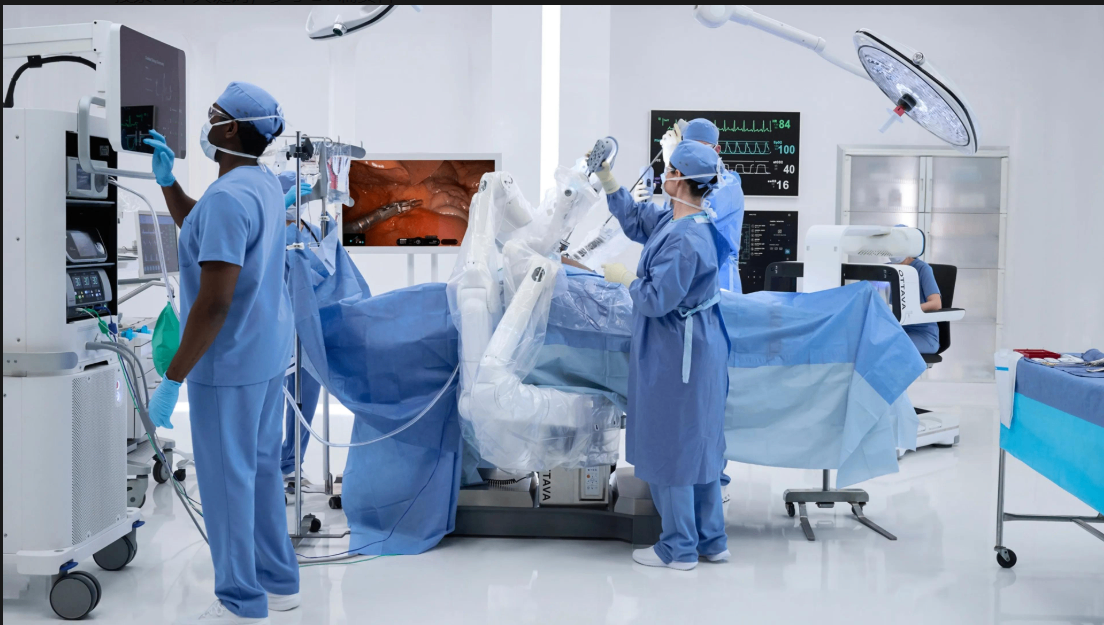
The pivotal clinical trial supporting its clearance is known as FORTE. Designed as a prospective, multicenter, single-arm open-label study, it enrolled a total of 30 patients across six U.S. centers to evaluate the safety and procedural performance of OTTAVA for gastric bypass surgery. Results demonstrated that all procedures were completed robotically without conversion to non-robotic techniques. Enrolled patients achieved an average weight loss of 30 pounds (approximately 13.6 kilograms) at 30 days post-operation, successfully meeting the primary safety and performance endpoints.
Notably, five out of the six participating trial sites had never performed robot-assisted surgeries prior to the study, fully validating the adaptability of the table-integrated architecture for underserved clinical settings. This means OTTAVA has the potential to be deployed in operating rooms of community and mid-sized hospitals that were previously unable to accommodate surgical robots due to space constraints.
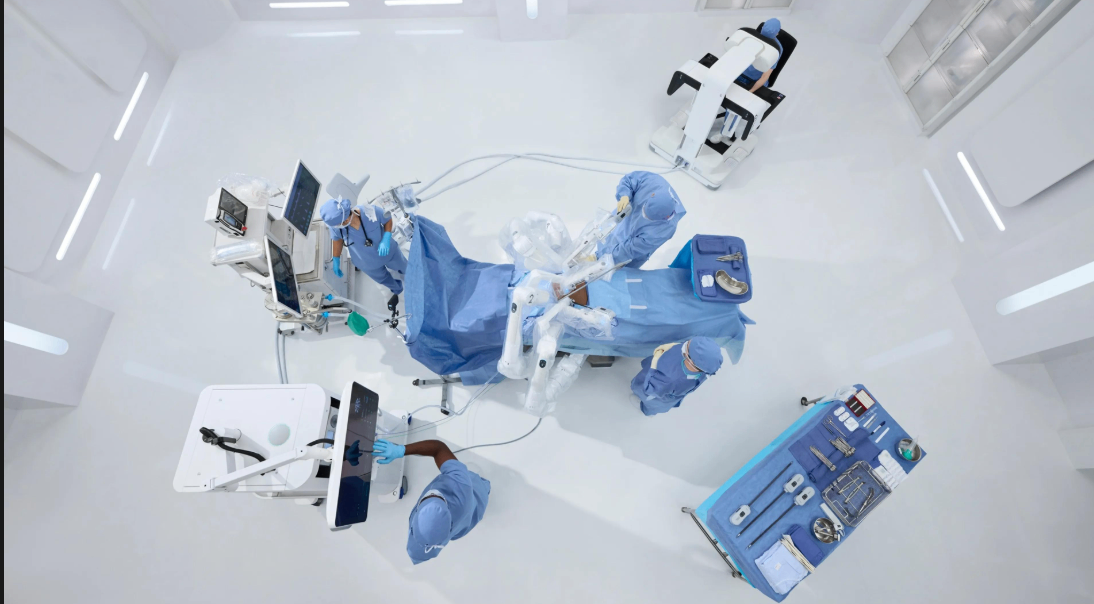
Compared with other industry competitors, OTTAVA’s fundamental differentiator lies in its robotic arms being embedded within the surgical table, instead of standalone carts arranged around the patient. Hani Abouhalka, Chairman of Johnson & Johnson’s Surgery and Robotics Business Group, elaborated on this design philosophy: “We believe the ability to create and return valuable space to hospitals and surgical teams is transformative. Currently, hospitals are forced to dedicate exclusive operating rooms solely for robotic systems. Yet we envision operating rooms that cater to all types of procedures — open surgery, laparoscopic surgery, and robotic surgery alike.”
The same surgical table enables seamless switching among open surgery, laparoscopic surgery and robotic surgery, eliminating the need for dedicated space reserved exclusively for robotic procedures.
In terms of workflow innovation, OTTAVA prioritizes automation and seamless collaboration. Through coordinated control of software, motors and sensors, OTTAVA delivers multiple workflow optimizations: automated pre-set arm positioning, which moves robotic arms to pre-programmed surgical positions at the touch of a button and drastically streamlines system setup and teardown procedures; and the Twin Motion dual-sync function, enabling synchronized movement between the surgical table and robotic arms. This allows intraoperative patient repositioning and multi-quadrant anatomical access without surgical interruption, greatly expanding intraoperative maneuverability.
Unlike many surgical robotic systems modeled after the da Vinci surgical robot architecture, Johnson & Johnson prioritizes instrument innovation to address core clinical pain points and boost adoption among healthcare practitioners.
Johnson & Johnson has developed targeted instruments to resolve frequently encountered clinical challenges in robotic surgery, with two flagship devices highlighted as follows:
2-in-1 Needle DriverAddressing feedback from 83% of surgeons who reported accidental suture cutting at least once per month, this instrument features surgeon-controlled switchable dual modes: cut-only mode and suture-only mode.Patented Monopolar Curved ScissorsTo tackle the dulling and suboptimal cutting performance experienced by 98% of surgeons, its proprietary design maintains consistent blade alignment, delivering uniform and thorough cutting results.
Furthermore, in the area of system intelligence, OTTAVA integrates Johnson & Johnson’s Polyphonic™ digital ecosystem for surgical data capture, training, collaboration and research. This embodies the company’s long-term vision of “digital surgery”: instead of merely supplying hardware, Johnson & Johnson aims to build an intelligent assistance platform powered by data, artificial intelligence and connectivity.
The launch of Johnson & Johnson’s OTTAVA did not happen overnight. Against the backdrop of Intuitive Surgical’s da Vinci first-mover advantage and a mature market landscape, the system is the culmination of Johnson & Johnson’s decade-long strategic planning and iterative development in surgical robotics.
As early as 2015, Ethicon, a subsidiary of Johnson & Johnson, formed Verb Surgical, a joint venture with Verily Life Sciences under Alphabet (Google). The partnership aimed to develop a digital surgical platform integrating robotic technology, advanced instruments, data analytics and machine learning, dubbed “Surgery 4.0” by the industry. The joint venture remained highly secretive for a substantial period of time, yet consistently underscored its vision of data-driven connected surgery, rather than treating robotic systems as standalone devices.
However, the pivotal turning point for Johnson & Johnson came in February 2019, when the company announced the all-cash acquisition of Auris Health for $3.4 billion, plus milestone payments of up to an additional $2.35 billion. Founded by Dr. Frederic Moll, a widely recognized pioneer in the field of surgical robotics, Auris Health’s Monarch™ robotic platform had already secured FDA clearance at the time.
Dr. Moll co-founded Intuitive Surgical back in 1994 and led the development of the da Vinci robotic system, earning him the moniker “Father of the da Vinci Robot.” This acquisition brought Dr. Moll officially into the Johnson & Johnson organization as Chief Robotics Development Officer, with direct oversight of the company’s soft tissue surgical robot program. Later that same year, Johnson & Johnson went on to acquire Verily’s remaining equity stake in Verb Surgical, bringing its robotic surgery business fully in-house. The technologies, teams and philosophies from Verb Surgical and Auris Health were gradually integrated, laying the groundwork for a unified soft tissue surgical robotics platform.
However, the R&D journey was far from smooth. In October 2021, Johnson & Johnson announced an approximately two-year delay to its development timeline, citing disruptions caused by the COVID-19 pandemic as well as technical complexities inherent in integrating robotics, surgical table motion, instruments and digital systems into a unified single platform.During this period, the design underwent pivotal revisions: the original six-arm configuration was ultimately downsized to a four-arm system. In November 2023, Mr. Abouhalka confirmed that the company planned to submit an Investigational Device Exemption (IDE) application to the FDA in the second half of 2024.
Johnson & Johnson formally filed its IDE application in October 2024 and received FDA clearance the following month to initiate clinical trials across the United States. In April 2025, the first series of clinical procedures using OTTAVA were completed at Memorial Hermann-Texas Medical Center in Houston, performed by Dr. Erik Wilson, Director of Minimally Invasive and Elective General Surgery at UT Health Houston, who successfully carried out Roux-en-Y gastric bypass surgery.
In January 2026, Johnson & Johnson formally submitted a De Novo classification application to the FDA based on data from the FORTE trial. The company announced at the ASMS Annual Meeting in May that the study had met its primary endpoints, and on July 22, the FDA granted De Novo marketing authorization for OTTAVA. The return of core founding developer Dr. Frederic Moll brought an exceptionally high level of industry attention to the launch of this product.
For commercialization, Johnson & Johnson is adopting a prudent rollout strategy, launching with select U.S. customers as initial pilot sites and prioritizing positive clinical experiences among early adopters. Meanwhile, the company is conducting clinical trials for inguinal hernia repair, with plans to file its second indication submission as early as early 2027. Market access initiatives for key regions including Japan and Western Europe have also been launched in parallel.
Nevertheless, the soft tissue surgical robotics sector has entered an era of multiple parallel technological routes. According to Frost & Sullivan, Intuitive Surgical posted revenue of $2.771 billion in Q1 2026, representing a 23% year-over-year increase, while Q2 2026 revenue climbed further to $2.89 billion, up 19% year-over-year. Its global installed base has reached 11,710 units, capturing more than 80% of the installed market share. Backed by over two decades of first-mover advantage and an extensive surgeon training ecosystem, the da Vinci system retains a firmly dominant market position.
Medtronic, another leading medical device giant, secured FDA clearance for urological indications for its Hugo surgical robot in December 2025 via a modular design approach. Coupled with Johnson & Johnson’s OTTAVA, which officially entered the market in July 2026 with its table-integrated architecture, all three product lines target general surgery indications. The soft tissue surgical robotics market is now witnessing comprehensive, full-scale competition.
Overall, head-to-head competition among these three product lines in general surgery indications will serve as a core indicator for industry landscape restructuring post-2027. Johnson & Johnson and Medtronic share a common challenge: both must market their systems to hospitals already equipped with da Vinci platforms and surgeons proficient in da Vinci operations. Benefiting from 140 years of surgical expertise, an extensive network of top-tier hospitals and surgeons worldwide, as well as a comprehensive portfolio of surgical instruments and disposables, Johnson & Johnson is widely regarded as the most promising challenger.
It is worth noting that gastric bypass surgery, one of the core indications for which OTTAVA has obtained clearance, is facing structural disruption brought by novel anti-obesity medications. By restructuring the digestive tract to treat obesity and metabolic disorders, gastric bypass remains one of the most common bariatric surgical procedures in the United States.
Nevertheless, as the clinical efficacy of GLP‑1 agents such as semaglutide (Wegovy) and tirzepatide (Zepbound) has been fully validated and these drugs have gained rapid widespread adoption, an increasing number of patients prefer minimally invasive options like injectable medications to manage obesity and metabolic disorders over surgical intervention. Intuitive Surgical explicitly stated during previous earnings call sessions that the growth rate of bariatric surgery volumes in the U.S. has shown signs of slowdown amid rising penetration of novel anti‑obesity pharmaceuticals.
This means OTTAVA is entering a market that is not expanding unilaterally; instead, it is an industry segment undergoing a reshaping of demand structure. Rather than engaging in head-to-head competition with da Vinci in core bariatric procedures where da Vinci holds an overwhelming advantage, Johnson & Johnson has opted to leverage its space-saving edge and target underserved grassroots clinical settings as its differentiated breakthrough strategy — a logically sound approach. In an environment with limited incremental demand, any player that can reach mid-tier and grassroots medical institutions previously unable to offer robotic surgery due to insufficient operating room space stands to unlock a new growth trajectory.
All in all, spanning from Verb Surgical’s “Surgery 4.0” vision to technology consolidation via Auris Health and ultimately the commercial launch of OTTAVA, Johnson & Johnson has completed a strategic leap in surgical robotics over the course of a decade. Whether OTTAVA can leverage its space-saving advantages and penetrate underserved grassroots clinical segments to carve out a distinct market niche amid the pincer competition from da Vinci and Hugo will stand as one of the most closely watched competitive narratives across the medical device industry in the years ahead.