On July 1, Terumo Corporation, Japan’s leading medical device manufacturer, released a global recall notice to launch a simultaneous voluntary recall across all its worldwide distribution regions for specific models of its Relay™Pro Thoracic Stent-Graft System. This product, designed for endovascular treatment of thoracic aortic lesions, has been linked to four reported adverse incidents caused by intraoperative device separation defects, resulting in three patient fatalities.
The recalled products are the Relay Pro NBS series with diameters ranging from 32 mm to 46 mm. A total of 7,000 sets sold between May 2024 and March 2026 are affected, which were distributed to 43 countries across North America, Latin America, Europe, the Middle East and Asia.
01
Root Cause of the Fatal Defect
After sorting out the information from the recall notice, MedDeviceHome found that Terumo first launched a voluntary recall of the same product in Japan on June 1, 2026. This global recall will not adjust the original recall scope and disposal plans for the Japanese market, and the domestic and overseas recall procedures will be carried out in parallel.
The company disclosed that it had completely halted all shipments of the affected product models to markets outside Japan starting March 2026. Nevertheless, in light of the potential risks arising from defective products still held in the inventories of distributors and medical institutions at all tiers, the company finalized a supplementary control plan featuring a unified global recall across all markets to maximize the safety of patients undergoing thoracic aortic surgery.
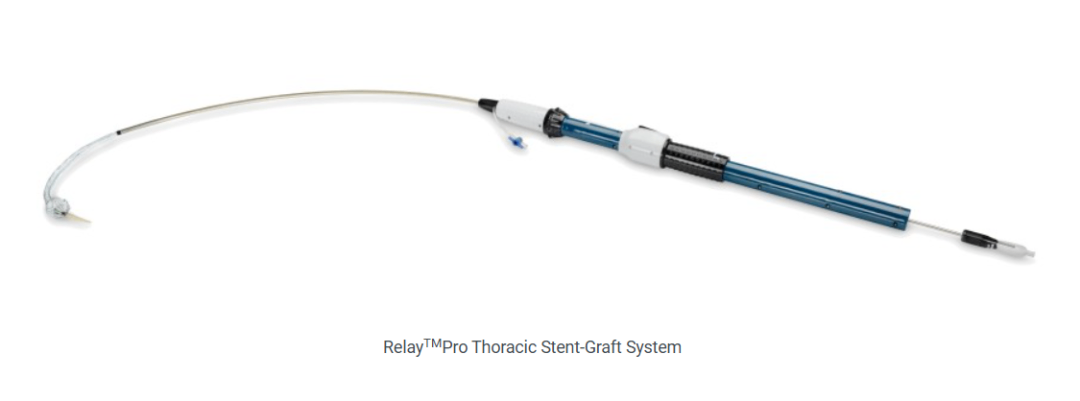
The Relay™Pro Thoracic Stent-Graft System serves as a core product under Terumo’s vascular graft division. It obtained CE marking certification from the EU in 2017 and secured US FDA marketing approval in 2021. Initially approved for the repair of thoracic aortic aneurysms and penetrating atherosclerotic ulcers, the product received an expanded FDA indication clearance in 2023, covering two additional severe conditions: aortic dissection and traumatic aortic rupture. It ranks among the mainstream consumables for global large-vessel interventional clinical procedures.
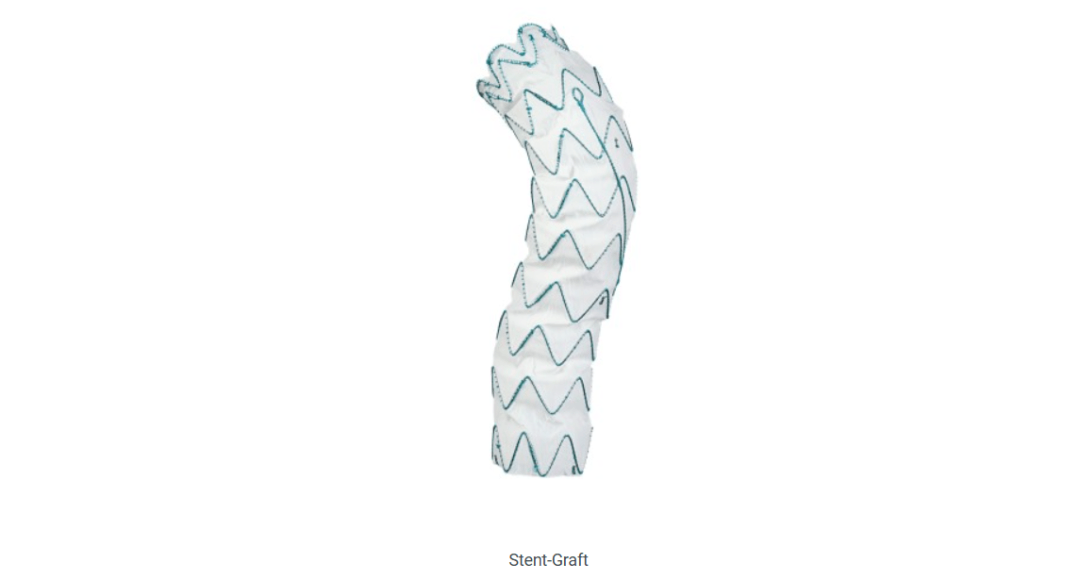
The trigger for this global recall stems from four serious adverse events reported by medical institutions outside Japan. The failures all occurred during critical intraoperative steps: after full deployment and implantation of the stent, the delivery system failed to separate normally from the stent graft. This prevented the delivery device from being withdrawn from the patient’s body in accordance with standard surgical protocols, severely disrupting the minimally invasive thoracic aortic procedure.
Terumo officially clarified that it cannot currently fully confirm a direct causal link between the device defect and the adverse events. Nevertheless, the clinical outcomes carry strong warning implications: three of the four reported cases resulted in patient death either intraoperatively or postoperatively. The high fatality risk directly prompted the company to launch this large-scale global recall.
Meanwhile, the company supplemented key safety differentiation information: the jamming and separation defect only occurs intraoperatively before the completion of detachment operation. Stent grafts that have been fully deployed and permanently implanted in patients carry no identical safety hazards. Patients who have already received the implant do not need excessive anxiety, and medical institutions may conduct continuous monitoring in line with standardized clinical follow-up protocols.
To address the inconveniences brought by this large-scale global recall to clinicians, medical institutions and patients worldwide, Terumo issued an official apology statement. The company stated that it will implement full-chain control and rectification measures, identify and fix loopholes across the entire workflow including production, quality control and pre-market testing, to prevent the recurrence of similar device failures.
02
Terumo’s Global Business Layout
Large-vessel Interventional Devices as the Core Pillar
As a leading multinational medical device corporation in the global vascular interventional track, Terumo has established an organizational structure consisting of three core operating entities and seven business divisions, namely the Cardiac and Vascular Company, General Hospital Devices Company, and Blood and Cell Technology Company. Its business footprint spans more than 160 countries worldwide, with 103 affiliated companies at home and overseas and a workforce of over 15,000 employees. The company has delivered more than 50,000 types of medical devices and supporting services to clinical and pharmaceutical sectors globally.
Among them, the Cardiac and Vascular Company serves as Terumo’s core revenue and R&D powerhouse. Its four subdivided business units fully cover the full spectrum of tracks from coronary, peripheral vascular and neurointerventional products to surgical consumables for aortic treatment.
After sorting out Terumo’s development footprint in China, MedDeviceHome found that the company launched its localized layout back in 1995 by setting up a manufacturing base in Hangzhou: Terumo Medical Products (Hangzhou) Co., Ltd. As an early foreign-owned medical device factory in China, it introduced international production management and digital quality control systems to domestic medical manufacturing, serving as a benchmark model for domestic vascular interventional consumable production. Later, the Changchun production base was established to further expand local production capacity.
The year 2003 marked a critical milestone for Terumo’s commercialization in China. In the same year, the group set up its China headquarters in Hong Kong and an international trading firm in Waigaoqiao, Shanghai, to centrally manage its nationwide sales channels. The Shanghai trading company was later restructured into Terumo Medical Products (Shanghai) Co., Ltd., and multiple regional branches were established to refine its domestic distribution network.
In 2012, Terumo (China) Investment Co., Ltd. was founded to centrally integrate all businesses across Greater China. In the same year, Terumo formed a joint venture with WEGO Group, namely WEGO Terumo (Weihai), to focus on the dialysis consumables track. In 2019, its self-developed peritoneal dialysis solution obtained marketing approval for launch. Designed for home dialysis and residual renal function protection, the product filled the gap in China’s segmented home dialysis consumables market.
In 2018, Terumo completed the acquisition of Yisheng Medical to complement its domestic coronary stent product line and fully optimize its portfolio of cardiovascular interventional consumables. In the same year, Terumo BCT entered into a strategic cooperation with Shanghai Unicartis to carry out localized development of CAR-T cell expansion systems, facilitating the clinical application of cell therapy for hematological malignancies.
Aortic dissection and thoracic aortic aneurysms are highly lethal acute cardiovascular emergencies. Endovascular stent grafts serve as the core consumables for minimally invasive treatment. Intraoperative device jamming and detachment failure will drastically raise surgical risks. This simultaneous recall covering 7,000 sets across 43 countries represents one of the large-scale global safety incidents in the field of large-vessel intervention in recent years.
On the one hand, this case has sounded a quality control alarm for aortic stent manufacturers at home and abroad. More rigorous testing should be implemented for factory reliability inspection and clinical simulation verification of the connecting structure between delivery systems and stents. On the other hand, medical institutions at all levels in China must immediately conduct stocktaking of the affected product models on-site to safeguard the bottom line of clinical safety for aortic surgeries.
MedDeviceHome will continue to follow up on the implementation rules of this global recall in the Chinese market, the domestic circulation volume of the affected products, and the company’s rectification plans, while keeping track of updates on new global regulatory rules for large-vessel interventional devices.