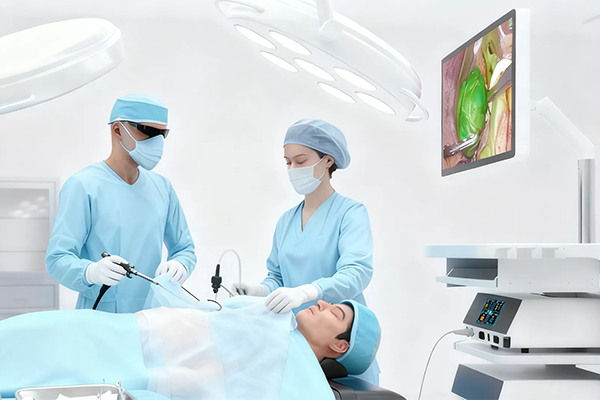
According to the official update from Tuodao Medical recently, Tuoling®, its self‑developed laparoscopic surgical robot, has successfully completed multiple remote‑control clinical trials in urology, marking a momentous milestone in the development of domestic surgical robots.
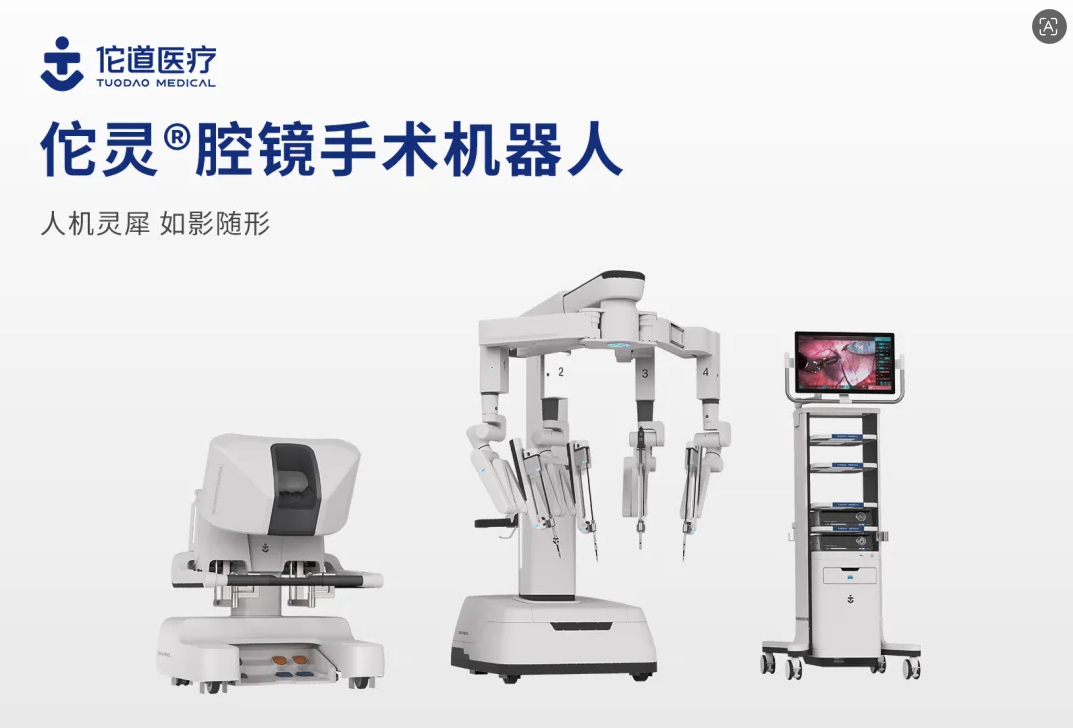
Led by Professor Zhang Xuepei’s team from the First Affiliated Hospital of Zhengzhou University and assisted by Professor Murat Rexati’s group at the First Affiliated Hospital of Xinjiang Medical University, this trial carried out two partial nephrectomies and one radical prostatectomy between Urumqi and Zhengzhou. Real‑world clinical cases have verified the feasibility and safety of ultra‑long‑distance remote surgery.
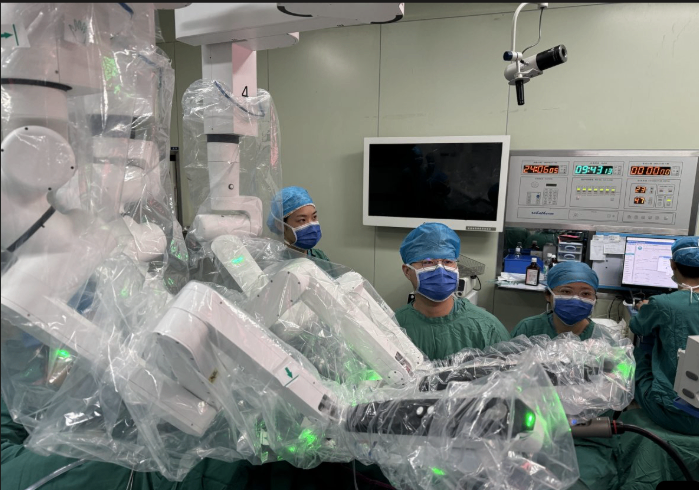
From Tuodao Medical’s perspective, the core breakthrough of this trial lies in the first remote‑scenario application of China’s first domestically‑produced laparoscopic‑robot force‑feedback technology put into clinical use. Fully independently‑developed by the company, the technology originates from the national key‑research‑and‑development‑program project "Force‑sensing and Force‑feedback Technology for Surgical Robots" undertaken by Tuodao Medical. It breaks the long‑standing limitation that domestic laparoscopic robots could only deliver clear vision, and officially propels the industry into the tactile‑sensing era of "sense‑of‑touch perception".
With force‑feedback surgical instruments, the system can perceive the real‑time interaction force between the distal‑end surgical tools and human tissues, and accurately reproduce such force at the master‑control console. This enables surgeons to acquire delicate tactile perception in addition to high‑definition vision, and truly realize dual‑mode interaction combining sight and touch.
This also signifies that backed by such tactile feedback, remote operating surgeons are able to detect real‑time force variations while pulling, gripping and suturing tissues via the surgical robot, precisely adjust manipulation ranges, effectively prevent excessive traction and accidental tissue injury, and build a crucial safety barrier for the reliable implementation of ultra‑long‑distance remote surgery.
Besides the core highlight of force‑feedback technology, multiple technical capabilities of the Tuoling® laparoscopic surgical robot have also been fully validated in this ultra‑long‑distance scenario. For instance, its built‑in 3D‑4K fluorescent imaging system can magnify intra‑human tissue textures by 10‑ to 20‑fold, assisting surgeons in distinguishing subtle anatomical layers and delivering robust visual support for delicate operations.
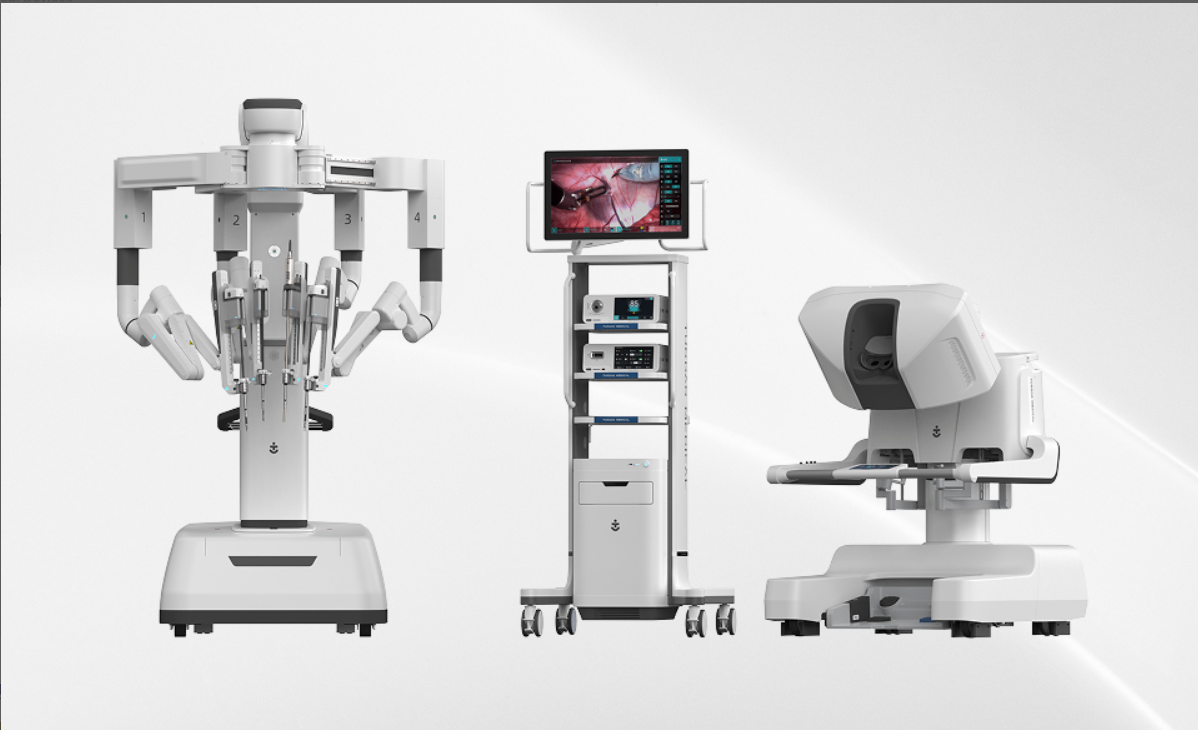
During signal transmission spanning 2,400 kilometers, the end‑to‑end latency of the Tuoling® laparoscopic surgical robot system remained steadily within clinically safe thresholds throughout the whole procedure. Its robotic arms responded synchronously to every motion command from the operating surgeon, with positioning accuracy fully compliant with clinical surgical standards.Stable and smooth operation guaranteed satisfactory surgical efficiency. The technically‑demanding radical prostatectomy only took one hour and nine minutes, greatly shortening the patient’s anesthesia duration, lowering peri‑operative risks and laying a solid foundation for the patient’s rapid post‑operative recovery.
Professor Murat Rexati pointed out that remote surgery delivered by the Tuoling® robot breaks geographical barriers and frees premium‑grade medical resources from spatial restrictions. Expert‑level surgical skills can be extended to borderland regions, sparing patients with complicated and severe illnesses in remote areas the trouble of long‑distance medical trips and enabling them to access top‑tier minimally‑invasive diagnosis and treatment services locally.
From an industry‑wide perspective, the successful completion of this clinical trial marks the official upgrade of domestic laparoscopic surgical robots from the vision‑dominated operation phase to a new dual‑perception era combining vision and tactile feedback. This technological leap not only greatly improves the operating feel and safety margin of remote surgery, but also accumulates valuable clinical experience for the regular cross‑regional sharing of high‑quality medical resources, and lays a solid technical foundation for the remote‑oriented and inclusive development of home‑grown surgical robots.