


On September 1, 2026, U.S. orthopedic‑device firm Enovis Corporation officially announced that it has signed a binding offer to acquire French orthopedic surgical‑robot developer eCential Robotics. The transaction is initiated with an upfront enterprise value of EUR 155 million (approximately USD 180 million. The cash consideration payable to eCential’s shareholders upon closing stands at around EUR 176 million (roughly USD 204 million). In addition, performance‑based milestone payments of up to EUR 35 million are available, bringing the total maximum deal value to EUR 190 million (approximately USD 245 million).
It is understood that the transaction is expected to close by the end of 2026, subject to regulatory approvals across relevant jurisdictions worldwide. Enovis plans to fund the deal using its existing cash on hand and revolving‑credit facility.
As a global leader in orthopedic implants and intelligent navigation, Enovis is an innovation‑driven med‑tech firm headquartered in Dallas, the United States. Its business spans core areas including orthopedic implants, intelligent surgical navigation and pre‑operative planning.
According to official information, Enovis boasts a comprehensive product portfolio in orthopedic reconstruction, covering implant solutions for hip, knee, shoulder, elbow, foot and ankle joints. It holds a significant share in the global shoulder‑replacement market and ranks among the world’s top‑three players in shoulder surgery.
In intelligent diagnosis and treatment, Enovis has built a mature ASTRA intelligent orthopedic diagnostic ecosystem, anchored by two core products: the ARVIS augmented‑reality surgical navigation headset and the Astra Portal AI intelligent pre‑operative planning system. The former is a standalone wearable AR navigation system that provides surgeons with real‑time, hands‑free surgical guidance across a wide range of joint‑replacement procedures. The latter leverages pre‑operative CT scans to perform 3D anatomical reconstruction and AI‑based landmark identification, enabling intelligent planning of personalized surgical plans.
Nevertheless, Enovis has long suffered from a notable shortfall: the absence of in‑house hardware execution terminals. Despite its proven capabilities in pre‑operative planning and intra‑operative navigation, the company lacks a self‑controlled integrated orthopedic surgical‑robot hardware system. As a result, it cannot deliver a complete surgical closed‑loop. Reliance solely on implants and navigation devices can no longer meet clinical demands for one‑stop intelligent diagnosis and treatment, leaving the company at a persistent disadvantage in equipment procurement bids and clinical‑cooperation competitions among high‑end medical institutions.
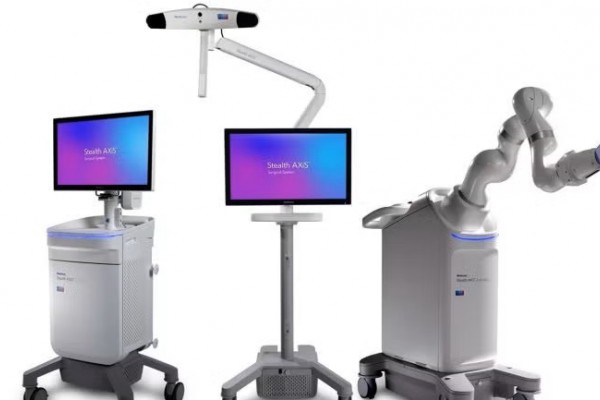
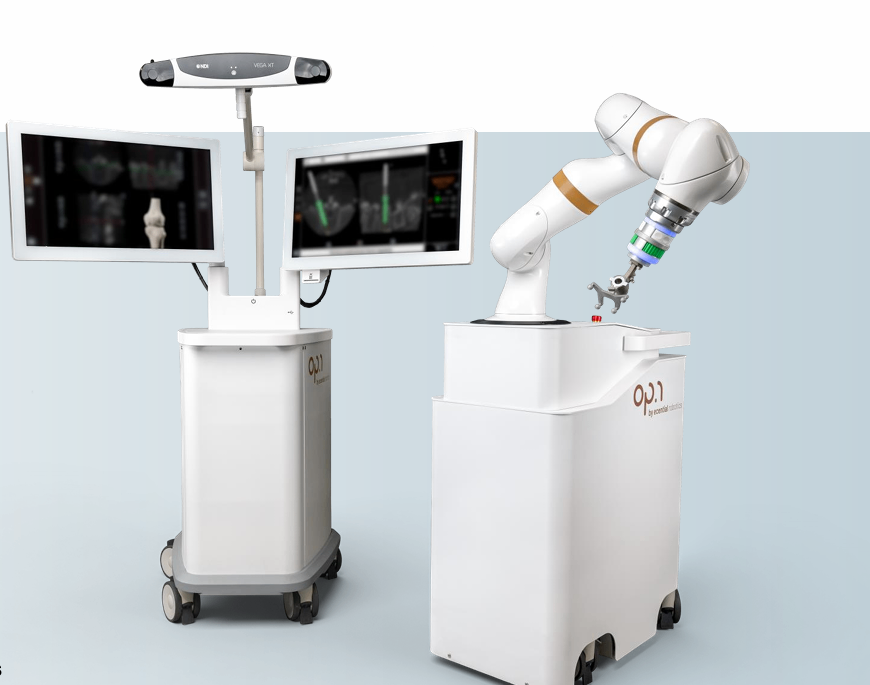
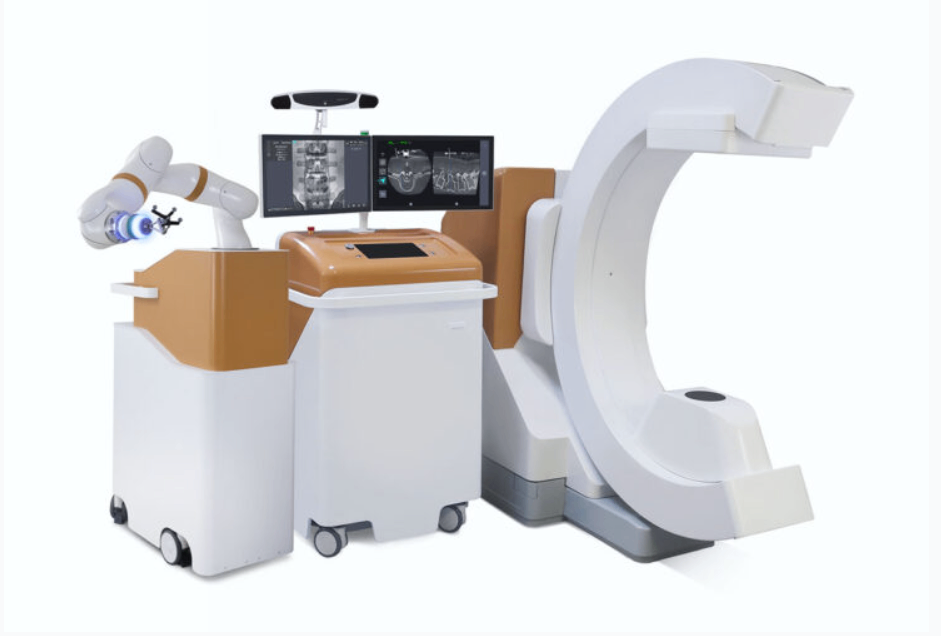
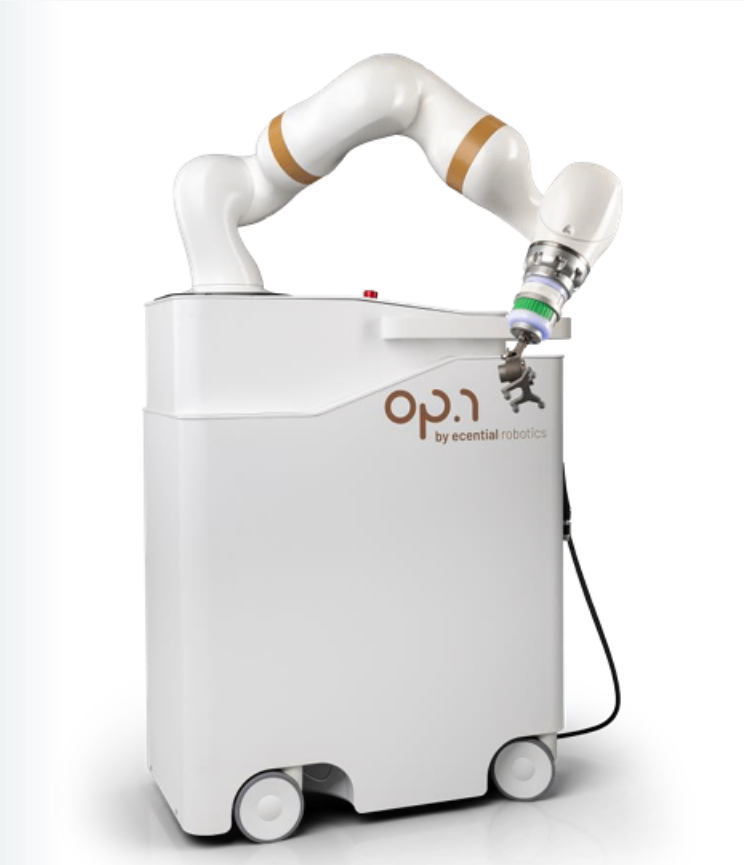
The acquiree, eCential Robotics, was founded in 2009 and is headquartered in Grenoble, France. It boasts over 15 years of innovation‑driven expertise in computer‑assisted surgery and orthopedic robotics. Its flagship offering, the Op.n spinal navigation and robotic‑assisted platform, is a modular, open surgical system that integrates real‑time intra‑operative navigation and active robotic guidance within a single architecture.
The Op.n orthopedic surgical robot boasts industry‑leading technical maturity. The Op.n platform has obtained FDA 510(k) clearance and is approved for spinal procedures in the United States. In 2024, the Velys robotic spinal‑surgery system, co‑developed by eCential Robotics and DePuy Synthes (Johnson & Johnson), secured FDA clearance, which fully validates the safety, precision and clinical reliability of its technology. In August 2026, the PERLA TL application jointly developed by the two parties received another FDA 510(k) clearance, further expanding the application scenarios of the Op.n platform in robot‑assisted spinal surgery.
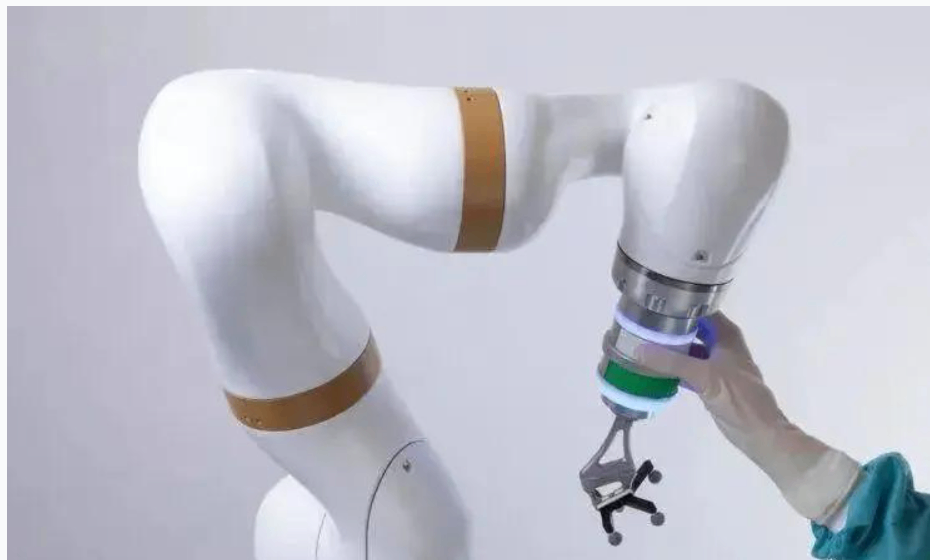
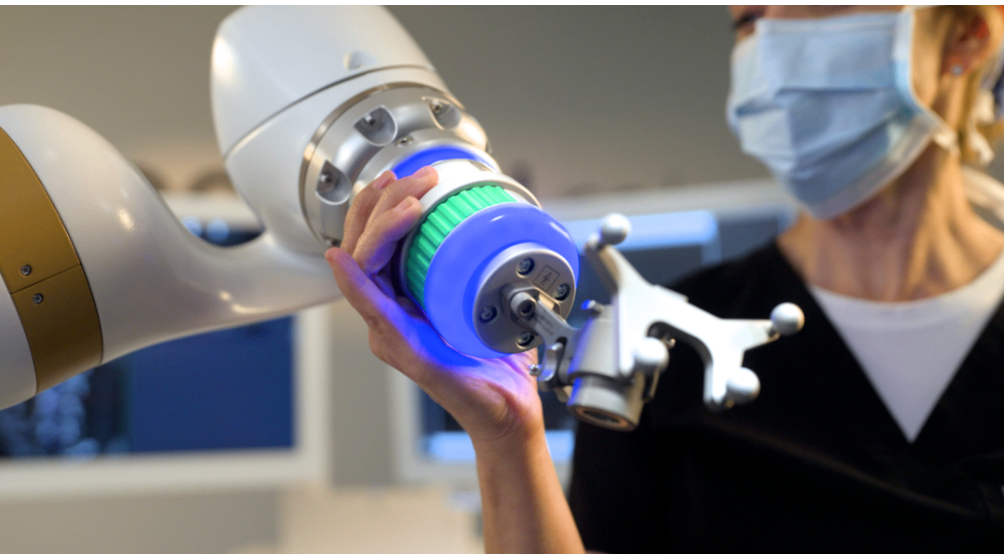
Meanwhile, the Op.n platform features an implant‑agnostic open design. It is not locked to a single brand of orthopedic consumables and supports compatibility with multiple categories of implantable devices, greatly improving clinical adaptability and commercial expansion potential. Integrating three core capabilities — real‑time intra‑operative navigation, precise intelligent robotic guidance and 3D image reconstruction, the platform is highly suited to the clinical requirements of complex minimally‑invasive orthopedic procedures. Its 7‑degree‑of‑freedom collaborative robotic arm enables automatic implant pre‑positioning and intra‑operative adjustment, delivering outstanding hardware‑software integration performance.
From a market‑promotion perspective, eCential’s technology has achieved clinical adoption in spinal and knee‑joint procedures. As early as the beginning of 2026, surgeons at Hackensack Surgery Center in the United States began deploying the system to perform advanced robotic spinal surgeries within an ambulatory‑surgery‑center setting.
This acquisition is driven by the high‑degree business complementarity between the two companies, and the core logic behind the deal is clear and well‑defined. Enovis boasts a mature software ecosystem for AR‑based navigation and AI‑powered pre‑operative planning, while eCential Robotics holds core competencies in surgical‑robot hardware, navigation algorithms and control systems. Their combination directly fills Enovis’ gap in robotic execution terminals and enables a complete surgical closed‑loop.
In terms of product coverage, Enovis’ full‑range portfolio of hip, knee, shoulder and other implants together with its navigation devices, combined with eCential’s spinal robot and knee‑joint applications, delivers end‑to‑end coverage spanning pre‑operative planning, intra‑operative navigation and robotic execution. On the technical front, Enovis’ strengths in augmented‑reality navigation and AI‑driven planning algorithms are deeply integrated with eCential’s capabilities including the 7‑degree‑of‑freedom robotic arm, real‑time navigation and open‑platform architecture, generating synergies between software ecosystem and hardware devices.
From a market perspective that draws industry attention, Enovis, one of the world’s top‑three shoulder‑implant manufacturers, boasts an extensive customer network for implants. Combined with eCential’s FDA‑cleared mature robotic platform, this deal will accelerate technology commercialization and drive rapid monetization through market channels. Enovis CEO Damien McDonald explicitly stated that the acquisition is far more than obtaining a single robotic device; rather, it is “accelerating the go‑to‑market of the robotic platform by acquiring talent, intellectual property and advanced capabilities”. eCential has an engineering team of more than 50 professionals with proven experience in designing, developing and launching three orthopedic and spinal robotic platforms, which will deliver solid talent support for Enovis’ robotic business.
Upon completion of the transaction, eCential’s robotic‑control system and algorithm‑driven software will be seamlessly integrated into Enovis’ ASTRA ecosystem. This will deliver a true end‑to‑end closed‑loop workflow covering AI‑powered intelligent pre‑operative planning, AR‑enabled real‑time intra‑operative navigation and precise robotic surgical execution.
With Enovis’ full suite of intelligent diagnostic‑therapeutic devices, clinicians are freed from cross‑system switching and the need to adapt to multiple sets of operational logic. One unified system enables end‑to‑end intelligent workflows for orthopedic surgery, fundamentally addressing industry pain points of fragmented traditional smart devices, cumbersome operations and steep learning curves.
Leveraging eCential’s proven technology stack, Enovis has laid out a clear product‑rollout roadmap: it will launch a new‑generation intelligent orthopedic surgical robot within the next two years, with initial commercialization targeted at high‑volume, highly‑standardized total knee‑replacement procedures. Following stable market performance of its knee‑focused offering, Enovis will accelerate R&D and commercial launch of a shoulder‑specific surgical robot. Drawing on its market‑share advantage in the global shoulder‑replacement segment, the product equipped with a 7‑degree‑of‑freedom robotic arm will address long‑standing industry challenges of limited intra‑operative maneuverability and poor adaptability associated with conventional devices.
Following the closing of the acquisition, Enovis will partner with eCential Robotics to establish a global orthopedic‑robotics center of excellence in Grenoble, France. Drawing on the local pool of high‑caliber medical R&D talent and cutting‑edge European medical‑technology resources, the two parties will continue to deepen research in core fields including orthopedic surgical robots, intelligent navigation algorithms and AI‑driven surgical planning.
Competition within the global intelligent orthopedic‑device industry has evolved from comparisons of standalone‑device specifications into an era of comprehensive rivalry centered on technological ecosystems, end‑to‑end solutions and sustained innovation capabilities. The monopolies established by legacy incumbents through first‑mover advantages have given rise to industry‑wide challenges including severe product homogenization, high equipment‑procurement costs and limited clinical adaptability, which to some extent hinder the widespread adoption of intelligent orthopedic technologies.
From an industry‑wide perspective, the high‑end segment of the global orthopedic‑robotics market has long operated under an oligopolistic structure, with core market power firmly held by three international giants: Johnson & Johnson, Stryker and Zimmer Biomet. Leveraging their mature in‑house systems including MAKO, ROSA and VELYS, the three firms have built triple‑layer barriers spanning technology, product offerings and clinical reputation.
Accordingly, the significance of this acquisition goes far beyond an ordinary commercial M&A deal. It directly addresses Enovis’ decade‑long business gap and propels the traditional orthopedic leader into the first tier of the orthopedic‑robotics track. Enovis has long exhibited lopsided development: while it boasts profound expertise in implants and intelligent navigation, it has consistently lacked a proprietary robotic‑hardware system. This acquisition fundamentally reverses that situation and enables Enovis to compete head‑to‑head with established industry incumbents.
Through this differentiated acquisition, Enovis breaks free from cut‑throat competition within conventional tracks and builds a complete industrial closed‑loop consisting of “intelligent software ecosystem, high‑end hardware equipment and standardized clinical procedures”. The breakout by this new industry player will effectively disrupt the oligopolistic landscape, force technological iteration and equipment‑cost optimization across the sector, and accelerate the broader adoption of intelligent and minimally‑invasive high‑end orthopedic surgical technologies.
Overall, Enovis’ acquisition of eCential Robotics represents a strategic capability‑fill rather than mere corporate expansion. It marks the orthopedic leader’s formal entry into the high‑barrier intelligent surgical‑robot track and puts a definitive end to its long‑standing gap of lacking an in‑house orthopedic surgical‑robot system.
The two companies feature high business complementarity. Enovis delivers implants, AR‑navigation and AI‑planning ecosystem, while eCential Robotics brings clinically‑validated robotic hardware and control systems. The combined entity will form a full‑workflow intelligent closed‑loop for orthopedic surgery that covers pre‑operative planning, intra‑operative navigation and robotic execution. It is projected that with the successive launch of new‑generation intelligent surgical robots for knee and shoulder joints over the next two years, the global orthopedic‑robotics market will witness another round of landscape reshuffling.