


According to official updates from Gen‑pro Medical recently, its international expansion has hit a key milestone. The company’s multi‑port laparoscopic surgical robot completed its first commercial‑grade installation and the inaugural clinical operation at Penang Adventist Hospital in Malaysia. This marks not merely the hospital’s first laparoscopic surgical robot, but also fills the technical void in robotic minimally‑invasive surgery across northern Malaysia, opening a new chapter for the development of local minimally‑invasive healthcare.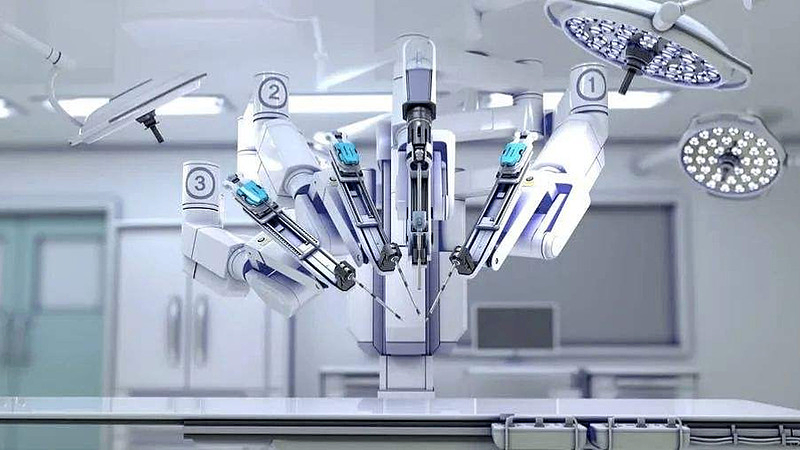
Penang Adventist Hospital, where the device was deployed, is located in George Town, Penang, Malaysia. It ranks among the country’s most influential non‑profit charitable hospitals, boasting a history of over 140 years. The hospital began with traditional Chinese medicine services and formally expanded its western‑medicine system in 1983, gradually establishing its distinctive heritage of integrated Chinese and Western medical care.
Today, Penang Adventist Hospital is a tertiary acute‑care hospital with more than 400 inpatient beds. Equipped with advanced imaging and surgical facilities, it hosts multiple specialized centres and delivers multidisciplinary medical services covering cardiology, urology, neurosurgery, orthopaedics, oncology and other departments. It commands an outstanding professional reputation throughout northern Malaysia and the whole nation.The hospital also runs an affiliated nursing college and has long‑devoted itself to medical education and talent cultivation. Upholding the core mission of charitable healthcare for the public, it supplies affordable, high‑quality medical services for local residents.
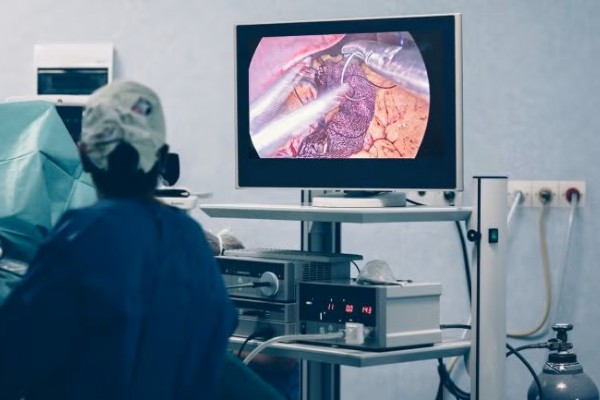
The inaugural robotic surgery after Gen‑pro Medical’s equipment installation was performed by Dr. Ye Kewei, a senior gynaecologic‑oncology specialist with extensive robotic‑surgery experience. He successfully carried out a total abdominal hysterectomy plus bilateral adnexectomy.The entire procedure lasted only 110 minutes with an intraoperative blood loss of merely 5 ml. Precise and smooth throughout the operation, it fully demonstrated the clinical strengths of Gen‑pro’s multi‑port laparoscopic surgical robot.
Following the surgery, Dr. Ye Kewei spoke highly of the device’s performance. He remarked that the Gen‑pro robot enables easy and efficient preoperative preparation, with seamless workflows for platform positioning, trocar connection and instrument installation. Intra‑operative manipulation runs smoothly and the system maintains stable and reliable operation all through the procedure.As the first‑ever robotic surgery performed at Penang Adventist Hospital and across northern Malaysia, its overall performance "exceeded our expectations". The doctor also looks forward to further integrating the Gen‑pro robot into routine clinical work, allowing more patients to benefit from advances in minimally‑invasive technology.
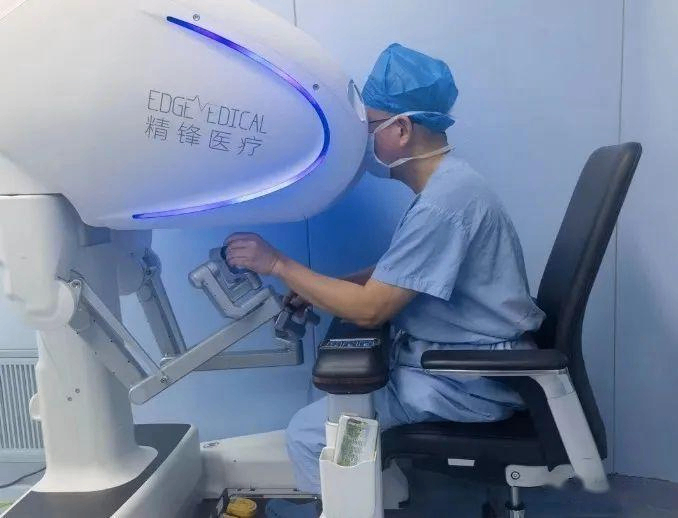
Datuk Dr. Ye Guotai, Chief Executive Officer of Penang Adventist Hospital, personally tested the Gen‑pro robotic system prior to the surgery. He holds the view that compared with conventional laparoscopic surgery, the robotic system delivers marked improvements in operational flexibility, surgical precision and surgeon‑operation comfort.In addition, he has high expectations for systematic and advanced robotic‑surgery training for the hospital’s surgical team. He hopes that with the support of the new equipment, the hospital can keep delivering sophisticated, premium‑grade robotic surgical services for patients in Penang.
As a well‑acknowledged healthcare hub in Southeast Asia, Malaysia hosts this commercial deployment at Penang Adventist Hospital, which marks a vital milestone for Gen‑pro Medical’s in‑depth expansion across the region.This local roll‑out further completes the company’s strategic layout in Southeast Asia. It will fuel the construction of a clinical‑service network covering key Southeast‑Asian markets through radiation effect from pilot sites, laying a solid foundation for deeper business penetration in more Southeast‑Asian nations.
Southeast Asia is witnessing an urgent demand for upgraded medical‑care infrastructure at present. Local medical institutions have strong appetite for medical equipment featuring cost‑effectiveness and outstanding clinical value, rendering the region a major growth engine for Chinese‑manufactured medical‑device exports.Leveraging its adaptable, cost‑efficient, stable and reliable high‑end surgical robot platform, Gen‑pro Medical keeps partnering with premium overseas healthcare facilities. It is bringing advanced minimally‑invasive robotic technology to more regions and enabling patients worldwide to gain access to medical innovations made‑in‑China.
Malaysia’s surgical‑robot market is currently a fiercely‑competitive arena dominated by international giants with multiple market participants vying for business. Gen‑pro Medical’s market entry has brought fresh dynamics to this sector.
Intuitive Surgical, the undisputed global leader in laparoscopic surgical robots, has established the deepest footprint within Malaysia’s high‑end market with its da‑Vinci system, thanks to its first‑mover advantage and proven technology. Its equipment has been deployed in numerous top‑tier medical institutions including Gleneagles Kuala Lumpur, Columbia Asia Hospital, Sunway Medical Centre and Pantai Hospital. Having completed over 500 surgical procedures, it firmly holds the leading market position.
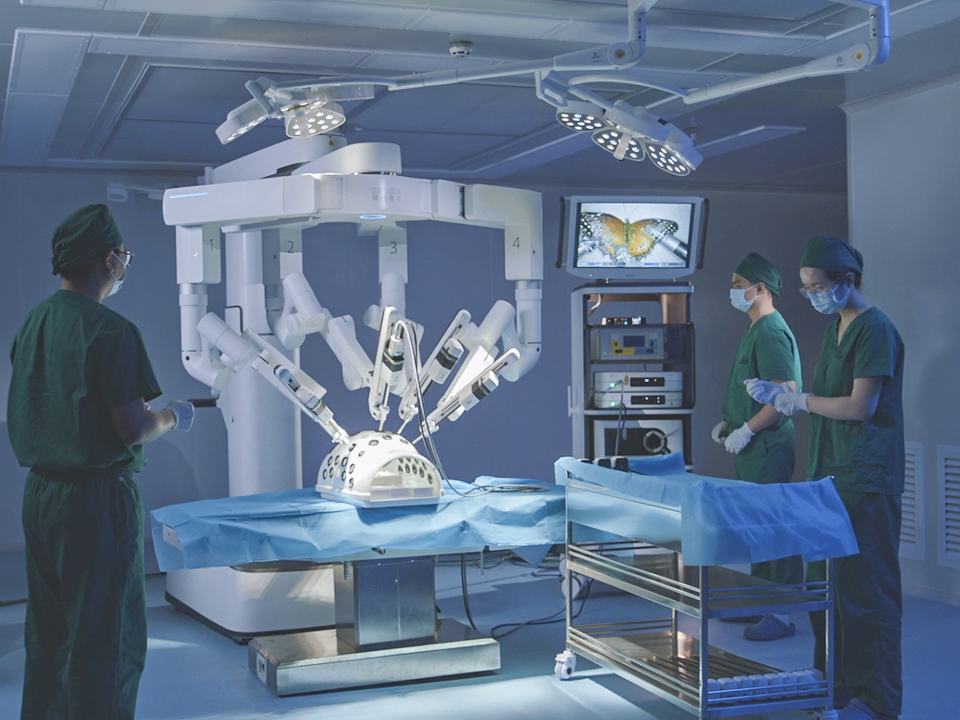
The Hugo™ system from global medical‑device giant Medtronic features modular design and high cost‑performance, while the Mazor X™ specializes in spinal surgery. It has signed a memorandum of understanding with Sunway Healthcare Group to advance cooperation in spinal surgery, robotic technology and other fields.
The Mako™ system from Stryker, another world‑leading manufacturer of orthopaedic surgical robots, accounts for over 50 percent of the global market share in joint‑replacement procedures. The company now runs a manufacturing plant in Penang, yet public information concerning local Mako system installations in Malaysia remains undisclosed.
Besides, Medicaroid, the Japanese joint‑venture company established by Kawasaki Heavy Industries and Sysmax, has secured Malaysian regulatory approval for its hinotori™ system, Japan’s first domestically‑developed surgical robot. The device has been deployed in hospitals across Johor and Melaka.
An analysis of the overall competitive landscape reveals that in Malaysia’s present‑day surgical‑robot market, Intuitive Surgical’s da Vinci system remains the undisputed leader in the high‑end segment, bolstered by long‑accumulated first‑mover advantages and a mature clinical ecosystem.Both Gen‑pro Medical and Medtronic adopt cost‑effectiveness as their core selling points in an attempt to reshape the existing market structure. Gen‑pro Medical’s recent inaugural equipment installation in northern Penang constitutes a crucial move to challenge the established market order.Companies such as Stryker and Medtronic concentrate on niche tracks including orthopaedics and spinal surgery, which means their direct competition against laparoscopy‑focused Gen‑pro Medical stays limited. Rivalry still persists, however, over hospital procurement budgets for medical devices. The approval and local roll‑out of products from Japan‑based Medicaroid has injected new competitive variables into the marketplace.
Overall, Gen‑pro Medical is now operating in Malaysia amid an intensely‑competitive marketplace marked by technological dominance from the da Vinci system at the high‑end tier, fierce rivals such as Medtronic racing ahead within the same track, and continuous arrivals of new‑entrant players.Its core strengths lie in the outstanding cost‑performance of its products and the first‑mover advantage secured by its early installation in northern Malaysia. Moving forward, competition in this market will hinge on which enterprise can obtain broader market‑access certifications at a faster pace, build comprehensive physician‑training systems and establish solid clinical‑end user reputations.