



Infrared picosecond laser blackening marking
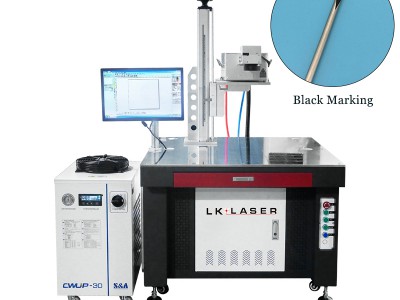
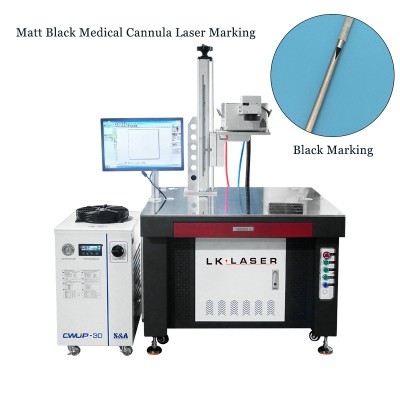
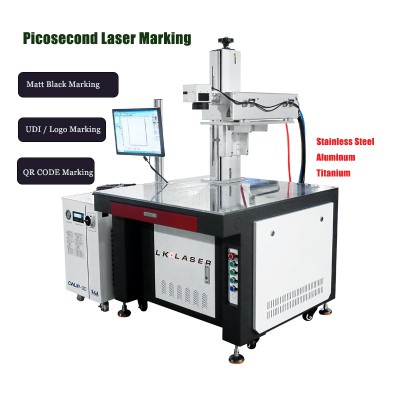
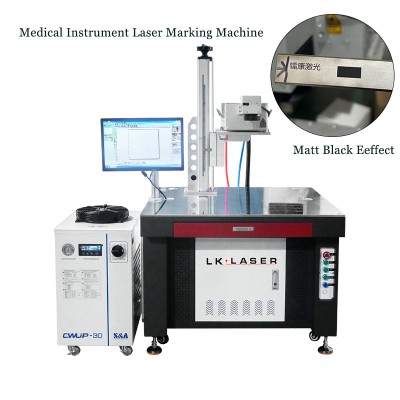
The pulse width of the infrared picosecond laser is 3-4 orders of magnitude shorter than that of the nanosecond laser, and the peak power is higher. Therefore, the interaction mechanism between the two lasers and the material is different. The results of the two laser markings look similar to the naked eye, but the methods of producing black marks are different. The pulse duration of the picosecond laser is very short, so the thermal effect of the interaction between the laser and the material surface is very small. The area where the laser is applied forms a "light trap"-like property with anti-reflection properties, making the laser-acting area appear significantly darker black than the non-acting area (see Figure 3). In other words, picosecond laser marking does not form a brittle oxide layer, so it will not be corroded even after passivation and multiple autoclaves and disinfections.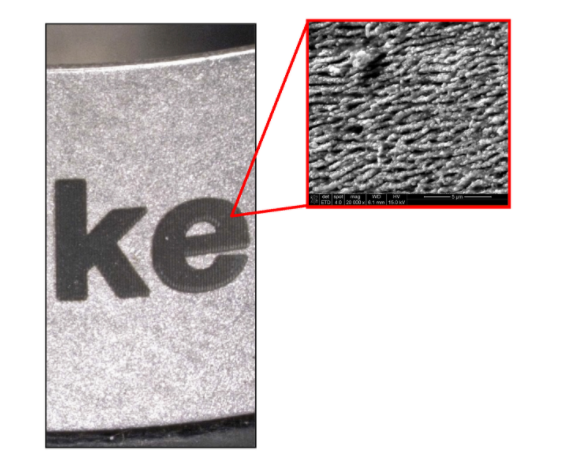
Sample picture of black marking by infrared picosecond laser. An enlarged close-up view shows the "light trapping" properties of the laser-marked structure.
The marking remains colorfast after passivation and autoclaving.
In addition, picosecond laser blackening has a wider processing window and is not dependent on part shape or alloy composition. Picosecond laser marking is a non-thermal process, so it is suitable for medical parts of different shapes and metal compositions, which is beneficial to production applications.
An increasing number of medical device manufacturers are turning to picosecond laser marking technology to ensure high-quality marking of medical devices. With the development of laser technology, the industrial stability of picosecond lasers has significantly improved; in addition, the increase in laser power has also shortened the processing time and reduced production costs, although the prices of nanosecond fiber lasers and nanosecond UV DPSS lasers are steadily increasing. decline, but the technical advantages of picosecond infrared lasers have greatly exceeded the price advantage of nanosecond lasers.
Summarize
Picosecond infrared lasers have entered the blackening marking market for stainless steel medical devices and have become a popular choice among today's medical device manufacturers. Picosecond infrared laser marking offers high contrast, durability and corrosion resistance. In addition, compared with traditional laser marking, the wider process window of picosecond laser also improves the reliability of production.