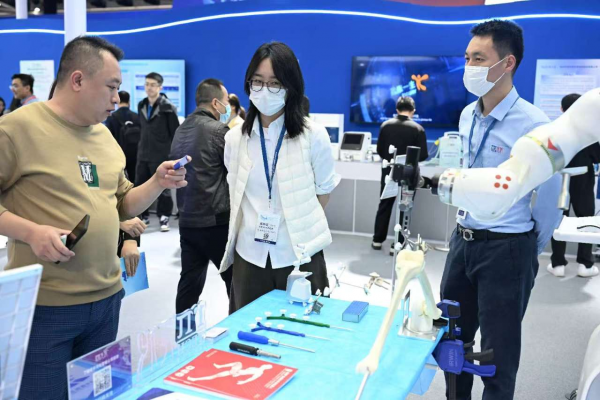
On July 28, Zhongke Xianjian co-hosted the IIT Clinical Investigator Meeting for Implantable Cortical Visual Restoration Brain-Computer Interface together with Shenzhen Eye Hospital, The Second People’s Hospital of Shenzhen, Shenzhen Institute of Advanced Technology, Chinese Academy of Sciences, and the Major Science and Technology Infrastructure for Brain Mapping and Brain Simulation, among other institutions.

Experts from ophthalmology, neurology, neurosurgery, brain science, ethics and other fields attended the meeting to discuss matters including the clinical research protocol, preclinical validation data, ethical review and filing, surgical procedures, subject screening and safety management. In accordance with the implementation roadmap formulated at the meeting, Zhongke Xianjian plans to launch China’s first investigator-initiated trial (IIT) in humans of a visual cortical prosthesis brain-computer interface based on flexible electrodes in the fourth quarter of 2026.
The convening of the clinical investigator meeting marks the completion of core preclinical preparations for Zhongke Xianjian’s visual cortex brain-computer interface, ushering in the implementation phase of human trials. This also represents a major milestone in the domestic clinical translation of flexible visual cortical prostheses from systematic R&D to clinical application.
Vision BCIs Enter the Competition Stage for Brain-Writing Capabilities
Visual restoration represents one of the most technically complex segments within the field of implantable brain-computer interfaces.
Motor and speech BCIs primarily extract information from neural activity. By contrast, visual restoration requires converting external images into stimulation sequences with distinct spatial and temporal signatures, which then trigger phosphenes via electrical stimulation of the visual cortex. The mapping relationship between stimulation sites, stimulation parameters and subjective visual percepts determines the quality of visual information the system can deliver.
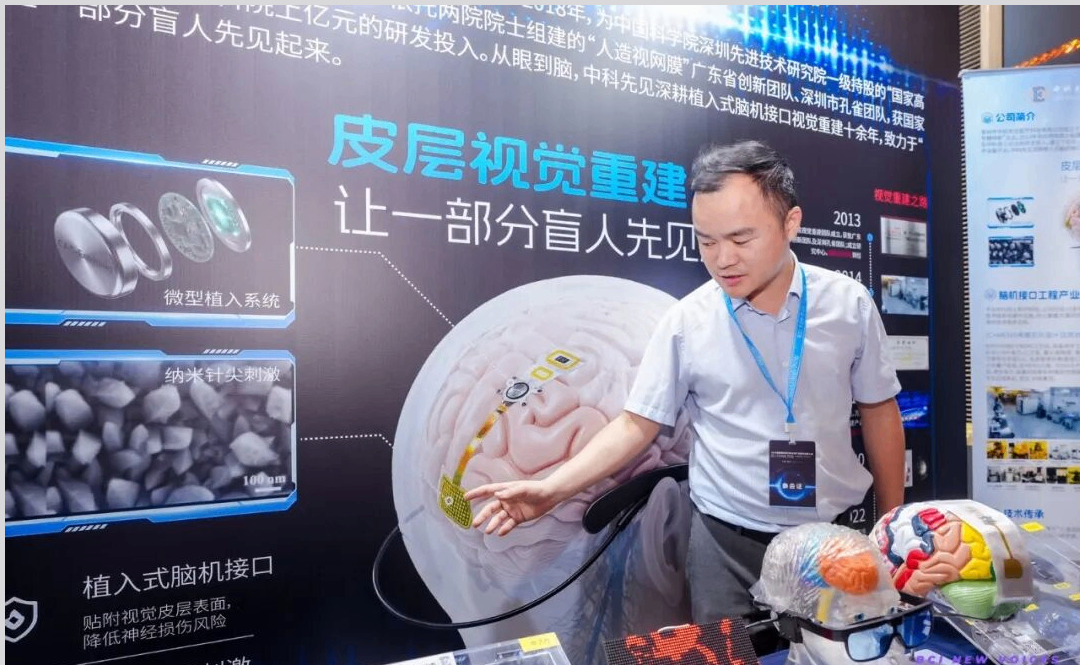
A long-term implantable visual cortical prosthesis needs to integrate high-density electrodes, low-power microchips, wireless communication, implant packaging, visual encoding algorithms and standardized clinical surgical workflows all at once. Stimulation thresholds, spatial selectivity, temperature rise control and long-term stability collectively govern the system’s channel scalability, as well as its scope for subsequent commercialization.
Zhongke Xianjian has maintained continuous R&D investment in this field for 12 years, gradually building full-industry-chain capabilities covering nano-flexible electrodes, dedicated SoC chips, wireless bidirectional transmission, long-term biological packaging and AI visual encoding algorithms. Its technological reserves span the core segments of implantable visual BCIs, laying a relatively comprehensive engineering foundation for continuous system iteration and clinical translation.
The semi-invasive technical route delivers differentiated competitive advantages.
At present, two types of interface solutions are predominantly adopted for visual cortical prostheses: cortical surface electrodes and intracortical penetrating electrodes.
Surface stimulation solutions represented by Orion, which has completed six human clinical cases with six years of follow-up, exhibit favorable tissue compatibility yet limited stimulation depth. In contrast, penetrating electrode solutions exemplified by Neuralink’s Blindsight product boast superior stimulation precision and spatial selectivity, though implantation deep into brain parenchyma risks foreign-body response and glial scar formation. Both technical approaches carry respective merits and drawbacks, and each has driven advances in human safety verification, phosphene induction and functional vision research for visual cortical prostheses.
Drawing on the strengths of both approaches while offsetting their respective drawbacks, Zhongke Xianjian has opted for a semi-invasive technical route that sits midway between the two. On one hand, its nano-flexible electrodes attach to the surface of the arachnoid membrane, minimizing damage to brain parenchymal tissue. On the other hand, the nanotip structure improves charge transfer efficiency between electrodes and neural tissue, enabling greater charge delivery to deeper-layer neurons for stimulation.
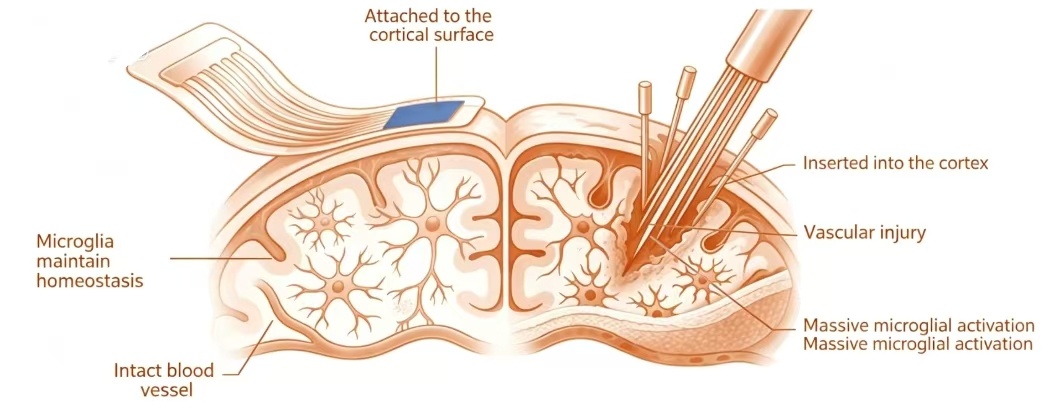
Surface Cortical Attachment vs. Intracortical Implantation
According to preclinical data disclosed by Zhongke Xianjian, the nanostructured design reduces interfacial impedance by approximately 90% and cuts the stimulation current threshold by an order of magnitude compared with conventional flexible surface electrodes. Moreover, the electrodes can withstand rigorous electrical stimulation equivalent to a cumulative 3 billion pulses over a 10-year service life.
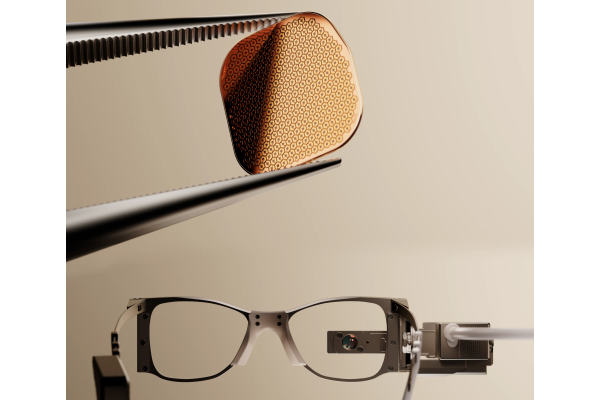
This design combines the tissue conformability of flexible surface electrodes with high-efficiency electrical stimulation performance. The button-sized implant also simplifies surgical procedures, laying the groundwork for standardized clinical implantation of visual cortical prostheses.
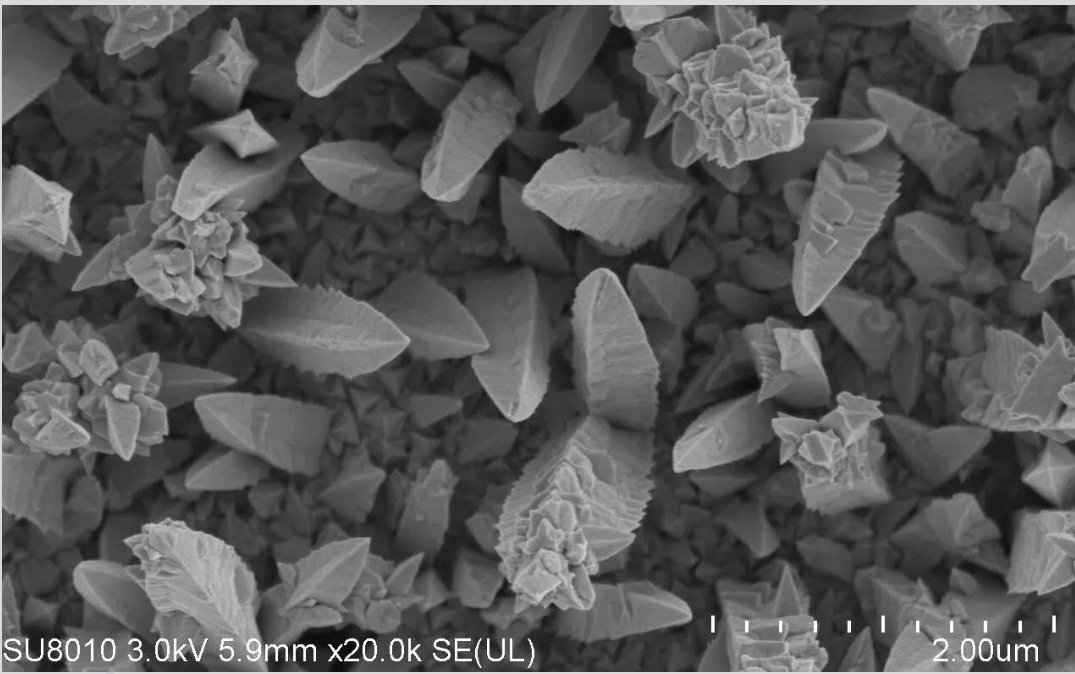
Scanning Electron Microscopy (SEM) Image of Nanotip Structures
Wireless 100-Channel System Completes Long-Term Primate Validation
Prior to launching human trials, Zhongke Xianjian has sequentially completed preclinical animal experiments on pigs, canines and non-human primates (NHPs). In 2025, the team performed China’s first wireless 100-channel visual cortical implantation in non-human primates, with over seven months of post-implantation observation accumulated to date.
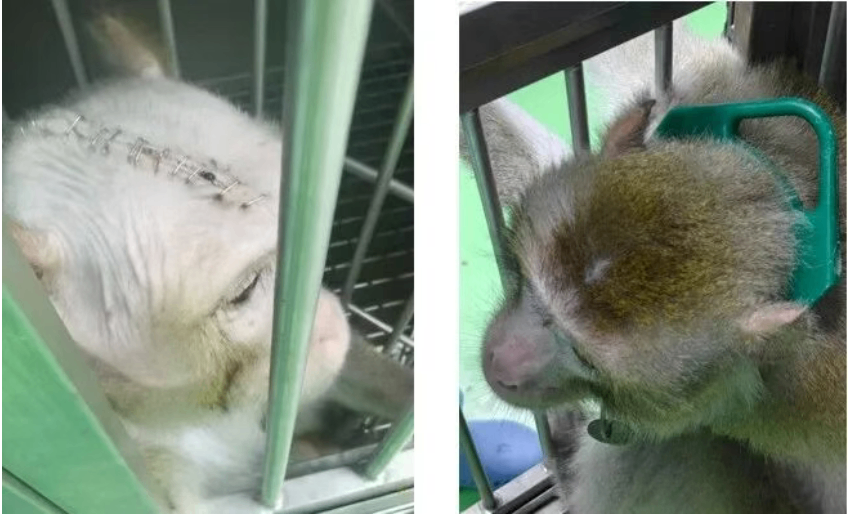
Left: Day of surgery Right: 6 months post-operation
Information disclosed by the company indicates that the implanted device maintained stable positioning throughout the observation period, with relevant biochemical and neurofactor markers remaining within normal ranges. Continuous visual cortical electrophysiological recording and electrical stimulation validation have also been conducted.
This experiment verified the coordinated performance of nano-flexible electrodes, custom SoCs, wireless bidirectional communication and biocompatible packaging under chronic implantation conditions. For implantable BCI products, long-term animal trials serve multiple validation objectives, including connection reliability, packaging stability, tissue response and stimulation consistency. The seven-month implantation data collected from non-human primates provides critical preclinical evidence to support Zhongke Xianjian’s upcoming human trials.
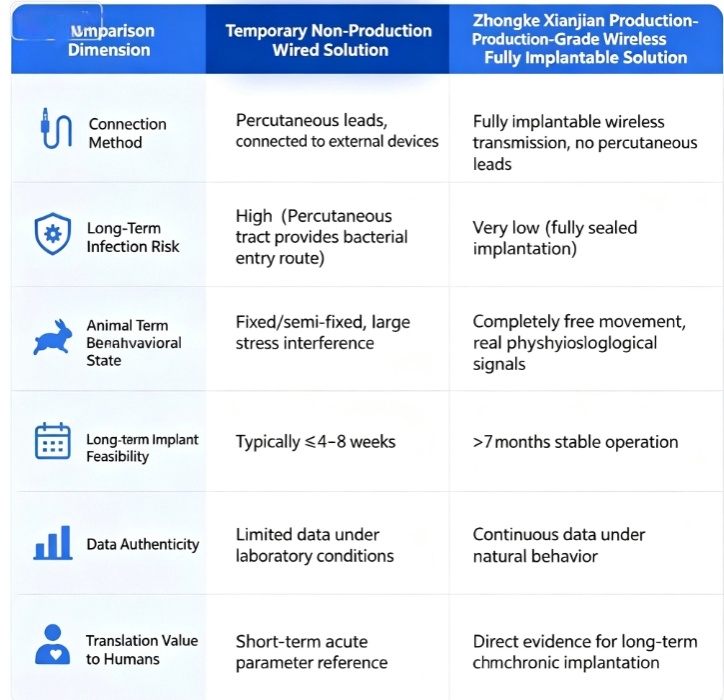
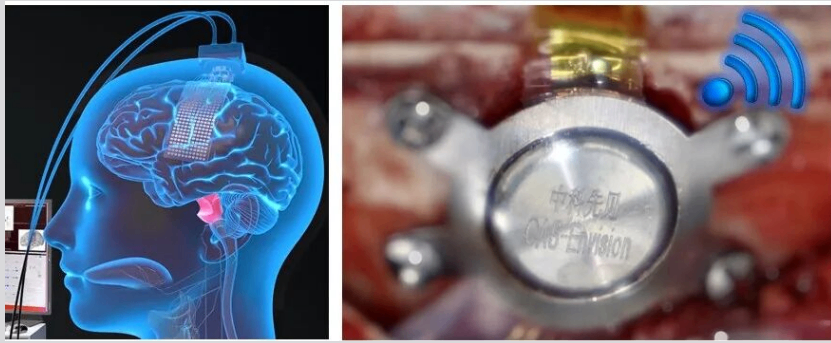
Comparison of Wired and Wireless Solutions (The right image shows Zhongke Xianjian’s visual cortical chip implant implanted intraoperatively in non-human primates, with a diameter of merely 10 mm — the smallest among comparable devices worldwide.)
Wireless integration also stands as a key feature of the system. Conventional percutaneous wire solutions carry notable risks of infection, mechanical traction and limitations on daily usage scenarios. By contrast, a fully implanted wireless system better aligns with patients’ future routine living conditions. Zhongke Xianjian has completed systematic integration of stimulation, signal recording and wireless transmission at a 100-channel scale, demonstrating the team’s comprehensive strengths in low-power chips, communication protocols and implant packaging.
The first IIT will establish fundamental human visual stimulation datasets.
Per its development roadmap, Zhongke Xianjian plans to enroll the first cohort of subjects and perform surgical implantations in Q4 2026. The trial will build a human safety database for visual cortical stimulation using nano-flexible electrodes and map the spatial mapping profile of human phosphenes.
Phosphene mapping serves as an essential foundation for algorithm development of visual brain-computer interfaces (vBCIs). The research team records the position, size, brightness and shape of phosphenes elicited by varying stimulation sites and parameters. Combined with individual anatomical data of subjects, a mapping relationship is established among electrodes, visual cortex and subjective visual percepts.
Such human-derived data will be leveraged to optimize stimulation strategies and visual encoding algorithms, and also lay the groundwork for expanding effective stimulation sites and enhancing the system’s capability to convey spatial visual information. As standardized training protocols are established step by step, discrete phosphenes can be further combined to reconstruct visual cues including outlines, orientations and positional signals, supporting object recognition and spatial navigation functions.
Shenzhen Has Built a Collaborative Translation Foundation for Visual Cortex Brain-Computer Interfaces
This project brings together specialized ophthalmic hospitals, Grade A tertiary general hospitals, research institutes, major science and technology infrastructure facilities, and corporate R&D platforms.
Visual cortical prostheses involve subject etiology assessment, neurosurgical implantation, visual function testing, stimulation parameter research, post-operative training and long-term follow-up. Multidisciplinary collaboration serves as the cornerstone of clinical research. The integrated strengths of Shenzhen in medical resources, brain science platforms and the full medical device industrial chain create favorable translational conditions for the advancement of this project.
From nano-flexible materials, dedicated application-specific chips and wireless implant systems, to long-term validation in non-human primates and preparations for human trials, Zhongke Xianjian has built a continuous technology translation chain. This investigator meeting has further streamlined collaborative workflows connecting corporate R&D, scientific research platforms and clinical institutions.
As the first human investigator-initiated trial (IIT) moves forward on schedule, Zhongke Xianjian will take the lead in accumulating domestic human stimulation parameters, phosphene mapping data and clinical operation records for flexible visual cortical prostheses. This dataset will directly underpin subsequent system iterations, registrational clinical trials and product finalization. It will also help China establish a more comprehensive clinical research system for visual restoration brain-computer interfaces based on visual cortical stimulation.