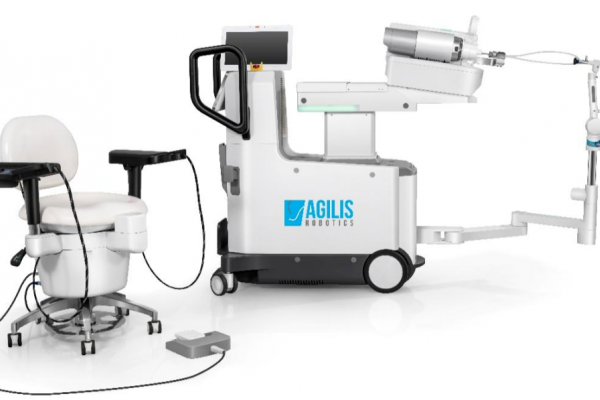
On July 23, 2026, Israeli surgical robotics firm Momentis Surgical officially announced that the multi-port configuration of its Anovo® surgical system has secured FDA 510(k) clearance in the United States. With this milestone, Anovo stands as the world’s first and currently only surgical robotic system capable of supporting three minimally invasive surgical access approaches—natural orifice, single-port and multi-port—on a single hardware platform.
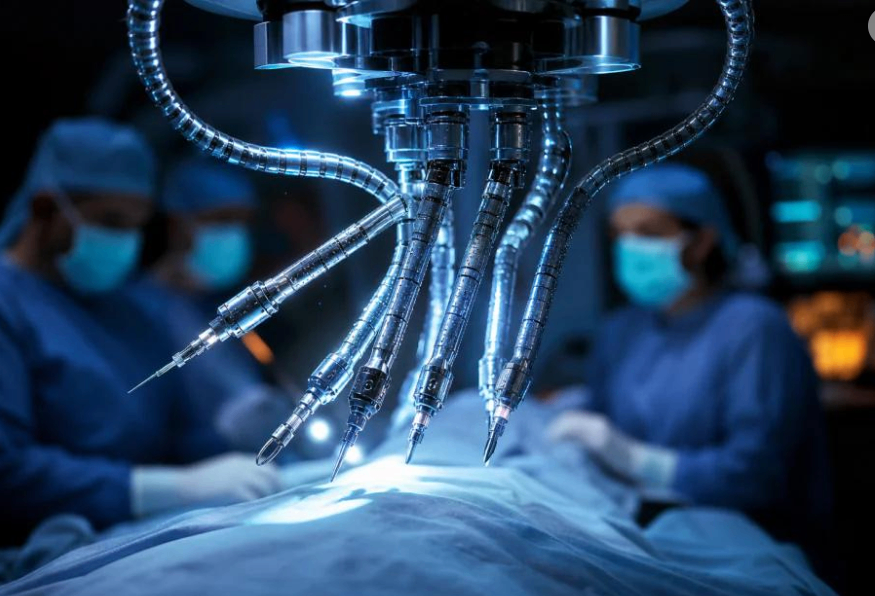
From an industry perspective, the Anovo system can be described as a futuristic surgical robotic platform, thanks to its exceptional compatibility with an extensive range of surgical procedures. This clearance marks far more than a routine product approval—it fundamentally shatters the nearly 20-year-old core paradigm plaguing the global surgical robotics industry: the rigid one-device-per-procedure constraint. It carves out an entirely new growth trajectory for the sector, breaking the invisible shackles of this long-standing industry flaw that confined the trillion-dollar market to fragmented, procedure-specific equipment.
Data indicates that the global surgical robotics market reached a size of USD 24.8 billion in 2025, with a compound annual growth rate (CAGR) of nearly 25% from 2020 to 2025. Over the same period, China’s market surpassed RMB 8 billion, posting a CAGR exceeding 22%. Beneath this rapid growth, however, the entire industry has long remained tightly constrained by the outdated "one robot for one procedure" model.
According to public bidding documents released by a Class A tertiary hospital in China in 2025, if the facility intends to cover multi-port, single-port and natural orifice procedures simultaneously, the total procurement cost of a full suite of da Vinci equipment alone exceeds RMB 50 million, with annual maintenance fees equivalent to 12% to 15% of the original equipment value.
Other major competitors in the market are equally trapped in the path dependency of procedure-specific dedicated systems. For instance, Medtronic Hugo only supports multi-port soft tissue procedures and is incompatible with single-port and natural orifice applications. CMR Surgical Versius solely caters to multi-port laparoscopic surgeries with no capacity for natural orifice interventions at all. While Johnson & Johnson Ottava features a modular design as its core selling point, it has yet to complete clinical validation for single-port procedures to this day.
The mainstream products from leading domestic manufacturers face a similar predicament. Both Toumai and MicroPort’s laparoscopic surgical robots only support multi-port operations, while products developed by Jingfeng, Tinavi and other brands have yet to achieve hardware compatibility across all three surgical access approaches.
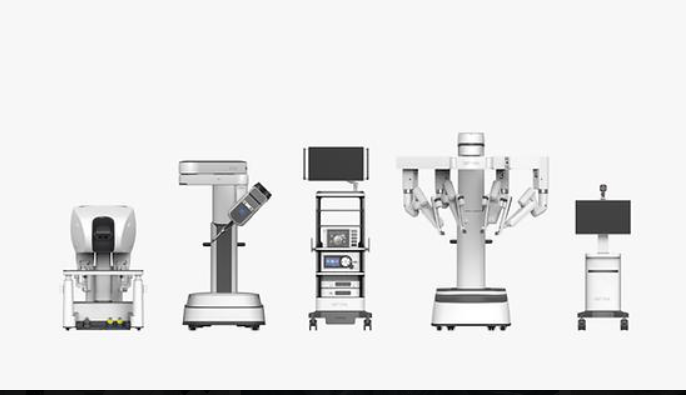
Statistics from industrial research institutes show that as of 2025, the penetration rate of surgical robots in non-tertiary hospitals worldwide stood below 3%. A large volume of minimally invasive surgical demand at grassroots medical institutions still relies solely on conventional laparoscopic equipment.
What enables Anovo to break the two-decade-long industry inertia lies not in minor iterative upgrades to conventional manipulator specifications, but in its fundamental overhaul of the rigid instrument design logic adopted by the sector for decades.
Rigid straight-shaft instruments of conventional surgical robots rely on abdominal trocars as external fulcrums to generate lever motion. The external manipulators must swing 30° to 60° to produce merely 1 cm of movement at the instrument tip inside the body. This gives rise to three universal pain points across the industry:First, each system generally occupies over 12 square meters of floor space, making it impossible to fit two units in a standard operating room simultaneously.Second, arm collision interference reaches as high as 17% during multi-arm coordinated manipulation, requiring frequent repositioning of arms in complex surgeries.Third, limited articulation at instrument tips results in approximately 22% operational blind zones within confined cavities such as the pelvic and thoracic spaces.
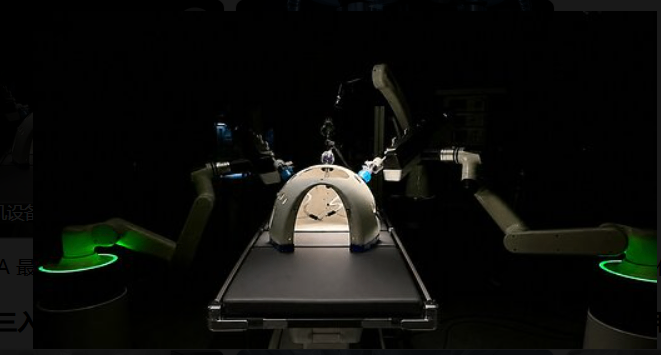
Anovo’s built-in joint bionic instruments completely rewrite these rules. Three sets of independently actuated joints—shoulder, elbow and wrist—are integrated inside its slender instrument shaft, shifting the motion fulcrum of the entire system from 1.5 meters outside the patient’s body forward to 3–5 cm inside the patient’s cavity. The external manipulators only undertake basic positioning and instrument delivery, with almost no large-amplitude swinging required.
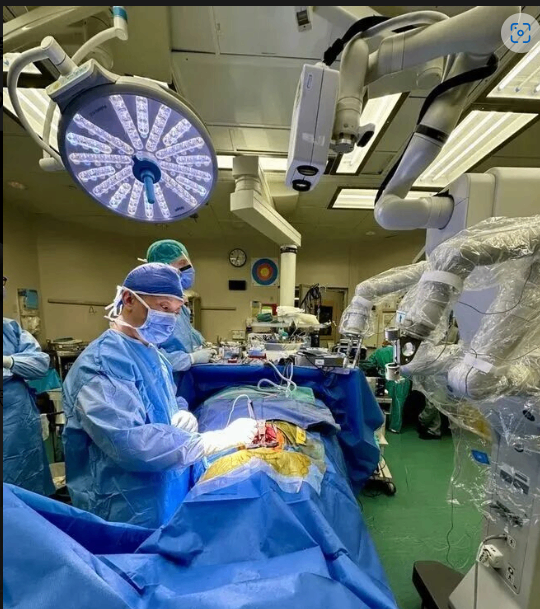
Its instrument tip achieves full 360° coverage with zero dead zones; intra-cavity dexterity is boosted by 210% compared with conventional rigid instruments, while operational blind areas within confined anatomical spaces drop to under 3%.The entire system occupies merely 4.2 square meters of floor space, less than one-third of a traditional multi-port robotic platform, enabling seamless deployment in standard compact operating rooms.Multi-arm collision interference falls below 0.2%, eliminating frequent intraoperative arm repositioning; average single-case operative time is cut by 18% versus conventional multi-port surgical robots.Complemented by an ultra-lightweight core control unit weighing only 5.9 kg and an open surgeon console design, full-system deployment and commissioning of Anovo can be completed within 45 minutes. By contrast, installation and calibration of the da Vinci series typically take 2 to 3 hours.
When the second-generation Anovo platform obtained FDA clearance in November 2024, it added a millimeter-scale haptic feedback system as well as forward and backward flexion dual operating modes. The force-sensing precision at the instrument tip was elevated to 0.1 Newtons, further addressing the clinical shortcoming of conventional robotic systems that "offer visual visualization but no tactile sensation".
Prior to this clearance for its multi-port configuration, Anovo had previously secured FDA clearances for natural orifice access (transvaginal benign gynecological procedures) and single-port access (abdominal wall hernia repair). The integration of all three surgical access modalities on a single hardware platform unlocks drastically higher clinical efficiency than legacy robotic systems. In clinical trials, the platform cleared in this round supports seamless switching among the three modes, pushing the procedural density of one single unit up by over 270%.
According to the 2025 multicenter European clinical data disclosed by Momentis Surgical, in test departments equipped with a single Anovo system, general surgeons performing abdominal wall hernia repair can freely switch between single-port and multi-port access based on patient body habitus and hernia ring location. The average monthly surgical volume of one unit surged from 17 cases with conventional multi-port robots to 46 cases, representing a 270% jump in procedural density.Clinical data from gynecology departments further shows that surgeons only need to complete 23 cases to master operations across all three access modalities on Anovo along its learning curve. This figure is far lower than the combined training threshold of 62 cases required for proficiency on separate single-port and multi-port da Vinci platforms.
Calculated from a full-lifecycle cost perspective, the procurement cost of a single Anovo unit stands at approximately 60% of that of a conventional multi-port surgical robot, with no need for repeated hardware purchases to expand surgical procedure coverage. Pilot data from U.S. ambulatory surgery centers indicates that facilities equipped with Anovo see the payback period per unit shortened from 6.8 years for legacy robotic systems to merely 2.9 years. This statistic completely overturns the long-standing industry consensus that surgical robots can only deliver profitability at large tertiary hospitals.
Maurice R. Ferré, Chairman of Momentis Surgical and Co-Founder of MAKO Surgical, stated:"Over the past two decades, the industry has poured massive resources into building separate dedicated systems, while overlooking what surgeons truly demand: a single platform capable of addressing all procedural needs. At its core, the clearance of Anovo returns the power of choice from device manufacturers back to operating surgeons."
The FDA clearance of Anovo is drawing a brand-new starting line for competition across the global surgical robotics sector, while delivering clear innovation inspiration to China’s domestic market segment, which is currently mired in homogenized cutthroat competition. The innovation logic of next-generation surgical robots will shift focus from expanding the quantity of manipulator arms to upgrading end-effector instruments, opening a window for domestic manufacturers to pursue differentiated development.
Over the past decade, 90% of the industry’s R&D resources have been channeled into a race to optimize superficial parameters such as the degrees of freedom of external manipulators and the resolution of imaging systems. However, Anovo’s technological paradigm shift—shifting the core innovation focus from external robotic arms to intrabody end-effectors—has demonstrated that innovations in intracorporeal instruments featuring built-in articulations and forward-shifted fulcrums can deliver superior clinical value with far lower R&D investment. This presents a clear differentiated breakthrough pathway for numerous late-market manufacturers with limited technical reserves.
Furthermore, as global surgical care rapidly shifts toward ambulatory surgery centers, more than 9,000 ambulatory surgery centers in the U.S. remain unequipped with surgical robots. Meanwhile, China’s outpatient surgical volume registered a 34% year-on-year increase in 2025, and the incremental growth potential in lower-tier medical markets far outpaces equipment replacement demand from established top-tier tertiary hospitals.The FDA clearance of the Anovo surgical robot marks the official opening of opportunities in these underserved markets. Compact, low-cost modular robotic platforms will become the core competitive solution to capture this untapped incremental market segment.
Of course, Anovo’s current indications are still limited to benign gynecological procedures and abdominal wall hernia repairs, and it has not yet expanded into high-complexity operations in thoracic surgery, urology and other fields where leading competitors have established deep market presence for years. Its global installed base stands at merely over one hundred units, leaving a substantial gap in clinical training infrastructure compared with Intuitive Surgical’s installed fleet of more than 10,000 systems.
Nevertheless, it is undeniable that with a commercially available product, Anovo has steered the industry away from homogenized competition centered on spec stacking and redundant hardware proliferation toward a brand-new era prioritizing operational efficiency and full procedural coverage. For domestic surgical robot manufacturers accelerating their global expansion, this serves both as a fresh benchmark and an unmissable window to build differentiated competitiveness.