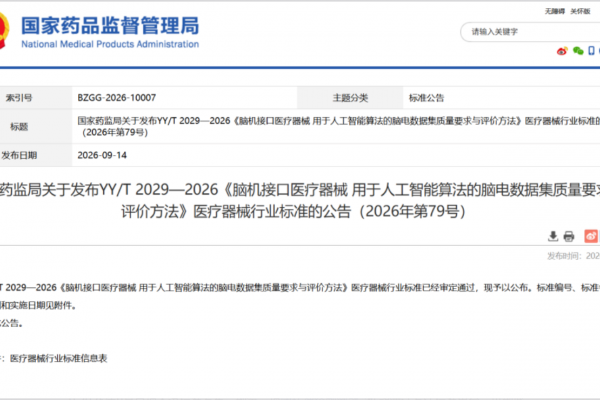
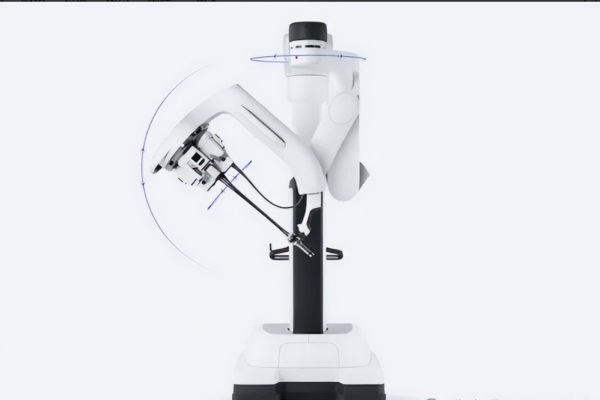
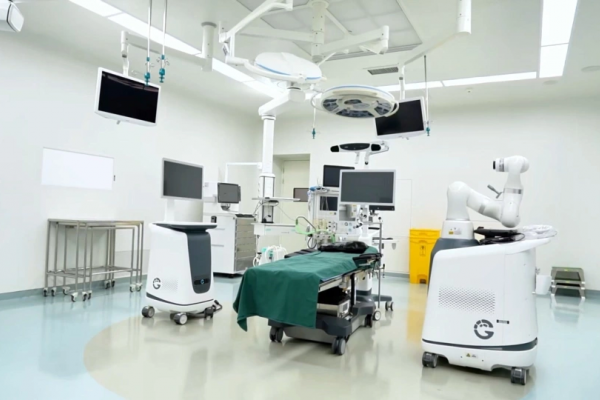
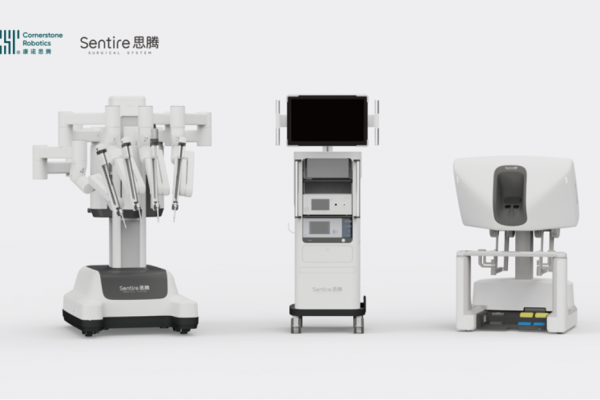
In July 2026, the National Health Commission of the People’s Republic of China and two other central authorities jointly issued the Circular on Further Improving Centralized Procurement of Medical Equipment in Public Medical and Health Institutions, which formally included laparoscopic surgical robots in the scope of provincial-level volume-based procurement (VBP).Unlike previous drug centralized procurement policies that prioritized the lowest bid above all else, this new policy establishes the core principle of "premium pricing for superior quality" at the top design level. It explicitly aims to guard against cutthroat price wars and sets brand-new competition rules for the entire high-value medical equipment sector.
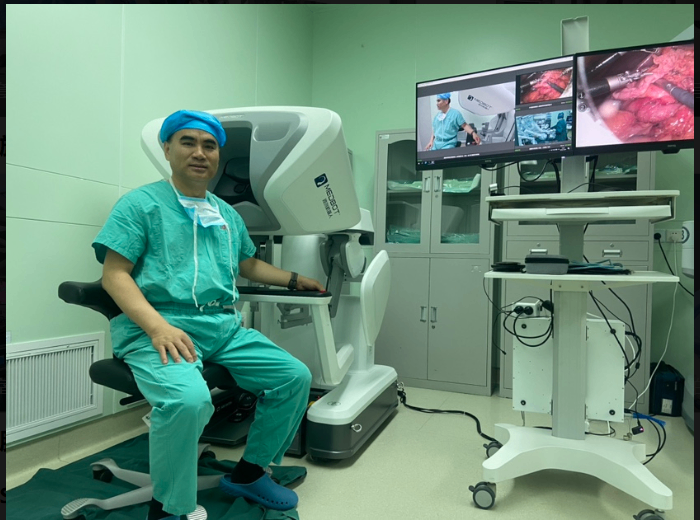
It is learned that in accordance with the requirements set forth in the Circular, China has formally implemented a three-tier hierarchical management system for medical equipment procurement covering national, provincial and municipal levels. As Class B large-scale medical equipment, laparoscopic surgical robots are explicitly included in the centralized procurement catalog managed by provincial authorities, with each provincial health commission coordinating and carrying out relevant procurement work. By contrast, Class A equipment featuring higher technical complexity and greater capital investment, such as proton and heavy ion therapy systems, shall be subject to unified centralized procurement organized by the National Health Commission.
Meanwhile, to accelerate policy implementation, the document sets out a clear implementation timeline: all provincial-level regions across the country must complete at least one round of centralized volume-based procurement (VBP) for Class B large-scale medical equipment by the end of 2026; by the end of June 2027, each province shall select at least one prefecture-level city to launch a VBP pilot and finish one round of procurement, forming a rollout pattern featuring full provincial coverage with pilot programs at the prefectural level.
Different from previous centralized procurement of medicines and medical consumables, the core policy breakthrough of this round of procurement is that it completely breaks away from the lowest-price-oriented logic adopted in traditional drug volume-based procurement. The Circular clearly stipulates that the core evaluation principles shall be "appropriate technology, quality first, reasonable pricing and premium pricing for superior quality". Instead of taking price as the sole decisive indicator, the evaluation system incorporates multi-dimensional factors including equipment quality, technical advancement, after-sales service capacity and stability of consumables supply.
This round of centralized procurement policy lays special emphasis on "preventing cutthroat competition", and takes full-lifecycle cost as a core evaluation dimension. Instead of merely focusing on the unit purchase price of equipment, the assessment scope covers all long-term operating expenses including subsequent consumable replacement, routine maintenance and system upgrades. Such rule design fundamentally eliminates the malpractice wherein enterprises deliberately slash prices to win bids and later offset losses by overcharging for consumables through "making up low equipment prices with high consumable sales". It also reserves ample room for differentiated competition for enterprises with proprietary core technologies.
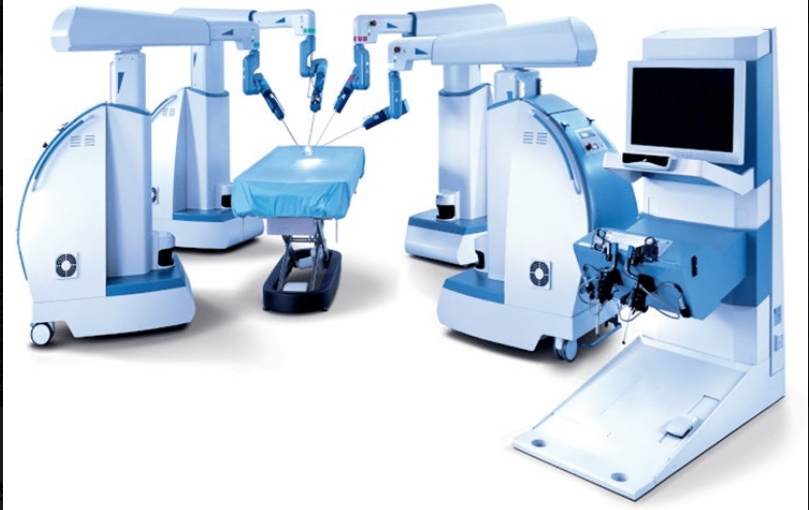
From a market perspective, China’s domestic laparoscopic surgical robot market has maintained rapid growth in recent years. Nevertheless, the da Vinci series manufactured by Intuitive Surgical has long held a dominant market position. In recent years, however, driven by overlapping factors including the expiration of certain patents and the democratization of motion control as well as endoscopic image processing technologies, domestic manufacturers have achieved rapid breakthroughs in the integrity of their technical platforms. Their products are no longer limited to demonstrating isolated single movements; instead, integrated and coordinated solutions covering imaging, motion control, real-time planning and feedback have been developed, bringing about a fundamental shift in the market landscape.
From 2022 to 2025, the domestic laparoscopic surgical robot market accomplished a critical leap from "technological breakthroughs" to "large-scale commercial adoption". Statistics indicate that the domestic market size stood at approximately RMB 1.5 billion in 2022, with a market share of merely 30%. In 2023, the market expanded to RMB 2.8 billion, and domestic brands captured 40% of the market. In 2024, domestic market volume surpassed RMB 6 billion. Within the overall national market of RMB 8.5–9 billion, domestic brands’ market share exceeded 50% for the first time, topping 56%. By 2025, the domestic market size further broke through RMB 8 billion. Amid the total national market of RMB 11–12 billion, domestic manufacturers sustained a stable market share above 55%, thoroughly ending the long-term monopoly of foreign brands.
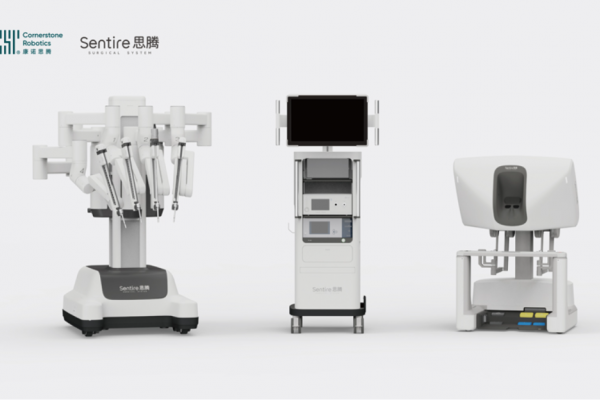
Leading domestic manufacturers have delivered outstanding performance in equipment installation and order intake.MedSurgical (Jingfeng Medical) installed 20 units in 2024 and secured cumulative signed orders exceeding 31 units by 2025. Its products are sold to overseas markets including Pakistan, Brazil and Nigeria. It is the world’s second enterprise holding registration certificates for three types of endoscopic surgical robots: multi-port, single-port and natural orifice systems.Toumai® by MicroPort has garnered over 100 global orders with nearly 80 units installed. Its overseas orders surpassed 60 units in 2025, accounting for 73% of its total revenue. It is the first domestic endoscopic surgical robot brand deployed at top-tier European medical institutions.Sinovation Robotics installed 12 units across China in 2024 and 38 units worldwide in 2025, with more than 100 intended overseas orders and product presence in nearly 40 countries.Shurui Robotics developed China’s first single-port endoscopic surgical robot applicable to four major surgical disciplines. After obtaining approval for multi-department clinical use in 2024, its system rapidly expanded to clinical scenarios such as thoracic surgery and general surgery in 2025.
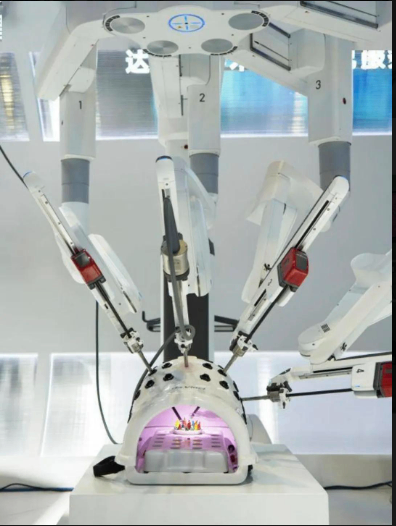
In stark contrast, Intuitive Surgical’s da Vinci system has seen a continuous contraction of its market share in China. It installed 45 to 50 units in the country in 2022, retaining a market share of over 70%. In 2023, 55 units were installed, yet its share dipped to 68%. Installation volume rose slightly to 58 units in 2024, while its market share slid further to 62%. Full-year installation projections for 2025 stand at roughly 40 units, with its market share falling below 45%.In the first half of 2025, the total overseas order volume of domestic manufacturers surpassed da Vinci’s annual installation count within China, marking the initial formation of large-scale global deployment networks for domestic players.Bid-winning statistics for laparoscopic surgical robots across China’s public hospitals in H1 2026 recorded a total of 31 awarded units. Domestic brands secured 19 units, accounting for 63% of all successful bids. This marked the first time domestic products outperformed da Vinci by a wide margin, which claimed only 10 units. The trend of domestic import substitution has shifted from market anticipation to tangible reality.
Beyond the market of top-tier tertiary hospitals, domestic devices have penetrated the lower-tier market far faster than anticipated. Thanks to their lower purchase prices and more flexible localized services, domestic manufacturers have rapidly filled the gap in high-end medical equipment at grassroots medical institutions.
Meanwhile, domestic enterprises are accelerating the construction of a complete commercial closed loop integrating main equipment, consumables, training and remote operation & maintenance. Leading manufacturers including Jingfeng Medical and MicroPort have achieved a consumable repurchase rate exceeding 60%, gradually replicating the mature sustainable profit model known as the "razor-and-blade" business model.
From a policy perspective, the rollout of this centralized procurement initiative is not merely a price reshuffle, but a comprehensive upgrade in the dimensions of market competition across the sector. The previous point-to-point marketing model adopted by manufacturers targeting individual hospitals will be replaced by province-wide all-round competitive bidding. Higher standards will be imposed on enterprises regarding their province-wide consumable distribution capacity, cross-regional operation and maintenance service systems, as well as compliance of technical parameters, further lifting the industry entry barriers.
The release of the current policy marks the full arrival of the centralized procurement era for laparoscopic surgical robots, signifying that this track has officially bid farewell to its previous stage of unregulated rapid expansion and entered a brand-new cycle of structural competition. A reasonable decline in prices is an inevitable trend, yet vicious price wars will not take shape. Policy dividends will incline toward enterprises with robust technical capabilities and outstanding full-lifecycle cost control proficiency.
For domestic manufacturers including Jingfeng Medical and MicroPort Toumai®, centralized volume-based procurement represents a historic opportunity to further expand market share and accelerate import substitution. As for foreign brands such as da Vinci that have long dominated the market, they have to adjust their traditional pricing strategies and service models, and proactively adapt to the new rules governing centralized procurement of medical devices in China, so as to retain their market standing amid the reshaped competitive landscape.
From a longer-term perspective, this round of centralized procurement will not only reshape the domestic laparoscopic surgical robot market landscape, but also drive China’s high-end medical equipment industry to complete an upgrade from “import substitution” to “technology-driven global expansion”, thereby securing a more influential voice in the global surgical robot track.