Recently, Nature published a groundbreaking medical study. An engineering and surgical team from the University of California, San Diego successfully completed the world‑first in‑vivo surgery trial with a remotely controlled humanoid robot.The success of this pre‑clinical animal trial has taken humanoid robots out of laboratory settings and equipped them with practical capabilities for real‑world surgical operations. It delivers a viable new technical approach to ease the global shortage of medical resources and address limited access to healthcare in remote areas.

Liang Zekai, a post‑2000 Chinese PhD student, serves as both the first‑ and corresponding author of this Nature‑published paper.The humanoid robot adopted in the experiment is modified from Unitree G1. Standing 1.5 meters tall and weighing 27 kilograms, it is tailor‑made for operating‑room scenarios.
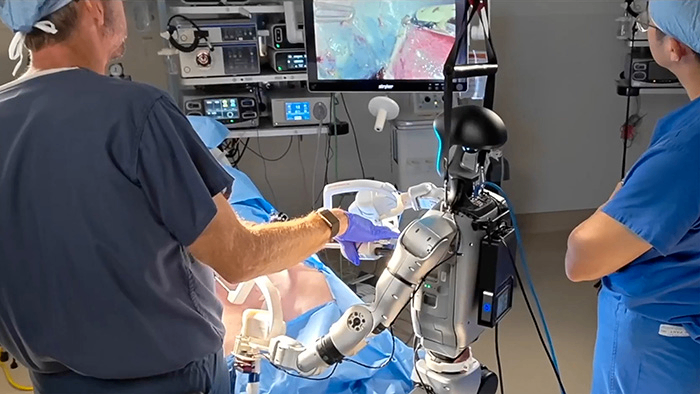
Two sets of real‑world surgical scenarios were established in this study, with experiments performed on large mammals.During the trials, the humanoid robot codenamed Surgie first worked alongside human surgical assistants to successfully carry out cholecystectomy. Afterwards, two identical robots collaborated to finish the full surgical procedure autonomously throughout the whole process.This proof‑of‑concept trial validates that humanoid robots can adapt to standard surgical workflows, marking a milestone for deploying humanoid robots within clinical operating rooms.
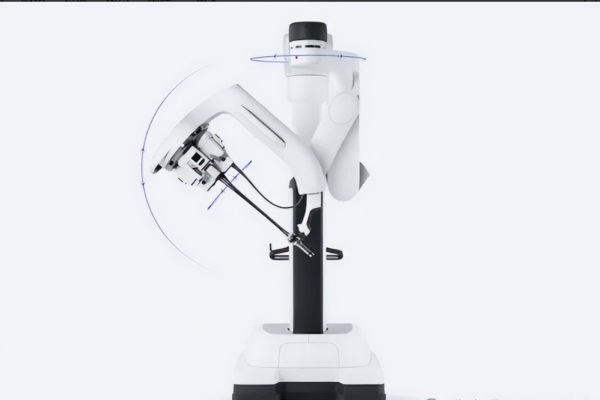
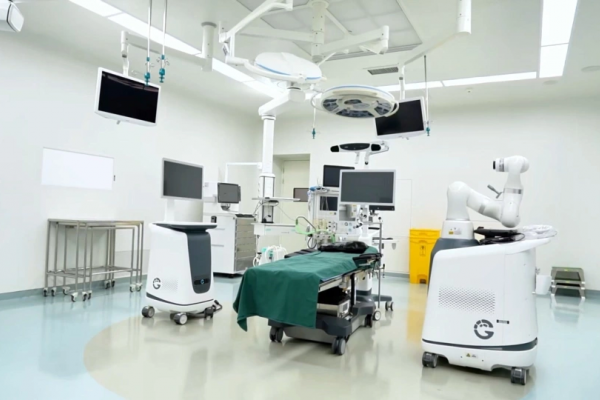
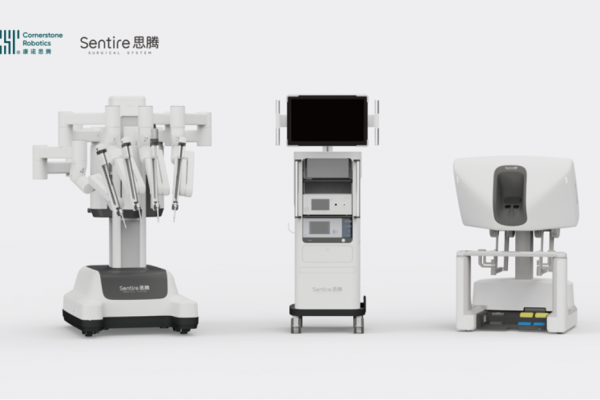
Compared with currently prevalent conventional surgical‑robotic systems, Surgie boasts remarkable practical merits. Traditional surgical robots are bulky, weighing up to 1,800 pounds. Their setup demands lengthy installation and commissioning by large‑scale teams alongside purpose‑built renovations to operating‑room spaces. High deployment costs and poor flexibility prevent them from gaining widespread adoption in grassroots‑level medical settings.
By contrast, Surgie has a human‑sized build of 1.5 meters in height and 27 kilograms in weight. Compact and highly mobile, it seamlessly fits existing operating‑room hardware and established workflows without extra renovations, drastically lowering barriers for real‑world implementation.
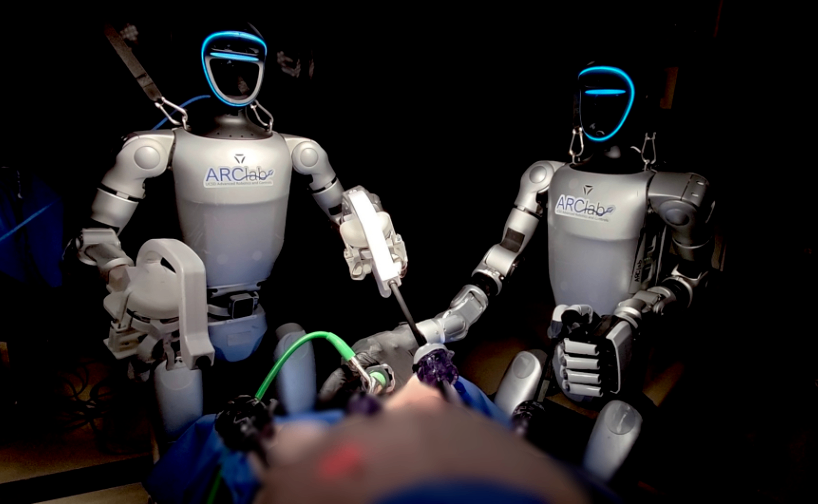
This humanoid robot features outstanding versatility. It can adapt to standard surgical instruments with simple adapter attachments and delivers surgical precision meeting clinical benchmarks of mainstream minimally‑invasive robots.Apart from core surgical procedures, it can also undertake auxiliary tasks such as passing instruments during operations and cleaning up operating‑room spaces after surgery.
Thanks to its portability and straightforward deployment, the robot can be deployed in remote regions lacking sufficient medical resources. It also accommodates special‑case scenarios including battlefield first‑aid and field rescue. Furthermore, it lays technical groundwork for surgical operations in space and on the Moon in the future.
The research team also acknowledges that the technology still has obvious drawbacks at present. Multiple rounds of equipment calibration are required during robotic‑assisted operations at this stage. Control latency exists, and the whole procedure takes substantially longer than operations carried out by conventional surgical robots.
Nevertheless, the team pointed out that early‑stage laparoscopic robotic surgeries once took more than six hours. Thanks to continuous technical iterations, such procedures now finish within merely half an hour. With ongoing optimization of artificial‑intelligence algorithms, human‑operated surgical robots will see steady upgrades in operational efficiency, stability and real‑time responsiveness.
Globally, the world is confronted with a shortage of surgeons and uneven distribution of medical resources. Emergency surgical care in remote locations and special‑condition settings has long‑standing deficiencies.This cross‑field technological breakthrough overcomes bottlenecks of high costs and scenario‑related limits plaguing conventional surgical equipment.As remote‑control and autonomous‑surgery technologies mature over time, humanoid surgical robots will gradually be deployed in medical institutions at all tiers and special‑operation scenarios. They will break down geographical healthcare barriers and deliver high‑quality, precise surgical services to patients across more regions.