On August 3, 2026, Andromeda Surgical, an autonomous‑surgical‑robot enterprise focusing on urology, announced the completion of its US$15‑million Series‑A round of financing. The round was led by Standard Capital, with participation from multiple institutional investors including Y Combinator, Vox Capital, Lingotto Innovation, Alumni Ventures and WestWave Capital. Cybernetix, NZVC, Zelda Ventures and Zeno Ventures also joined the investor roster. Founded merely three years ago, the firm has now raised a total of US$30 million in funding. The capital lays a solid financial foundation for subsequent clinical advancement, product roll‑out and market expansion.
The key draw for capital‑market investors lies in its adoption of autonomous‑driving technology retrofitted onto surgical robots to build autonomous surgical systems. It cuts the conventional 90‑minute average duration for prostate enucleation surgery down to a minimum of 30 minutes, breaking the existing efficiency ceiling for surgical procedures.
Founded in 2023, Andromeda Surgical has targeted the core track of autonomous‑operating surgical robots for urology since its inception. Guided by the vision of "making surgeries safer, more accessible and more efficient", the company aims to push past the performance limits of conventional surgery through technological innovation.
This vision is backed by a founding team with solid expertise spanning two high‑end sectors, med‑tech and autonomous‑driving technology.Nick Damiano, Co‑Founder and Chief Executive Officer, is a serial entrepreneur in the healthcare industry. His previous venture Zenflow, a firm dedicated to BPH treatment, has secured FDA‑approval for its retrievable stent and drawn investments from leading industry players including Cook Medical.He is the world’s first and so far the only med‑tech founder to be accepted into Y Combinator on two separate occasions, boasting extensive experience in clinical research translation and commercial implementation.
Another key co‑founder and CTO, Kartik Tiwari, comes from the autonomous‑driving sector. He once led the Starsky Robotics team to achieve the world’s first self‑driving truck road test on public roads. Today, he has cross‑applied the spatial‑positioning and autonomous‑control technologies accumulated in autonomous‑vehicle research into operating‑room scenarios, bringing brand‑new technical DNA to surgical robots.It is this "automotive‑robotics plus medical‑device‑development" founding combination that emboldens Andromeda Surgical to pursue its ambition of "autonomous driving inside the operating‑room".
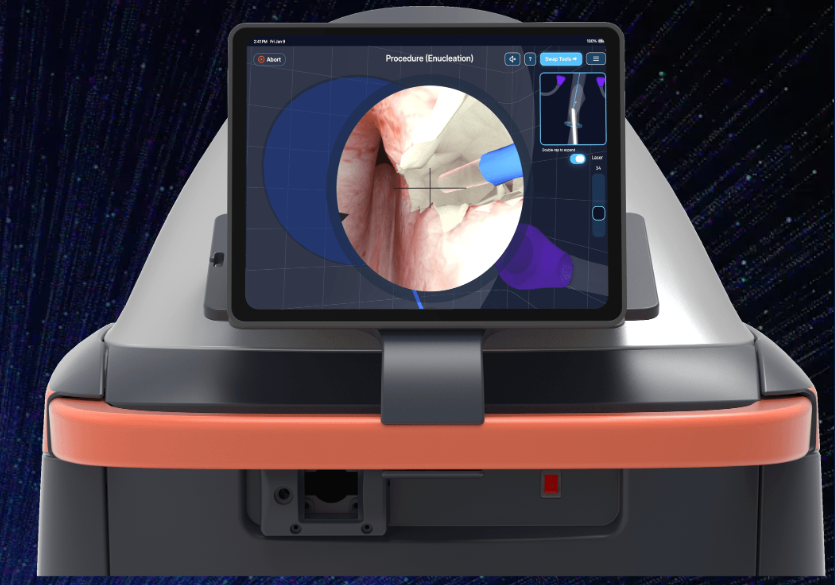
Leveraging the team’s cross‑industry strengths, Andromeda Surgical has rolled out its flagship offering, the Beacon autonomous surgical platform, adopting a software‑first differentiated strategy.Unlike conventional surgical robots that prioritize hardware and mechanical‑structure design, Beacon centers on AI‑driven empowerment. Its technology enables every general surgeon to attain the operative proficiency of world‑leading specialists.
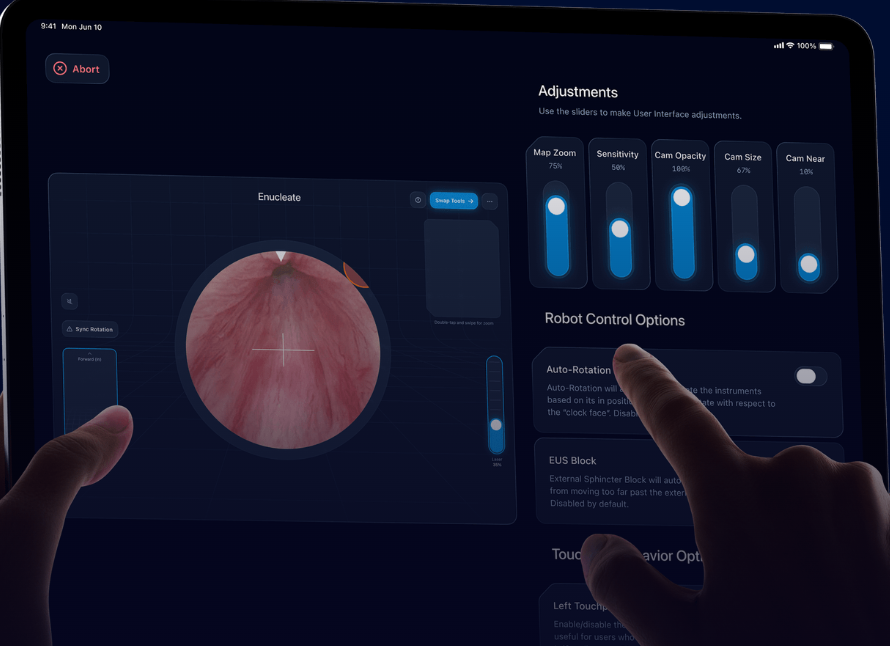
This single‑arm robotic platform controlled via a tablet computer is engineered for transurethral intracavitary procedures. It greatly lowers surgeons’ learning curve and streamlines the training workflow for sophisticated surgeries. Its technical highlights fall into four key categories:
First, the "human‑body GPS" navigation system. The platform’s most groundbreaking feature delivers anatomy‑based spatial navigation comparable to GPS, assisting surgeons in precisely tracking operative positions and subsequent maneuvers throughout the procedure. For that reason, Andromeda Surgical positions Beacon as "the core brain of the operating room in the future".
Second, streamlined interaction with a single‑arm setup and tablet‑based control. Free from the bulky, complex master‑slave consoles adopted by traditional surgical robots, it cuts down costs for deployment and personnel training.
Third, the open‑architecture design enables seamless compatibility. Without requiring hospitals to replace their extensive existing surgical equipment, Beacon can seamlessly integrate with commercially‑available surgical instruments, substantially lowering deployment costs for medical institutions. This stands out as a rare feature in the surgical‑robot industry dominated by closed‑loop ecosystems.
Fourth, built‑in autonomy capability. Drawing on the spatial perception and motion‑control technologies adopted in autonomous‑vehicle systems, the platform reserves room for upgrades toward higher‑level surgical autonomy in the future.
Clinically, the first‑use scenario for the Beacon platform is holmium‑laser enucleation of the prostate (HoLEP) for the treatment of benign prostatic hyperplasia (BPH). This procedure was selected chiefly for its well‑documented therapeutic efficacy, which eliminates interference from surgical‑procedure performance when evaluating the maturity of the robotic surgical platform.Nevertheless, the technique features a steep learning curve, and successful operations rely heavily on the surgeon’s experience, making it the ideal entry‑point for standardized robotic workflows.
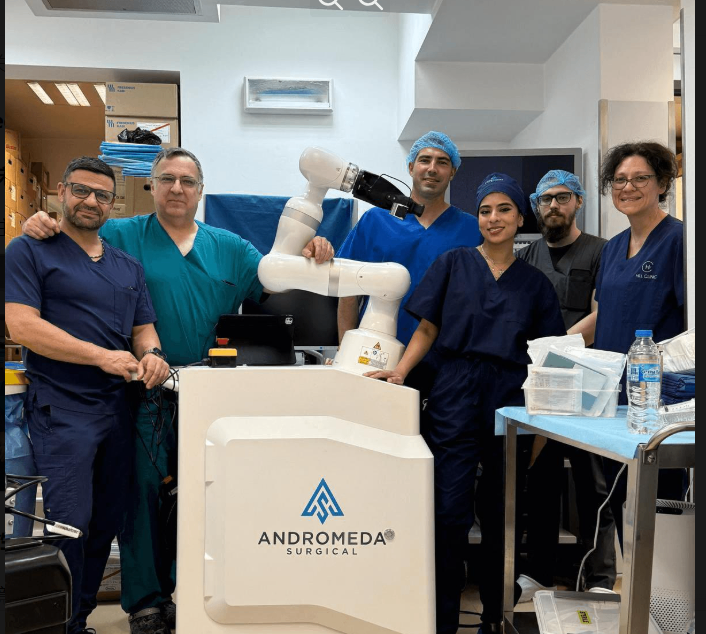
In December 2024, Andromeda Surgical performed the world‑first robot‑assisted HoLEP procedure in Chile, marking an industry milestone for this surgical technique. To date, over 40 clinical operations have been completed on the Beacon platform. The fastest prostate‑gland enucleation only took 30 minutes, far shorter than the roughly 90‑minute average duration for conventional HoLEP recorded in published literature, delivering a qualitative leap in surgical efficiency.
Progress is steadily underway on ASTRA, a prospective, multicenter, open‑label single‑arm clinical trial for clinical advancement. The trial plans to recruit 54 subjects across three clinical sites in Chile and New Zealand. Patient recruitment is now in progress, and the whole study is expected to conclude on December 30, 2026.
In terms of industrial collaboration, Andromeda Surgical has entered into in‑depth strategic partnerships with Richard Wolf, a giant within the endoscopy sector, and Quanta System, a global leader in laser‑related technologies. It integrates premium visualization tools and laser energy platforms into its proprietary system to further boost the product’s clinical performance and pave the way for global expansion.
When speaking about future plans, Andromeda Surgical states that upon consolidating the clinical application of the HoLEP procedure, it will gradually extend its autonomous surgical‑robot technology to treatment scenarios for more urological ailments including prostate cancer, bladder cancer and kidney stones.
From self‑driving trucks to intracavitary human‑body surgery, and cutting the operation duration from 90 minutes down to 30 minutes, Andromeda Surgical is proving that when AI and autonomous‑control technologies step into operating rooms, they alter far more than the trajectory of surgical scalpels —‑ they re‑define the efficiency frontier of the entire field of surgery.