On July 28, 2026, Dutch regenerative medicine firm Xeltis announced the completion of its latest financing round, raising USD 23.3 million (EUR 20.5 million, equivalent to approximately RMB 160 million). The round was led by Horizon 3 Healthcare, with participation from new and existing investors including the European Innovation Council (EIC), Invest-NL, VI Partners, EQT Life Sciences and DaVita.
This marks another capital infusion for Xeltis following its $55 million financing round closed at the end of 2025. The company stated that the combined proceeds from the two rounds exceed $78 million, which will be primarily allocated to advancing the pivotal U.S. clinical trials for its aXess hemodialysis vascular access device, completing FDA registration submissions and commercialization in the U.S. market. The funds will also support European market expansion, production capacity scaling, and R&D for its broader product pipeline.
For the fields of cardiovascular intervention and vascular surgery, what truly stands out about this financing round is not the fundraising amount itself, but the continued wager by capital markets on an innovative vascular access technology platform: endogenous tissue restoration (ETR), which generates permanent autologous blood vessels inside the human body, as an alternative to long-term reliance on synthetic graft materials.
#Targeting the Gap Between AVFs and AVGs, aXess Aims to Establish a Third Vascular Access Modality
Hemodialysis patients require stable vascular access for long-term treatment.
Clinically, three primary modalities are currently available:
Arteriovenous Fistula (AVF),
Arteriovenous Graft (AVG),
Central Venous Catheter (CVC)
Among them, AVF is widely recognized by international clinical guidelines as the first-choice modality for long-term hemodialysis, thanks to its superior long-term patency rate and low infection risk. However, an AVF typically requires weeks or even months to mature before it can be used, and not all patients are eligible for its creation.
In contrast, AVGs can be deployed much sooner, yet they are plagued by long-term complications including infection, thrombosis, and repeated interventional procedures to maintain patency. The aXess system developed by Xeltis is positioned to fill the gap between these two options.
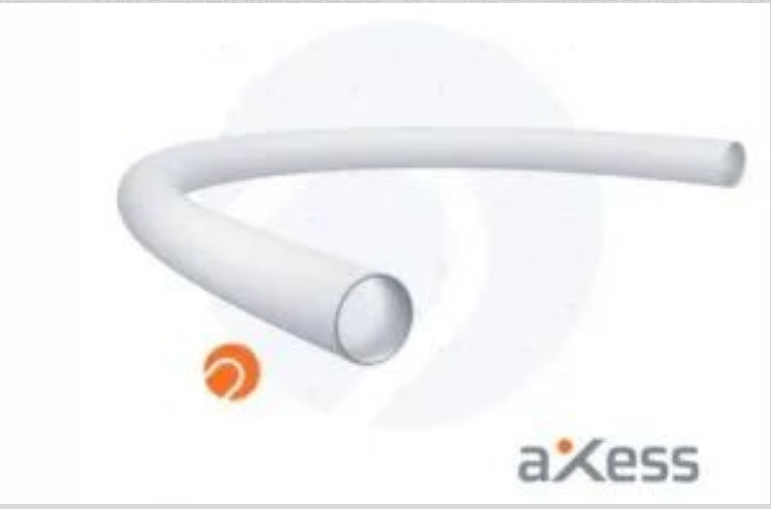
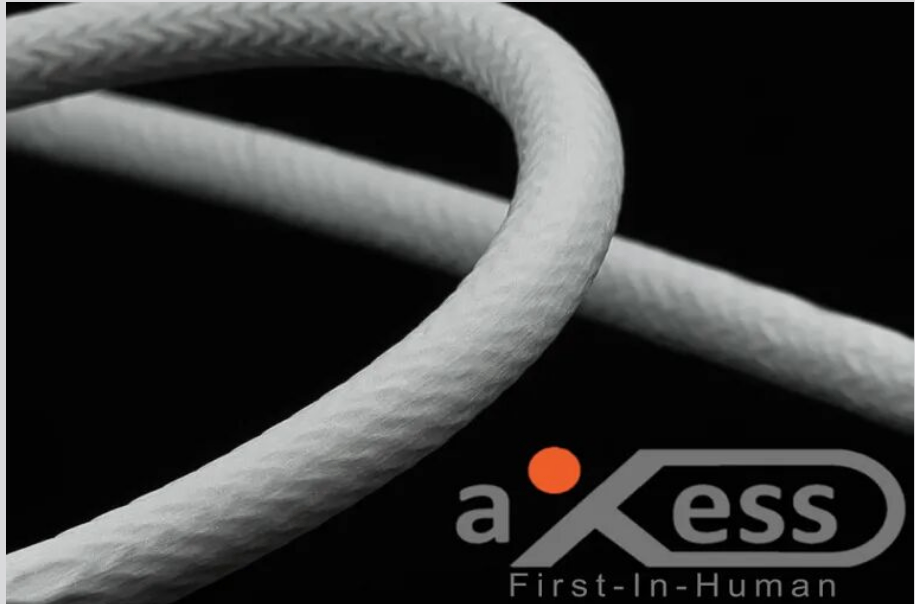
According to the company, aXess is a regenerative vascular access catheter. After implantation, it gradually induces the growth of the patient’s native tissue to form a new permanent blood vessel in vivo. The product is designed to combine the long-term patency advantage of AVFs and the rapid access establishment benefit of AVGs, while lowering infection risks and the need for repeat interventional procedures.
It should be noted that all the aforementioned product advantages are based on the company’s public disclosures and remain to be further validated by pivotal clinical trials.
#Clear Core Allocation of Financing: Advancing U.S. Pivotal Clinical Trials and FDA Registration
Unlike many early-stage financing rounds, the capital raised in this round has highly focused applications.
As disclosed by Xeltis, the proceeds from this financing round will be allocated to four key areas:
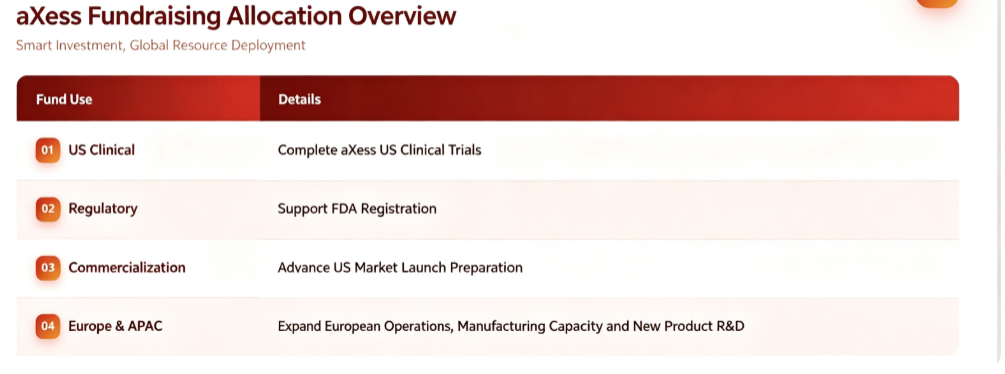
Among these priorities, the U.S. pivotal clinical trial is undoubtedly the top priority for the raised capital.
Pivotal clinical trials generally serve as critical clinical evidence to support FDA marketing applications, and their outcomes will directly determine whether the product can gain access to the U.S. market. Notably, Xeltis launched the commercial rollout of aXess across Europe earlier this month. This financing signals the company’s strategic shift, gradually expanding its focus from Europe to the U.S., the world’s largest hemodialysis care market.
#Beyond Hemodialysis Access, Xeltis Builds a Product Portfolio Centered on Regenerative Vascular Technology
aXess represents only one component of Xeltis’ regenerative vascular technology platform.
The company advances two key product lines in parallel:
XABG (Regenerative Coronary Artery Bypass Graft)
XPAD (Regenerative Peripheral Artery Disease Therapy)
All three product lines are built upon the company’s proprietary Endogenous Tissue Restoration (ETR) platform.
The core tenet of this technical approach is not to leave implanted materials inside the human body permanently. Instead, biodegradable scaffolds act as temporary structural templates to guide gradual regeneration of host tissue, ultimately yielding biologically active autologous tissue.
This technological direction has drawn sustained capital attention in recent years and is regarded as one of the key development paths for tissue-engineered blood vessels.
Nevertheless, from an industry perspective, regenerative medicine products are generally characterized by lengthy R&D cycles, stringent clinical validation requirements, and complex regulatory approval processes. Accordingly, strong financing capacity serves as a critical safeguard for enterprises to continuously advance their clinical programs.
#China’s Hemodialysis Vascular Access Market Remains Dominated by Conventional Solutions, While Regenerative Medicine Approaches Are Still in the Early Stage
According to public data, three modalities — AVF, AVG and central venous catheters — still dominate hemodialysis vascular access procedures in China.
In recent years, domestic enterprises have continued to make layouts in fields including artificial blood vessels, biological patches and vascular interventional devices. However, products that reconstruct permanent vascular access via tissue regeneration have not yet formed a mature commercial market.
On the other hand, the number of patients with end-stage renal disease (ESRD) in China keeps rising, and the population of hemodialysis patients continues to expand, driving a concurrent increase in demand for long-term stable vascular access.
If regenerative medical technologies can demonstrate superior performance in core indicators such as long-term patency rate, infection rate and reintervention rate in pivotal clinical studies, they are expected to become a vital complement to the existing vascular access system in the future. At the same time, however, such products need to go through multiple procedures including NMPA registration, clinical verification and medical insurance reimbursement to enter the Chinese market, leaving uncertainties over their commercialization timeline.